

Trump-Voting Pastor Says He 'Was Really Wrong' After ICE Deportations Devastate His Church, Force Him to Take Second Job
A survey found that only 31% of Hispanic Protestants viewed Trump favourably, down from 51% in 2024

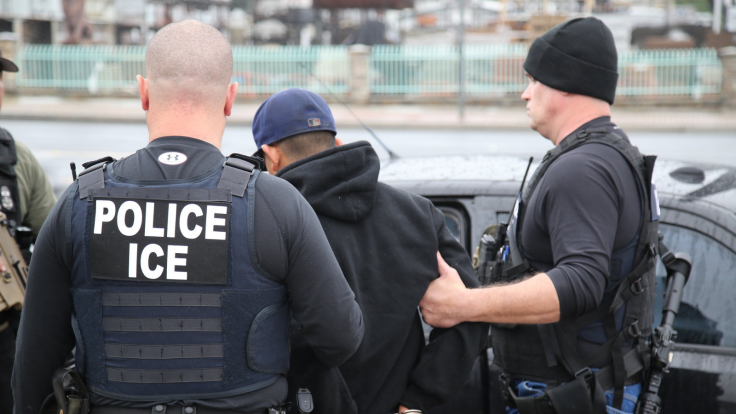
The Rev. Juan Carlos Calderón voted for Donald Trump in 2024 because he believed the president shared his Christian values and would focus immigration enforcement on criminals. Now, after church members were detained, families were separated, and attendance and donations declined at his Florida congregation, Calderón says he was wrong about Trump's deportation agenda and has taken a second full-time job to support himself.
Calderón, a Venezuelan-born US citizen who leads Un Nuevo Comienzo, an Assemblies of God church in Lake Worth Beach, said he had expected the Trump Admin to target gang members and immigrants who committed offences such as driving under the influence, rather than people without criminal records. 'I was really wrong,' Calderón said in Spanish. 'They're not looking for criminals.'
The consequences have extended beyond his political views. Two members of his congregation were detained and subsequently had to leave the US, according to Calderón. In one case, a pregnant US citizen whose husband had spent three months in immigration detention decided to leave the country with their two children.
Other congregants have become so frightened of immigration enforcement that they are reluctant to go to work or attend church. The resulting decline in the congregation's finances has forced Calderón to take a warehouse coordinator position alongside his pastoral responsibilities, ending eight years of working exclusively as a full-time pastor.
Immigration Enforcement Tests Christian Conservatives' Allegiance to Trump
Calderón's change of heart reflects a wider dilemma facing Hispanic Protestants, including evangelicals, who helped Trump build his winning coalition in 2024 but are increasingly questioning the consequences of his administration's policies.
According to the Public Religion Research Institute (PRRI), 64% of Hispanic Protestant voters supported Trump in the 2024 presidential election, making the group one of his strongest religious constituencies after white evangelical Protestants. Hispanic Protestants include both evangelical and non-evangelical Christians. Around 15% of US Latino adults identify as evangelical, according to the Pew Research Center.
For Calderón, conservative beliefs had initially outweighed concerns about immigration. He described himself as pro-life 'from the womb to the tomb' and said he had generally supported Republicans.
However, the experiences of his congregation have changed how he approaches the ballot box. He is now leaning towards supporting Florida Democratic gubernatorial candidate David Jolly, while remaining undecided about the Senate contest. He has also not ruled out voting for Democratic Senate candidate Angie Nixon.
'My loyalty isn't to a party. My identity is in Christ. My pastoral responsibility is with the people,' Calderón had said.
The shift comes as public opinion data points to declining support for Trump among Hispanic Protestants. A PRRI survey released on 20th October found that only 31% of the group viewed the president favourably, down from 51% in 2024.
Deportations Leave Latino Families Facing Difficult Choices
The effects of immigration enforcement have reached well beyond individual churches. A Pew Research Center poll conducted in November 2025 found that 22% of Hispanic adults personally knew someone who had been detained or deported by US authorities for immigration-related reasons.
José Luis Marantes, field director for Connected Americans, a project focused on people affected by aggressive immigration enforcement, said deportations, tariffs, and the war in Iran had combined to place substantial pressure on Latino households.
Hispanic evangelicals have traditionally weighed social conservatism heavily when choosing between political parties. Marantes said the consequences of immigration enforcement were now forcing many to reconsider that approach. Some members of Calderón's congregation have even considered abstaining from the midterm elections altogether.
Hispanic Evangelical Support for Republicans Is No Longer Assured
Even prominent Hispanic evangelical figures who have supported Trump have raised concerns about the administration's enforcement strategy.
In an August opinion article for the Christian Post, the Rev. Samuel Rodriguez, a Trump adviser and president of the National Hispanic Christian Leadership Conference, warned that more than 30% of recent deportations involved people without criminal records.
Rodriguez cautioned that if this became the defining image of the administration's immigration policy before the midterms, Republicans could face serious political consequences.
Despite declining Republican support, Democrats have yet to demonstrate that they can consistently attract Hispanic evangelical voters. In the latest PRRI survey, 44% of registered Hispanic Protestant voters said they would support a Republican candidate if the election were held immediately, compared with 35% who favoured Democrats. Another 21% were undecided.
The figures suggest that dissatisfaction with Trump has not automatically translated into support for the opposition. The Democratic Party also faces questions about whether it has made a concerted effort to reach Hispanic evangelicals who are reconsidering their political allegiance.
© Copyright IBTimes 2026. All rights reserved.