

Photos Of Meghan Trainor Slammed Online For 'Performative' Pictures With Daughter Following Her Birth via Surrogate
'Performative' photos of Meghan Trainor's surrogate-born daughter spark online criticism

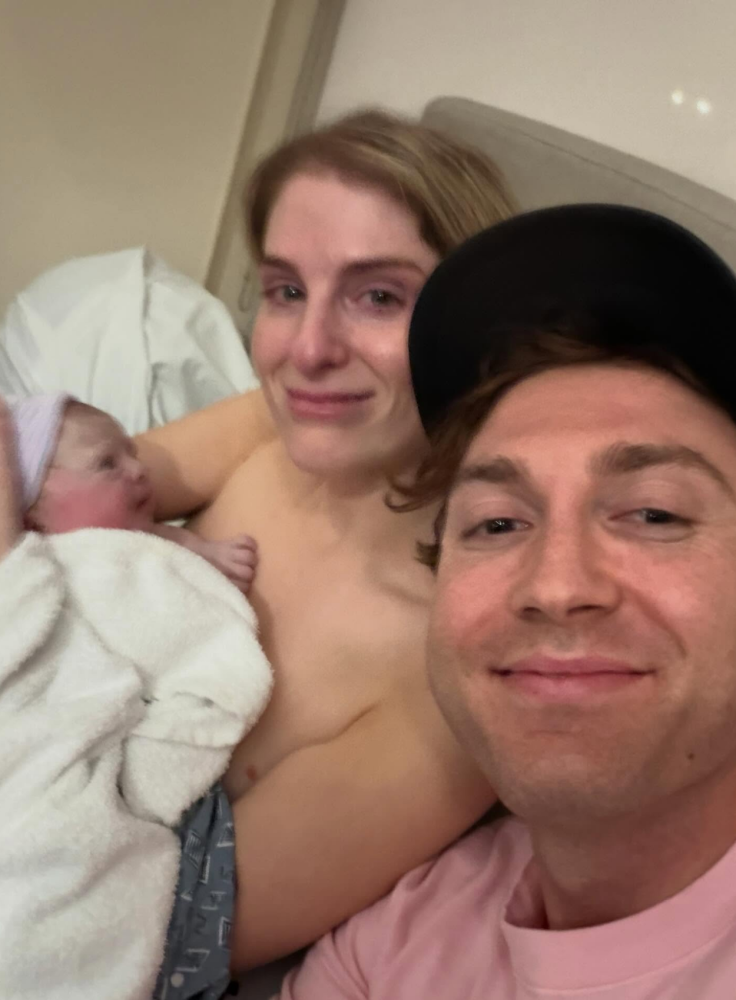
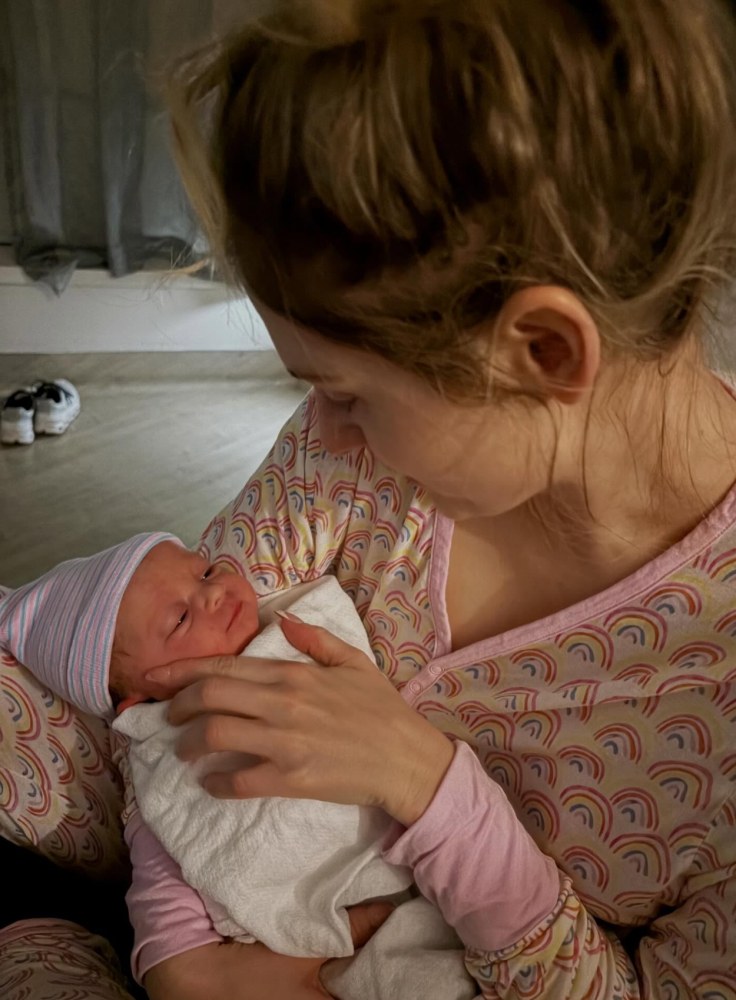
Meghan Trainor and husband, actor Daryl Sabara, have announced the arrival of their third child, a baby girl named Mikey Moon Trainor, born via surrogate on 18 January 2026. The singer shared the joyful news on her social media on 21 January with a series of intimate family photos.
However, her announcement has sparked a polarised response online. While many fans celebrated the news and offered congratulations, others have criticised the couple, labelling the photos 'performative' and questioning their choice to use surrogacy.
Trainor's Emotional Announcement
The pop star has shared heartfelt family photos on social media alongside her announcement, thanking the surrogate who carried their daughter. She wrote: 'Our baby girl Mikey Moon Trainor has finally made it to the world thanks to our incredible, superwoman surrogate.'
Trainor explained that surrogacy was the safest option for them to expand their family: 'We had endless conversations with our doctors in this journey and this was the safest way for us to be able to continue growing our family.'
The singer concluded the post by expressing her joy: 'We are over the moon in love with this precious girl. Riley and Barry have been so excited, they even got to choose her middle name. We are going to enjoy our family time now, love you all.'

Trainor Opens Up About Surrogacy
In an interview with PEOPLE, Trainor candidly discussed their decision. She admitted: 'It wasn't our first choice, but we had endless conversations with our doctors on this journey, and this was the safest way for us to be able to continue growing our family. We are forever grateful for that option.'
The singer also praised the surrogate, describing her as one of the 'most selfless, strong, and loving people' she had ever met. 'We felt so connected throughout the entire journey, and I'll always be grateful for the care and love she showed our daughter,' Trainor said.
Online Backlash Over 'Performative' Photos and Surrogacy Choice
While many celebrated the arrival of the couple's third child, others were less forgiving. Critics online accused them of staging 'performative' photographs and questioning the couple's decision to use surrogacy.
One commenter wrote: 'I find this photograph viscerally offensive. Somewhere in the background the desperate woman who gave birth to this child is bleeding. The things that money can buy.' Others focused on the power imbalance they believe underpins commercial surrogacy.
We wonder how much the “superwoman surrogate” was paid for her baby, so this wealthy woman and her husband, who were already parents, could have a daughter.
— StopSurrogacyNowUK (@WombsNotForRent) January 21, 2026
Megan Trainor’s fortune is worth an estimated $30 million.
Money really can buy anything can’t it? https://t.co/gOWC4I84dT
Another post bluntly stated: 'Breaking: rich woman of child-bearing age buys poor woman's womb. She then takes the baby and weeps with it in her arms as if she did anything other than something ghastly.' Others condemned surrogacy more broadly, calling it 'dystopian' and exploitative.
Surrogacy is truly so dystopian.
— Alexandra Lains (@realalexlains) January 21, 2026
To rent the womb of another woman, have her go through pain, discomfort while also having her form a bond with a human that she is physically growing; just to take that child away and then do “skin to skin” with the baby that should be doing… https://t.co/FKoxyInGKG
Thousands are finally speaking up against surrogacy. The tide is turning.
— Katy Faust (@Advo_Katy) January 21, 2026
We’re grateful your baby is here, alive, and loved.
But we won’t pretend the method was harmless. No child should be created through a system that turns women into means and babies into products. https://t.co/vy0arkI0Lz
One wrote: 'Posing with a minutes-old baby like she gave birth to it is weird as hell.' Another one said, '"Via surrogate" — why tf is she posing like she's the one who gave birth?' That view was echoed by another user, who wrote: 'These skin-to-skin pictures are so performative and fake. If you didn't birth a baby, it's not your baby. I'm sorry, but you can't convince me otherwise.'
Still, some commenters attempted balance, though many remain unconvinced, with one writing: 'I have conflicting thoughts about surrogacy. But I want y'all to stop making a big deal out of skin to skin lol.'
I have conflicting thoughts about surrogacy.
— Jamila 🔔 (@_iamjamila) January 21, 2026
But I want y’all to stop making a big deal out of skin to skin lol. This is 100% for the health & thriving outcome of the baby. Sometimes if there are babies with no parents there, even nurses will step in to do skin to skin. https://t.co/e5OzRGwj7b
Surrogacy Explained: Legal and Medical Context
Surrogacy is a reproductive arrangement in which a woman carries and delivers a child for another person or couple, who then become the legal parents. Gestational surrogacy, the most common form, ensures the surrogate has no genetic link to the baby.
According to the National Health Service (NHS), surrogacy is considered safe when conducted under medical supervision, with mandatory medical screenings and psychological counselling at licensed clinics for all parties involved.
Legally, surrogacy is permitted in the United Kingdom only on an altruistic basis, meaning surrogates cannot be paid beyond 'reasonable expenses.' In contrast, many US states allow commercial surrogacy.
Critics often describe the industry as 'dystopian' or 'exploitative,' arguing that it creates a 'wealth gap' where the rich can outsource the physical risks of childbirth to women in financial need.
© Copyright IBTimes 2026. All rights reserved.