

'Piggy' Trump Blasted For 'Garbled' Tone at Mar-a-Lago, Mocked After 'Dozing Off' During Press Con
Donald Trump's slurred Mar-a-Lago speech sparks fresh debate over his health and fitness for office

In a move that has left political commentators and medical experts alike searching for answers, President Donald Trump's latest appearance at Mar-a-Lago has shifted the spotlight from a dramatic military operation to his own personal wellbeing. While the world was reeling from the capture of Venezuelan President Nicolás Maduro, the 79-year-old president's physical condition became the unintended headline of the day.
Standing alongside the Secretaries of State and Defence on Saturday, Trump addressed the nation to confirm the success of the high-stakes raid, yet his delivery often overshadowed the magnitude of the news.
During a press conference on Jan. 3, 2026 — shortly after the United States launched Operation Absolute Resolve — the president appeared to struggle with basic delivery. Observers noted a distinctive slurring of words and a visible difficulty in staying alert, with many social media users pointing out that he seemed to have trouble keeping his eyes open throughout the address. The event was intended to project an image of 'bold and historic leadership,' as later echoed by allies like Benjamin Netanyahu, but instead, clips of the president's mumbling began to circulate almost instantly.

A Public Performance Under Fire
The reaction was swift and unforgiving. As the president discussed the military strikes and the extraction of Maduro from Caracas, critics online were less focused on foreign policy and more on the president's apparent fragility. 'Holy h---. Piggy looks and sounds like s---,' one user remarked beneath a clip of the address, while another added: 'Who let grandpa out of the nursing home again?!' Even high-profile critics like journalist David Shuster joined the fray, describing the 'frantic tone' as a frightening sign of cognitive decline.
The slurred speech has reignited a fierce debate regarding the president's cognitive and physical health. Some suggested the fatigue was the result of a 'late night' monitoring the operation, which Trump himself described as watching 'a television show'. One user speculated on X: 'Piggy's clearly not doing well... guess all those late nights spread out on the bear-skinned rug for Vlad are taking their toll'.
Others were more clinical, suggesting the president appeared to be suffering from a lack of focus, with one commenter noting: 'Hasn't had his Adderall yet.; The scrutiny is particularly acute given that the 79-year-old is the oldest person ever to hold the office, a point often weaponised by his detractors.
These observations are not isolated incidents. In recent months, reports have frequently surfaced of the president falling asleep during high-level meetings. When confronted with these claims by The Wall Street Journal on Jan. 1, Trump dismissed them as a misunderstanding of his 'relaxing' habit of blinking.
'I'll just close. It's very relaxing to me,' he insisted. 'Sometimes [photographers] will take a picture of me blinking, blinking, and they'll catch me with the blink', This defence comes despite reports that his public schedule has become lighter and starts later in the day during his second term.
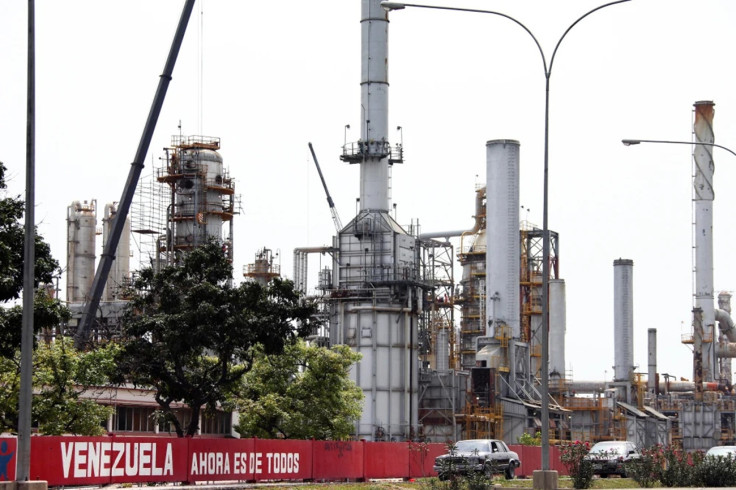
Make Venezuela Great Again: The Economic Ambitions of Donald Trump
Despite the health-related static, the president remained firm on his controversial plans for South America. He declared that the United States would 'run' Venezuela until a 'safe, proper and judicious transition' of power is achieved.
Central to this vision is the seizure and rehabilitation of the country's vast oil reserves, which Trump described as a 'total bust' under the previous regime. While Maduro faces trial in New York for narco-terrorism, Trump has made no secret of his plan to use US companies to revitalize the sector, claiming the project will 'cost billions of dollars'.
'We're not afraid to have boots on the ground,' the president stated, underscoring his intent to use American military might to secure economic interests. His plan involves deploying major US energy firms to invest billions into repairing the 'badly broken infrastructure' of the Venezuelan oil sector.
'We're going to have our very large United States put up companies... to go in... and start making money for the country,' he continued, ending with a familiar variation of his campaign slogan: 'Make Venezuela Great Again.' This stance has already caused oil prices to dip as markets assess the impact of a potential US-led supply surge.
While the White House continues to release reports, including recent MRI results, insisting the president is in 'excellent overall health'. the visual evidence of his latest address tells a different story to many. With bruised and bandaged hands noted in December — which the president attributed to a self-prescribed high dosage of aspirin —and a recurring 'frantic tone,' the contrast between the president's assertive 'world bully' persona and his physical appearance has never been more stark.
Trump has combatively shared his latest cognitive test results to prove he 'aced' them, yet the persistent swelling of his ankles and slurred speech continue to fuel the national conversation about his fitness for the job.
© Copyright IBTimes 2026. All rights reserved.