

Donald Trump's Odd Jaw Movement at Tennessee Rally Suggests 'Almost Manic' Behaviour, Psychologist Says
Psychologist questions Donald Trump's rally conduct while stressing his comments are not a psychological evaluation
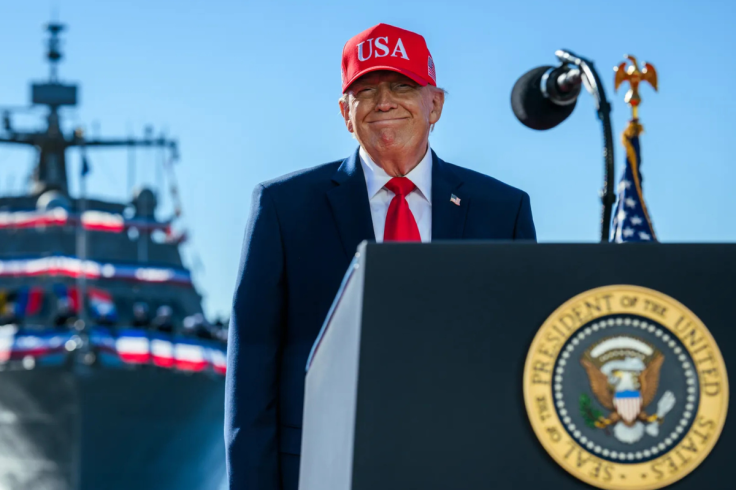
Donald Trump's odd sideways jaw movement at a mid-October rally in Clarksville, Tennessee, has prompted a clinical psychologist to describe his conduct as 'almost manic behaviour'. Dr John Paul Garrison, a clinician who comments on political figures online, raised the concerns after reviewing footage of the former president's speech.
Garrison, known on YouTube as Dr G, discussed the event in a video reported by OK! magazine. His remarks come amid ongoing scrutiny of Trump's mental state during his second term and repeated White House assurances about his fitness for office.
Donald Trump's Jaw Movement Draws Scrutiny
Garrison focused on a moment when Trump discussed renaming Lake Ontario to 'Lake America'. As the president spoke, his jaw shifted sideways, the psychologist observed. He suggested the movement might be associated with stimulants or stem from a neurological cause.
'Sometimes we see that when people are either on stimulant medication or taking stimulants of some kind,' Garrison explained.
He also suggested that impaired motor skills could account for the movement. Neither explanation was established in the account, and the White House has not disclosed that Trump takes stimulants. The suggestion of medication use remains Garrison's speculation.
His assessment extended beyond the jaw movement to the president's manner at rallies. He characterised occasions such as the Clarksville event as settings where Trump appeared 'more emotionally dysregulated'.
Garrison stressed that his commentary 'is not a psychological evaluation of any kind'. His observations reflected his opinions while watching the footage, rather than findings from an examination of the president.
Loyalty and Humour in Donald Trump's Speech
Another passage in the video concerned Trump's remarks about the response he receives from supporters. Turning towards the crowd, the president suggested that its enthusiasm would persist regardless of what he told them.
'When you stand up here, it's just like the love. I could say the stupidest things and you clap. You know, I love you so. That's true.'
Garrison interpreted the exchange as an assertion about loyalty, with Trump presenting his relationship with the audience through humour. He also noted that the president subsequently insisted he did not say stupid things.
'You notice how at the end he said it's true because he's emphasizing the fact there is unconditional loyalty no matter what he says. Not surprisingly, he goes on to say that he doesn't say stupid things, but what this does is this is using authority and dominance, and framing it as humor.'
That reading was Garrison's interpretation of the exchange. The account contains no response from Trump or his representatives addressing the psychologist's analysis of the crowd remarks or his suggested explanations for the jaw movement.
White House Defends Donald Trump's Fitness
The administration has repeatedly defended the president against concerns about his health, maintaining that his brain and neurological function are in excellent condition. Its broader response has emphasised his 'sharpness, unmatched energy and relentless work ethic', often comparing him with his predecessor, Joe Biden.
Other doctors cited in the reporting have alleged cognitive decline, dementia and a return to a 'childlike mental state'. Those allegations remain distinct from an established diagnosis, just as Garrison's commentary on the rally was expressly not a psychological evaluation.
OK! also reported instances in which Trump appeared to doze during public appearances. The president has previously referred to Biden, his Democratic rival, as 'Sleepy Joe Biden'.
In February, 61 per cent of Americans believed Trump had grown more 'erratic with age', according to a Reuters/Ipsos poll cited in the reporting.
© Copyright IBTimes 2026. All rights reserved.