

Trump's Jaw Movements at Tennessee Rally Draw Stimulant Speculation From Psychologist
Psychologist John Paul Garrison questioned Trump's jaw movements at a Tennessee rally, but the footage offers no proof of stimulant use
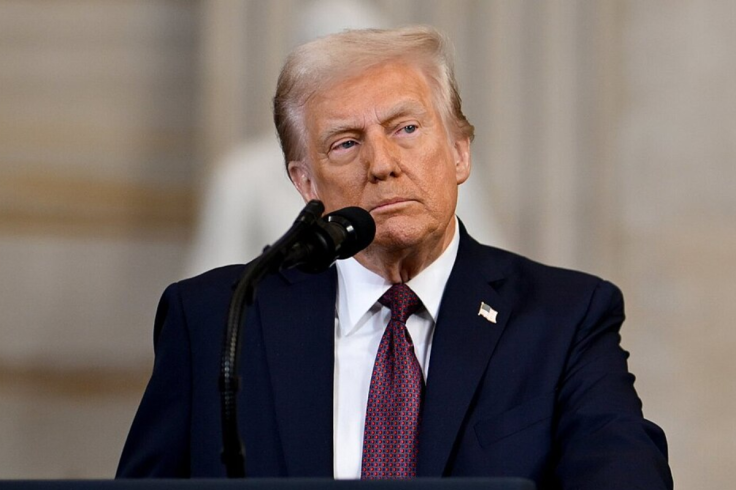
President Donald Trump's jaw movements at a campaign rally in Clarksville, Tennessee, on Saturday, 10 October 2026, have drawn scrutiny from clinical and forensic psychologist John Paul Garrison.
After reviewing footage, Garrison raised stimulant use as one possible explanation even though he presented no medical evidence that Trump takes stimulants or has a neurological condition.
The president appeared at F&M Bank Arena to campaign ahead of the 3 November midterm elections. Republican Senator Marsha Blackburn is running for Tennessee governor, and Senator Bill Hagerty is seeking re-election; both addressed the supporters.
Garrison, who hosts the YouTube series Dr. G Explains, examined Trump's facial movements and exchanges with the crowd. AlterNet reported that his comments were based on video footage rather than a clinical examination.
Psychologist Questions Donald Trump's Jaw Movements
Garrison said he noticed Trump's jaw shifting left as the president discussed renaming bodies of water. During the speech, Trump also suggested new names for an ocean, extending a theme he has raised at other public appearances.
'Sometimes we see that when people are either on stimulant medication or taking stimulants of some kind,' Garrison said.
He mentioned neurological explanations as another possibility. Neither interpretation establishes the cause of the movement, and no medical examination, treatment record, or other clinical evidence supports his conclusion about medication use.
Garrison also questioned whether what he interpreted as changes in Trump's facial and arm movements might be connected. He discussed motor control but did not present evidence linking the movements to one underlying condition.
A recording can show what a person appears to do, not necessarily why. Jaw movements might have explanations unrelated to medication or illness, and the video alone cannot distinguish between them.
Donald Trump's Applause Joke Draws a Different Interpretation
Garrison also focused on Trump's remarks about his audience. The president praised the affection of supporters before telling them, 'I could say the stupidest things and you'd clap.'
The audience laughed and applauded. Trump then added an important qualification, saying, 'But we don't say the stupidest things. We say things of common sense.' ABC News aired footage of that response.
Garrison interpreted the applause as a sign of what he called 'unconditional loyalty no matter what he says.' He suggested Trump was using humour to project authority while acknowledging the audience's enthusiasm.
The remark has already drawn attention on its own. Garrison's contribution is a reading of the crowd's response, rather than additional evidence about the president's health.
What Donald Trump's Rally Footage Cannot Prove
Garrison discussed another sequence involving Blackburn, describing Trump as closing his eyes and moving his mouth while standing nearby. The precise sequence has not been independently checked against the complete recording.
He characterised Trump's appearance as 'almost manic,' referring to what he considered unusually animated behaviour. The description is Garrison's opinion, not a psychiatric diagnosis, and it does not establish a mental health condition.
Garrison also suggested that applause could reinforce provocative behaviour. From that, he raised the possibility of similar dynamics in private settings. However, the rally footage reveals nothing about Trump's private conversations or presidential decision-making.
The American Psychological Association advises psychologists not to diagnose public figures they have not examined. Its guidance encourages commentary on general psychological principles while making the limitations of observations clear. That distinction matters especially when a public figure's appearance is discussed in medical terms.
For now, the Clarksville video documents a political speech, crowd reaction and the movements Garrison described. It does not determine their cause.
© Copyright IBTimes 2026. All rights reserved.