

Warming Celtic Sea and Channel Waters Raise Fears Venomous Jellyfish Could Reach UK Beaches
Warming seas in the Celtic Sea and English Channel could lead to more frequent sightings of the venomous Portuguese man o' war on British beaches
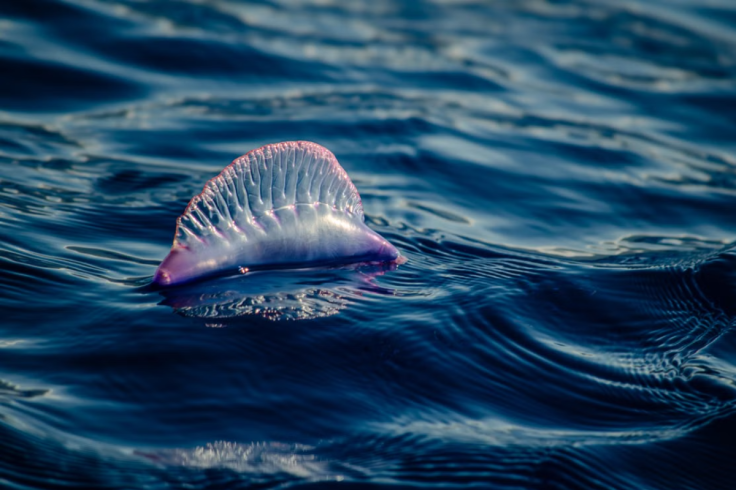
Waters in the Celtic Sea and the English Channel have warmed sharply this year, and scientists say the shift is part of a wider pattern already pushing venomous, jellyfish-like creatures onto beaches in France and Spain.
Portuguese man o' war, recognisable by their inflated, sail-like crests and tentacles that can trail metres beneath the surface, have been washing up along France's Bay of Biscay coastline with growing regularity. Researchers now warn that the same warming trend could bring the creatures closer to British shores.
1.3c of Warming Attributed To Fossil Fuel Emissions
A scientific attribution study found that climate change driven by fossil fuel emissions added around 1.3C to sea temperatures in a region centred on the Celtic Sea and the Irish Sea, extending into the English Channel, according to World Weather Attribution's report on the 2026 European marine heatwave.
The same analysis found even sharper increases elsewhere, with the Mediterranean gaining roughly 2C and the Bay of Biscay and Iberian Peninsula region around 1.4C. The researchers behind the study concluded that the extreme ocean heat recorded across Europe this year would have been 'virtually impossible' without human-caused warming.
🏖️⚠️ La playa de la Zurriola, en Donostia, se ha convertido en uno de los puntos más afectados por la presencia de carabelas portuguesas.#Donostia #SanSebastián #Zurriola #Gipuzkoa #medusas #carabela #CarabelaPortuguesa
— GipuzkoaGaur (@gipuzkoagaur) August 5, 2026
📹 @_ivancl pic.twitter.com/dyJyBQkT7z
France and Spain Report Surge in Sightings and Stings
Along France's Atlantic coastline, sightings of Portuguese man o' war have shifted from occurring roughly once every seven or eight years to appearing annually, according to Elvire Antajan, a zooplankton researcher at France's national oceanographic institute.
Spain has already recorded the impact directly. Along the country's northern coast this summer, beaches in the Basque region of Bizkaia and Gipuzkoa saw a cluster of stings within a matter of days, with 19 people injured and three requiring hospital treatment.
Further sightings were reported near Gijón in Asturias before the pattern spread to France's Atlantic coast in late July and early August.
The scale of the disruption was not limited to beaches. An EDF nuclear reactor in France remained offline this week after cooling pumps became clogged by what the operator described as a 'massive arrival' of jellyfish, echoing a similar shutdown the previous year.
What Is a Portuguese Man O' War?
Despite its appearance, the Portuguese man o' war is not a true jellyfish. It is a siphonophore, a colonial organism made up of specialised polyps that function together as a single animal, floating on the surface using a gas-filled crest as a sail.
Its tentacles carry venom-loaded stinging cells and can extend up to 30 metres below the surface. A sting typically causes intense, immediate pain along with red welts, and in some cases wider symptoms including nausea, muscle aches and chills.
Cardiovascular collapse and death have been reported, though such outcomes are rare, with most people recovering within around 72 hours without lasting effects.
If the warming trend recorded in the Celtic Sea and Channel continues, the same pattern of more frequent Portuguese man o' war sightings already seen in France and Spain could become more familiar on UK beaches too.
Fatal stings remain very rare in Britain, but the pain can be severe, and beachgoers are typically advised not to touch the creatures, alive or dead, and to report sightings to bodies such as the Marine Conservation Society.
For coastal communities and holidaymakers, the shift underlines how a fraction of a degree of ocean warming can translate into a very visible, physical change on the sand.
© Copyright IBTimes 2026. All rights reserved.