Europe Is Warming Faster Than the Global Average, and Scientists Say the Worst Is Yet To Come
Europe's climate crisis intensifies as warming accelerates, impacting agriculture, water, and energy systems.
Europe is warming at roughly twice the pace of the rest of the planet, making it the fastest-warming continent on record. Scientists behind the finding say the trend is accelerating, not levelling off, and that adaptation measures already in place will not be enough to offset the damage.
The warning comes from the World Meteorological Organization and the EU's Copernicus Climate Change Service, whose State of the Climate in Europe report confirmed the continent is heating at more than double the global rate, a status it has held for several consecutive years. Western Europe recorded average June temperatures of 20.74C, some 3.06C above the 1991-2020 baseline.
Europe's Heatwaves Arrive Earlier and Bite Harder
Heatwaves that were once considered exceptional are becoming routine. Prague has recorded temperatures nearing 40C this summer.
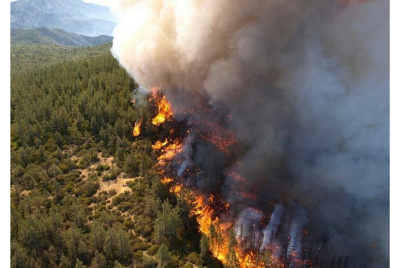
Parts of France, the UK and Spain saw daily averages more than 10C above normal in late May and June. The shift is not confined to southern Europe. Wildfires broke out in the Cairngorms National Park in the Scottish Highlands this year, forcing local communities to flee, a sign that regions once associated with mild summers are no longer immune.
Water Stress Hits 34% of Europeans as Drought Intensifies
The European Environment Agency's Europe's Environment 2025 report, published this year and covering 38 countries, found that climate change is placing sustained pressure on water supplies, agriculture and energy systems. Water stress already affects 30 per cent of Europe's territory and 34 per cent of its population, with only 37 per cent of surface waters achieving 'good or high ecological status' in 2021.
Tobias Lung, the EEA's State of the Environment Reporting project manager, said the deterioration extends well beyond temperature records. 'Our nature continues to deteriorate, be overexploited and lose biodiversity,' he said. 'The effects of accelerating climate change are being felt across Europe through more frequent forest fires, heatwaves and droughts.'
Fires Now Generate Their Own Weather
Wildfires are also changing in character, not just frequency. At least one million hectares burned across the EU last year, nearly double the historical average, and some fires now produce pyrocumulonimbus clouds, towering smoke columns capable of generating their own lightning, wind and embers that ignite fresh blazes kilometres away.
Rivers including the Rhine, Po and Danube have repeatedly hit unusually low levels in recent summers, disrupting shipping and cutting hydroelectric output. Farmers across southern and central Europe are already contending with reduced yields and heat-stressed livestock as irrigation demand rises against shrinking supply.
Europe is facing another summer of extreme heat that is straining power systems that used to be considered dependable. Rivers that cool nuclear and thermal plants are running low and warm, forcing operators in France, Germany and Spain to cut output or shut reactors early to meet… pic.twitter.com/ahdADxVHTh
— AFRICA IS HOME GLOBAL (@AfricaisHOME2) August 1, 2026
Climate Crisis Could Cost Europe €5.6tn by 2050
The financial cost is already substantial and expected to grow sharply. Extreme weather has cost Europe an estimated 738 billion euros since 1980, with 162 billion euros of that in the most recent three-year period alone.
The European Environment Agency projects losses could reach 5.6 trillion euros by 2050 without stronger mitigation. A separate study by the European Investment Bank and European Commission, published in May, projected that climate change could push annual European agricultural losses up by as much as 66 per cent by 2050.
Europe's Climate Reality Gap
Cities are responding with tree planting, cooling centres and early warning systems, while farmers experiment with drought-resistant crops and revised planting schedules. But researchers involved in the Copernicus and EEA assessments have been consistent in their message: adaptation can soften the impact, not cancel it out, and the underlying warming trend shows no sign of slowing without deeper cuts to greenhouse gas emissions.
That distinction matters for how the continent plans ahead. If Europe is warming at twice the global rate, then policies built around global averages, on flood defences, heat thresholds for outdoor work, or energy grid capacity, may already be out of date for the conditions Europeans are living through today. The Cairngorms fire, a UK-specific warning bell, underscores that no part of Europe is truly insulated from the accelerating shift.
© Copyright IBTimes 2026. All rights reserved.
- Recommended For You