

Fears Grow That Suspected Russian Plague May Hide a Secret 'Bioweapons Program' as China Panic Buys
Former CDC director Robert Redfield questioned Russia's account, but no public evidence confirms plague, an engineered pathogen or a biological weapons connection
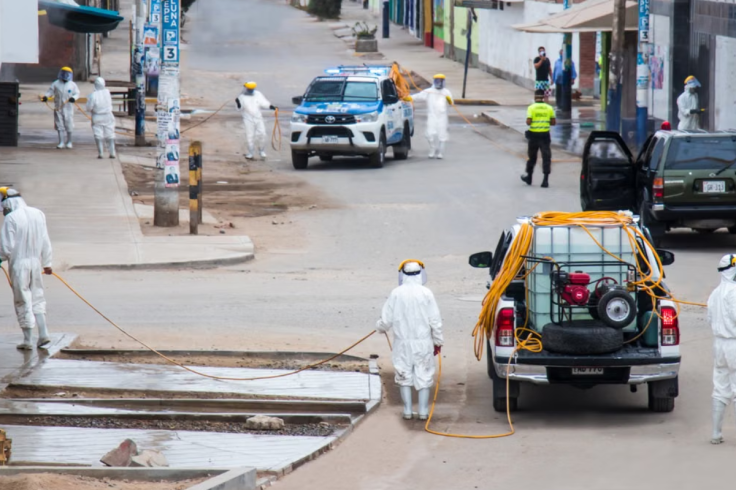
Russian plague bioweapons fears have grown after Dr. Robert Redfield raised questions about a lab worker's death in Siberia. Redfield previously served as director of the US Centers for Disease Control and Prevention.
Laboratory worker Darya Shipilova died in Siberia, but Russian authorities have not publicly identified the cause of death. There is no confirmed evidence that the incident involved a genetically modified pathogen. There is also no verified proof that it was linked to any biological weapons programme.
The concerns follow reports that 28‑year‑old Shipilova died on 2 October 2026 after an alleged laboratory accident at the Irkutsk Anti‑Plague Research Institute. Those reports describe quarantines and hospital closures in the Irkutsk region, though details remain unclear. Claims circulating online about a possible spread into China have reportedly led some residents to stockpile food and everyday supplies.
Russia Bioweapons Claims Raise Questions Over Shipilova's Death
Redfield has expressed doubts that pneumonic plague was responsible for Shipilova's death. He suggested Russian officials may know more about the circumstances than they have disclosed publicly.
'I think it's very likely that the Russian officials know what the cause of death was,' he said.
'I'm sceptical that it's plague... but clearly, I think they have a better understanding of what this young lady died from, and they have not been transparent with it.'
Those remarks raise questions, but they do not establish what happened inside the Siberian laboratory. The reported accident involving a broken test tube has not been backed by publicly confirmed evidence. No official report has identified the pathogen involved or established a link between the incident and Shipilova's death.
Redfield also questioned reports that about 200 people were quarantined and that five hospitals were closed following the incident. He argued that the reported response appeared difficult to reconcile with the usual transmission characteristics of plague.
'It's a very difficult pathogen to go human to human,' he said.
He added that the reported Russian response 'causes me pause'.
Redfield has theorised that an antibiotic‑resistant or genetically modified strain could help explain the circumstances. However, available information does not establish that Shipilova was infected with such a strain. Nor does it show that Russian authorities were conducting prohibited biological weapons research.
The distinction matters. An expert's suspicions can identify questions worth investigating. However, they are not a substitute for laboratory findings, medical records or an official account of the incident.
Russia Plague Concerns and the Bioweapons Speculation
Redfield went further by linking his suspicions to a possible Russian bioweapons programme. He said the circumstances had led him to question whether the underlying cause was connected to such work. He presented this as a personal assessment, not a confirmed finding.
'This is what makes me suspect that maybe the underlying cause has something to do with their bioweapons program,' he said.
He added, 'And this is not something they want in the public domain.'
These are Redfield's interpretations, not verified findings about the institute or the Russian government. No evidence supplied in the report independently confirms his theory. The cause of Shipilova's death remains publicly unidentified.
Pneumonic plague is the form of plague that affects the lungs. The available information does not establish that the disease was present in this case. Nor does it show that any unusual quarantine response necessarily points to an engineered pathogen.
The questions surrounding the Irkutsk Anti‑Plague Research Institute therefore remain unresolved. There is no confirmed diagnosis or verified public account of the alleged laboratory accident. Claims of a concealed bioweapons incident should be treated cautiously.
Russia Plague Fears Fuel Reported Food Stockpiling in China
The uncertainty has also spread into online discussion in China. Reports have described residents buying and storing essential goods amid fears of a possible outbreak. These accounts have not been confirmed by official Chinese sources.
Broadcaster FTV reportedly said people had been scrambling for 'rice, sugar, eggs, canned food and other daily necessities'. It linked this behaviour to speculation circulating on social media about the suspected Russian plague. These claims have not been independently verified.
The reports do not establish that plague has spread to China. They also do not show that Chinese authorities have confirmed any imminent threat. Instead, they point to public concern fuelled by unverified claims about an illness whose cause has not been publicly established.
That is a crucial difference. The prospect of a deadly infection can travel quickly online. This can happen even when the evidence needed to assess the actual risk remains unavailable.
For now, the central questions concern Shipilova's death, the nature of the alleged laboratory accident and the basis for Redfield's suspicions. Until further evidence emerges, the proposed link between Russian plague bioweapons fears, China's reported stockpiling and a possible bioweapons programme remains unconfirmed.
© Copyright IBTimes 2026. All rights reserved.