

China and Russia Held Plague Drill Weeks Before Viral Post Warned of 'Possible Lockdown' Near Border
Beijing says it is in contact with Moscow over suspected Siberian case; WHO has not confirmed plague, no lockdown order found

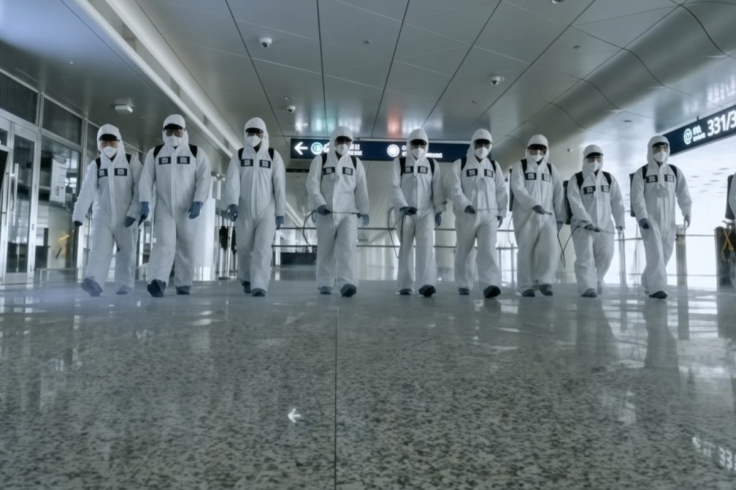
China and Russia held an infectious-disease preparedness exercise in Fuyuan from 24 to 27 August 2026, including a simulated imported-plague scenario. Weeks later, an X account warned of possible lockdowns in northeastern China, but the post did not establish that restrictions were planned or provide a verified official announcement.
The warning circulated amid concern over the death of Darya Shipilova, 28, a worker at Russia's Irkutsk Anti-Plague Research Institute who died on 2 October after developing severe pneumonia. Plague has not been confirmed as the cause of her death, and no verified evidence links her illness or the online warning to the August exercise.
Viral Post Warns of 'Possible Lockdown'
A Chinese-language post from @miaowuqvq urged readers to stockpile supplies and warned that cities could be placed under lockdown, particularly in China's three northeastern provinces.
The wording expressed a possibility, not an announced policy. The post did not establish that authorities had ordered restrictions, and its reach has not been independently verified.
The three provinces are Heilongjiang, Jilin and Liaoning. Their geography differs: Heilongjiang borders Russia, Jilin borders Russia and North Korea, and Liaoning borders North Korea.
An English-language repost described all three as bordering Russia. That description was inaccurate and should not be treated as evidence of an official cross-border health warning.
The social-media claim remains separate from the documented public-health developments in Russia and the earlier preparedness exercise.
🚨🇨🇳 BREAKING: VIRAL WARNINGS SPARK CONCERNS OF POSSIBLE LOCKDOWNS IN NORTHEASTERN CHINA
— Anonymous TV 🇺🇦 (@YourAnonTV) October 7, 2026
Viral posts circulating on Chinese social media are reportedly urging residents in Liaoning, Jilin and Heilongjiang, the three northeastern provinces bordering Russia, to stockpile food and… pic.twitter.com/Zr9WA5JU7w
August Exercise Practised Cross-Border Disease Response
According to a report from Fuyuan's municipal media centre, published on The Paper on 27 August, the joint exercise tested disease notification, risk assessment and coordinated emergency response across the China–Russia border.
Organisers used three scenarios: an emerging tick-borne disease labelled 'Disease X', an imported-plague scenario requiring a joint response, and sanitation and emergency medical care following flooding. The report did not specify a plague subtype.
Nineteen emergency teams from Heilongjiang, Liaoning and Jilin took part, involving more than 300 personnel and more than 40 vehicles. Russian participants included specialists from Rospotrebnadzor, the country's public-health watchdog, and regional services in Khabarovsk krai, Primorsky krai and Amur oblast.
Sergey Balakhonov, director of the Irkutsk Anti-Plague Research Institute, attended and addressed participants.
His attendance establishes an institutional connection between the exercise and the institute where Shipilova worked. It does not establish a connection between the drill and her subsequent illness. The report described simulated emergencies, not an actual outbreak.
Beijing Says It Is In Contact With Moscow
China's Foreign Ministry spokesperson Guo Jiakun said on 6 October that the two countries 'maintain close communication and cooperation in the prevention and control of infectious diseases, including the plague', according to Bloomberg.
He was responding to a question about whether Moscow had informed Beijing of the situation. His statement confirmed cooperation but did not identify the cause of Shipilova's death or announce restrictions in China.
Rospotrebnadzor described her illness as pneumonia of unknown cause and said microorganisms associated with her professional duties had not been detected.
In an update reported by Reuters on 7 October, the agency said it was winding down precautionary measures after concluding that there was no epidemic risk. Around 200 people had initially been placed in quarantine.
The watchdog said no plague cases had been detected among Shipilova's contacts and that 90% of those quarantined had been released. Nearly 5,000 laboratory tests had failed to detect dangerous pathogens, according to its statement.
WHO Seeks Further Information on Pneumonia
The World Health Organization continued seeking information about the cause of Shipilova's pneumonia, the rationale for the control measures and reports of a second employee with pneumonia of undetermined cause.
WHO spokesperson Christian Lindmeier described the initial public-health risk as moderate to low for Irkutsk, low for Russia and very low for the WHO European Region. That assessment reflected the information available at the time and was not a separate risk assessment for China.
The Russian authorities' findings and WHO's outstanding questions do not substantiate the online lockdown warning. The available evidence establishes a preparedness exercise and an investigation into an unexplained death, not a confirmed plague outbreak linked to planned restrictions in northeastern China.
© Copyright IBTimes 2026. All rights reserved.