

Sainsbury's AI Camera Error Sparks Facial Recognition Suspension: 'Human Error' Blamed Again
The supermarket blames an employee rather than the software, yet the same human check is what 150 more stores will rely on
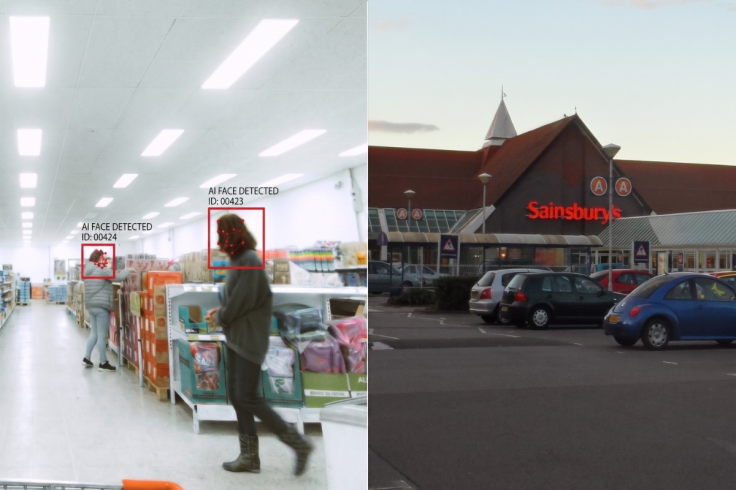
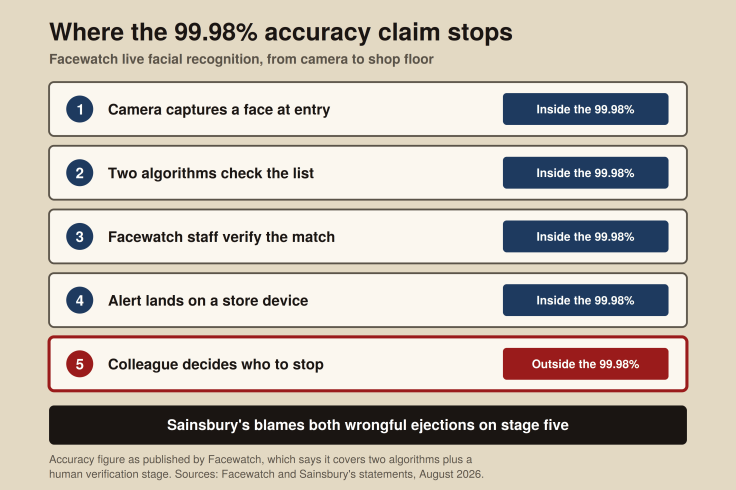
Sainsbury's has switched off live facial recognition at its East Dulwich superstore after Matt Arnold, a 46-year-old comedy promoter, was wrongly accused of shoplifting on 6 August and told to leave. Sainsbury's and its supplier Facewatch both say the software was right and a colleague misread what it sent, which is the one stage their accuracy figure does not cover.
Arnold, who was buying drinks for a comedy night at Dulwich Hamlet Football Club, called the episode 'a terrifying glimpse of the future.' He had scanned a trolley of drinks and snacks, tapped his Nectar card, and was waiting for a colleague to approve the alcohol.
Two managers arrived instead, told him he could not be served because of an incident earlier in the week, and moved to walk him out. He left on his own and, looking back, saw his face ringed in red on an overhead monitor.
Why It Keeps Going Wrong at the Same Step
Facewatch, the provider behind the cameras, said its live facial recognition 'was not at fault in this incident.' Sainsbury's blames human error rather than the technology, and has suspended the system at East Dulwich while it investigates.
Facewatch advertises 99.98% accuracy for its artificial intelligence (AI) matching. That figure covers two algorithms and a human verification stage, and it stops at the moment an alert lands on a shop worker's device. By the company's own account of the process, staff then confirm or refute the match, so the final call is designed to sit with the shop floor. That step also sits outside the number, as the chart below shows.
Both known Sainsbury's cases sit at that final step. Warren Rajah was ordered out of the Elephant and Castle branch in a case reported in February. He had to send Facewatch his passport and a headshot before the company confirmed he had never been on its database. Sainsbury's said then that it was the first time a manager had approached the wrong customer after an alert.
The explanation predates both. In November, Byron Long, 66, was accused at a B&M in Cardiff of taking £75 of goods, and the store's own footage then showed he had paid. Facewatch said its system had performed as designed and pointed to the handling in store. Big Brother Watch took that case to the regulator.
Facewatch issued 297,433 alerts to British retailers between January and June, roughly 1,643 every day, across a network that also takes in B&M, Spar, Southern Co-op, and Sports Direct. Every alert ends in a judgement made on a shop floor.
From Two Trial Stores to More Than 200 Before Christmas
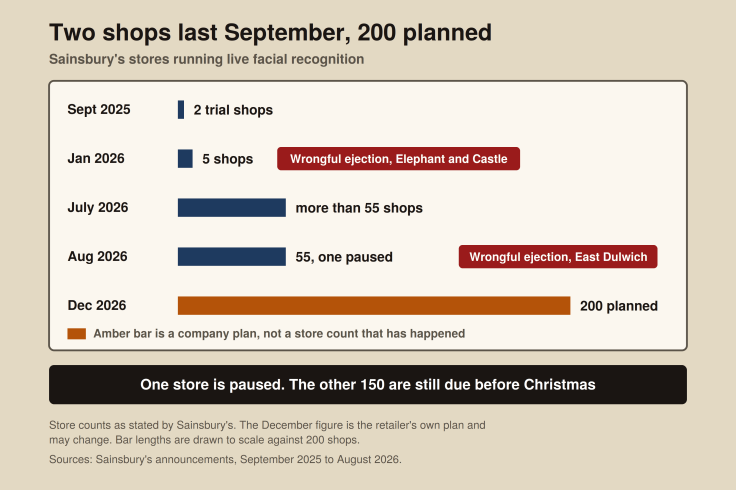
Sainsbury's started with two shops last September, had six running by February, and more than 55 by early July. Another 150 or so follow before Christmas. The retailer cites a 46% drop in theft, aggression, and antisocial behaviour where the cameras run. On its own figures, more than 90% of the people identified do not come back, as the graphic below shows.
Police numbers were already falling anyway. Shoplifting offences in England and Wales dropped 4% to 507,086 in the year to March 2026, the Office for National Statistics reported, the first fall in years. The two counts are not the same measure, one recording crimes reported to police and the other incidents logged inside a retailer's own shops. The 46% cannot be read as the cameras working alone. Retailers have still spent upwards of £5B on security in five years, on the British Retail Consortium's count, and that reaches the shelf edge.
For a shopper, the sharper risk is the watchlist rather than the lens. Big Brother Watch, the privacy campaign group, argues that people can end up barred across a string of shops without a hearing and without being told, because reports travel across the whole network. The group is already challenging the technology in the High Court. The rollout was drawing scrutiny before this month.
Facewatch has regulatory cover for the practice: the Information Commissioner's Office (ICO) closed a formal inspection in 2023 without demanding any action, satisfied that crime prevention is a legitimate purpose. The rollout was already drawing scrutiny before this month.
Where the Pause Actually Applies
One store is switched off. The training will be strengthened, the rollout date has not moved, and the check blamed for all three cases is the check that 150 more shops will be running by Christmas.
© Copyright IBTimes 2026. All rights reserved.