

Underground Schools Keep Afghan Girls Learning in Defiance of Taliban Education Ban
Afghan women run secret schools to educate girls despite Taliban ban
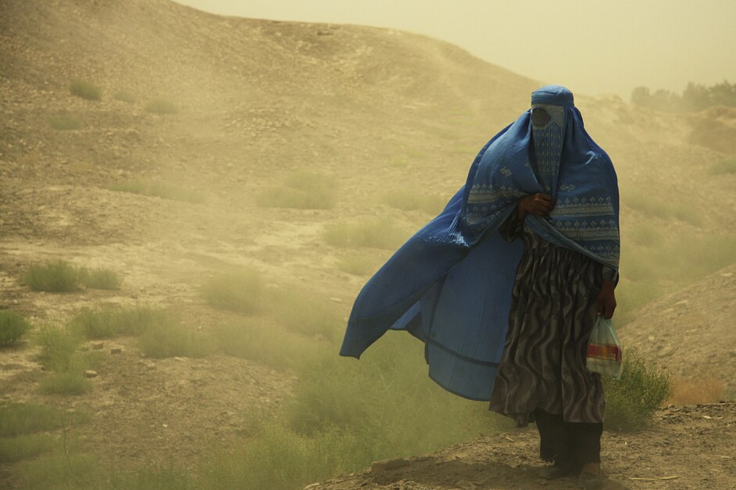
Nearly five years after the Taliban barred girls from attending school beyond the sixth grade, a network of secret classrooms run largely by Afghan women is keeping thousands of girls in lessons anyway. The schools operate out of private homes, shopfronts and other hidden spaces, always under the threat of discovery.
The ban, imposed within weeks of the Taliban's return to power in August 2021, has left what Human Rights Watch described as 'a generation of girls without formal education'. In a statement marking 1,000 days since the ban took effect, the organisation said Afghan society will never fully recover from the loss of so many future female professionals.
Inside the Secret Classrooms Helping 1,000 Afghan Girls To Keep Learning
One of the largest networks is run by the Pohana Fund, an NGO founded by exiled education campaigner Wazhma Tokhi. The fund operates 21 secret girls' schools across southern Afghanistan, educating around 1,000 teenage girls, mostly in Helmand and Kandahar provinces.
To win over conservative communities, Tokhi has told local elders that Islamic teachings form part of the curriculum. Teachers then quietly add maths, science and literature to the lessons.
Other groups report similar setups. Women for Change, an Afghan women's rights organisation, currently pays small salaries to 30 teachers providing lessons to nearly 1,300 girls. According to the Pohana Fund, one teacher in Helmand, identified only as Sherin for her safety, runs two sessions of 20 students a day. She said teaching 20 students twice a day is challenging, but she is committed to helping girls who have endured a lot.
We will hold the Taliban accountable for their heinous crimes. We will have justice for Afghan women and girls. We will end gender apartheid. To learn more, follow @EGACampaign and @MalalaFund pic.twitter.com/EWTYRUPPg4
— Malala Yousafzai (@Malala) August 15, 2026
Why One Afghan Woman Fears a Total Ban on Women's Existence
The education ban sits within a much broader set of restrictions. As the Taliban has tightened its grip, it has dismantled the Ministry of Women's Affairs, closed women's shelters and deployed more than 3,000 morality inspectors to enforce dress codes and other decrees.
One former Afghan civil society worker, testifying in connection with the UN Security Council, described the atmosphere created by these rules bluntly, saying she was afraid women would eventually be banned from breathing without a man's permission.
The UN has gone further, describing the Taliban's system as gender apartheid. In December, the People's Tribunal for the Women of Afghanistan, an independent civil society body sitting in The Hague, issued a judgment concluding that Afghanistan today qualifies as an apartheid-like system, though the ruling carries no binding legal force.
World Leaders Condemn but China and the EU Still Engage
Despite the scale of the restrictions, foreign governments have largely continued to engage with the Taliban diplomatically. China has accepted a Taliban-appointed ambassador, and the European Commission recently hosted Taliban officials in Brussels for talks on migration.
UNICEF has estimated that restrictions on girls' education and women's employment are already costing Afghanistan at least $84 million in annual economic output. That is a significant sum in an impoverished country where nearly three-quarters of the population are struggling to meet basic needs.
The underground schools are more than a stopgap. Teachers and campaigners involved in these networks say they are trying to preserve a generation's access to education so that girls are not left permanently behind if restrictions ever ease. For readers following Afghanistan's trajectory since 2021, these classrooms represent one of the clearest signs that resistance to the Taliban's policies is continuing quietly, even as international attention on the country has faded and diplomatic normalisation with Kabul continues to expand.
© Copyright IBTimes 2026. All rights reserved.