

SpaceX Falcon 9 Opens 2026 With a Mission Few People Noticed — Here's Why That Matters
The low-profile mission highlights SpaceX's growing role in global monitoring
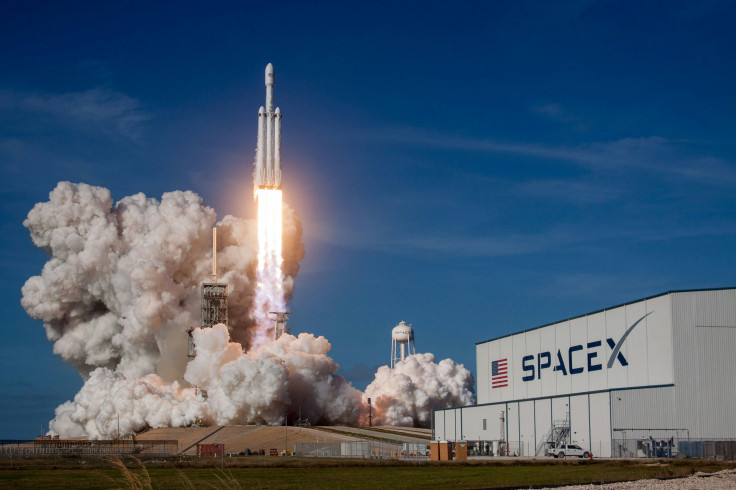
The first orbital launch of 2026 commenced with minimal fanfare, yet it quietly emphasised the crucial role SpaceX's work has assumed for governments worldwide.
On the evening of 2 January, a Falcon 9 rocket transported an Italian Earth-observing satellite into orbit, marking the inaugural spaceflight of the new year and highlighting the routine nature of high-stakes missions.
The launch occurred at 9:09 p.m. EST from Vandenberg Space Force Base in California. Within minutes, the rocket's first stage executed a controlled descent and landed back at the site, marking its 21st successful flight.
Around four and a half minutes later, the second stage deployed the COSMO-SkyMed Second Generation satellite into low Earth orbit.
A Routine Launch With Global Importance
Although publicly announced and livestreamed, the mission attracted far less attention than many recent SpaceX flights.
There were no astronauts onboard, no experimental spacecraft, and no headline-grabbing test objectives. Instead, the payload was a radar satellite designed for continuous Earth monitoring, operated for the Italian Space Agency and the Italian Ministry of Defence.
That understated profile is precisely what makes the launch significant. The Falcon 9 mission was not only SpaceX's first of 2026 but also the first orbital launch worldwide this year.
It illustrated how launches associated with security, climate monitoring, and emergency response are now regarded as routine events rather than major spectacles.
What the COSMO-SkyMed Satellite Will Do
The COSMO-SkyMed Second Generation spacecraft uses synthetic aperture radar to collect data regardless of cloud cover or daylight.
Operating at an altitude of about 620 kilometres, it can observe the Earth day and night, offering consistent coverage across large regions.
According to programme documentation from the European Space Agency, the satellite supports a wide range of applications, including risk management, environmental protection, land and maritime surveillance, natural resource monitoring, and defence operations.
The constellation is designed to provide near-real-time data that can be used during natural disasters, for strategic planning, and for long-term scientific and commercial analysis.
This latest satellite is the third in the second-generation COSMO-SkyMed network. The first launched in December 2019 aboard a Soyuz rocket, while the second flew in January 2022 on a Falcon 9, reflecting Italy's growing reliance on SpaceX for critical launches.
SpaceX's Expanding Role at the Start of 2026
The mission also underscored SpaceX's dominance in global launch activities. The company completed a record 165 orbital launches in 2025, far surpassing any other commercial or government operator. Opening 2026 with another successful Falcon 9 flight reinforced that momentum.
Reusable rocket technology remains central to that dominance. The booster used for this launch has now flown 21 times, lowering costs and enabling a cadence that few competitors can match. For governments seeking reliable access to space, that consistency is increasingly valuable.
Why the Lack of Attention Matters
Earth-observation and defence-related missions rarely generate the same excitement as crewed flights or experimental spacecraft.
Yet their impact is often broader and longer-lasting. Satellites such as COSMO-SkyMed support disaster response, climate monitoring, and national security, all while functioning outside of public view.
As Falcon 9 continues to deliver such payloads consistently, the balance of attention has shifted.
What once would have been a landmark launch now blends into a steady stream of operations. That normalisation signals a new phase in spaceflight, one where SpaceX functions less as a disruptor and more as a piece of global infrastructure relied upon by nations worldwide.
By beginning 2026 this way, SpaceX has illustrated how quietly critical its launches have become and why even low-profile missions can carry significant weight.
© Copyright IBTimes 2026. All rights reserved.