

Millions of Pensioners Face State Pension Shake-up as Triple Lock Set to Be Scrapped
The full new state pension is £241.30 a week in 2026-27, but payments depend on National Insurance records

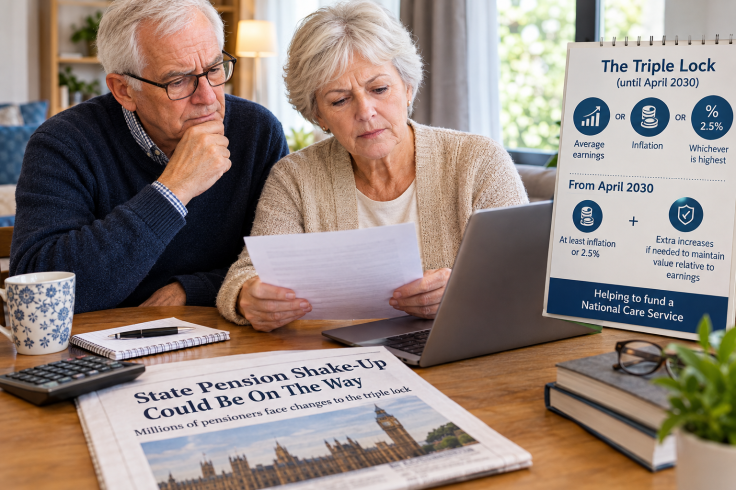
Millions of pensioners could face a major change to how their state pension rises from April 2030, as Prime Minister Andy Burnham plans to replace the long-standing triple lock with a new system designed to help fund a National Care Service.
The current triple lock will remain in place throughout the current Parliament. From April 2030, the government plans to guarantee that the state pension rises by at least inflation or 2.5%, whichever is higher, while allowing further increases when needed to keep pension payments aligned with average earnings over time.
The government says the change would generate savings to help fund a National Care Service in England, which is intended to provide free personal care to older people based on their needs rather than their ability to pay.
What Is Changing
Under the current triple lock, the state pension rises each year by whichever is highest among average earnings growth, inflation or 2.5%. That arrangement will remain in place until April 2030. After that, the government plans to replace the annual three-way test with an adjusted mechanism. The state pension will increase by at least inflation or 2.5%, whichever is higher. If a further increase is needed to preserve its value relative to average earnings, the pension will rise by more.
The government says the adjusted system will therefore continue to protect pensioners from rising prices while allowing the state pension to retain its position relative to earnings over time. This means the announcement does not amount to an immediate reduction in state pension payments. The effect on future annual increases will depend on inflation, earnings growth, and how the adjusted mechanism operates after 2030.
Why the Earnings Link Matters
The existing triple lock can produce a larger annual increase when wage growth is higher than inflation and the 2.5% minimum. In April 2026, the state pension rose by 4.8% after earnings growth was higher than inflation. The full new state pension increased to £241.30 a week for 2026-27.
Under the proposed system, earnings would no longer be one of three annual measures used to determine the increase. Instead, the government says the pension will receive additional increases when necessary to maintain its value relative to average earnings over time.
The Department for Work and Pensions said its analysis projects that the state pension would continue to rise in line with average earnings over the long term under the adjusted mechanism.
Why the Government Is Changing the Triple Lock
The proposed change is linked to plans for a National Care Service. The government says the service will provide free personal care for older people based on need rather than their ability to pay. It is expected to be introduced in phases, with Baroness Louise Casey's independent commission to recommend how and when the service should be developed. Her report is due in summer 2027.
The government estimates that adjusting the triple lock could reduce state pension spending by £15 billion a year by the end of the 2030s, rising to £50 billion a year by 2050. These are government estimates based on long-term projections, rather than guaranteed future savings.
The change is also intended to address the long-term cost of the existing system. The Office for Budget Responsibility has previously highlighted the triple lock as a source of additional pressure on state pension spending.
How Much the State Pension Is Worth
The full new state pension is £241.30 a week in 2026-27 following the 4.8% increase in April 2026. The basic State Pension also increased under the triple lock. Not everyone receives the full new state pension. The amount an individual receives depends largely on their National Insurance record and eligibility for the full rate.
The government has said the triple lock will remain in place until April 2030, with the current system expected to increase pension payments by more than £2,000 over the course of the current Parliament.
What Happens Before 2030
There is no immediate change to the triple lock. The government has committed to maintaining the current system until April 2030, meaning the state pension will continue to be uprated using the highest of earnings growth, inflation or 2.5% during that period. The change will take effect from April 2030 if implemented as announced.
After that, pension increases will have a minimum protection based on inflation or 2.5%, while the additional earnings safeguard is intended to prevent the state pension from losing its relative value against average earnings over time.
The long-term effect on individual pension incomes will depend on how wages and prices develop after 2030. The government's own analysis says the adjusted system is designed to keep the state pension rising while reducing spending compared with maintaining the current triple lock indefinitely. The reform is therefore primarily a change to how future annual increases are calculated, rather than an immediate cut to the weekly state pension.
© Copyright IBTimes 2026. All rights reserved.