

Survivors Describe Chaos As Deadly US Strike Obliterates Boat Going Nowhere Near America
Classified imagery of a September strike that finished off a damaged vessel has intensified legal and congressional scrutiny
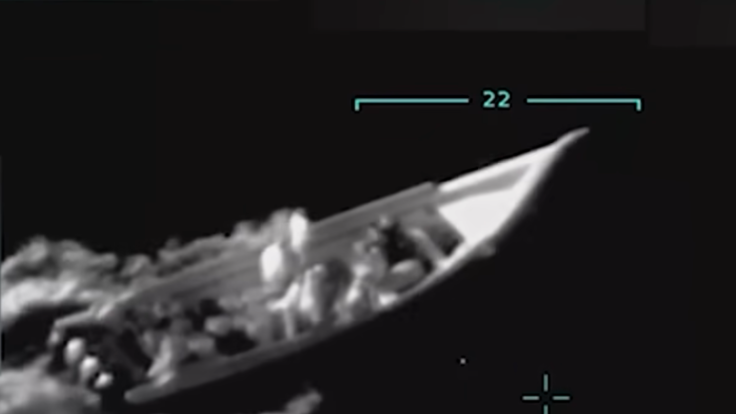
A classified video shown to US lawmakers appears to show shirtless, unarmed men clinging to wreckage as US forces fired additional munitions that finished off a suspected drug boat in the Caribbean; an incident that has ignited legal fury and demands for documentation from the Pentagon and Justice Department.
The footage, viewed by a small group of senators and congressional staff, captures smoke clearing after an initial strike and two surviving men trying to hold on to the severed bow of the vessel before more ordnance is seen striking the wreckage, according to sources who described the imagery.
The strike stems from Operation Southern Spear, the administration's campaign against alleged narco-traffickers at sea that has become a flashpoint in a broader debate over whether lethal military force is being used lawfully in largely civilian maritime spaces.
Classified Footage and Conflicting Official Accounts
Lawmakers told reporters that the classified video shown on Capitol Hill on Dec. 4 contained troubling scenes: survivors visible and apparently incapacitated when follow-on munitions struck.
Rep. Jim Himes, the top Democrat on the House Intelligence Committee, said the footage was 'one of the most troubling things I've seen in my time in public service'. Other lawmakers said they were shown multiple angles of the damaged vessel and that the two men did not appear to possess visible weapons or radios.
The Pentagon has defended the campaign as lawful and necessary. A Pentagon update on Operation Southern Spear reiterated that commanders authorised the second strike on the grounds that the damaged craft still contained illicit narcotics and posed a continuing threat. Pentagon spokespeople say Special Operations Command recommended the follow-on action to 'complete the mission'.
That justification, however, conflicts with accounts from several independent observers and human-rights organisations who argue that striking survivors or shipwrecked people violates the Law of Armed Conflict.
FOIA Demands and Human Rights Outcry
Legal scrutiny has moved from committee rooms to formal demands for the Office of Legal Counsel (OLC) memo that, according to senators, provides the administration's legal rationale for strikes against vessels suspected of trafficking drugs.
Thirteen Senate Democrats have formally asked Attorney General Pam Bondi and Secretary of Defense Pete Hegseth to declassify and release the September OLC opinion that officials reportedly relied upon to justify the campaign. The senators argued the public has a right to see the legal reasoning that underpins lethal force used far from US shores.
Rights groups have moved in tandem. Amnesty International and Human Rights Watch have called for independent investigations, characterising some strikes as extrajudicial killings and urging immediate transparency.

Amnesty's US office said it wants 'a prompt, thorough, independent, impartial and transparent investigation' into the September incident, and HRW has labelled some aspects of the maritime campaign unlawful under international law. Those organisations have also filed FOIA requests and letters demanding documents related to legal authorisations and chain-of-command communications.
Operational Justification and the Chain of Command
Officials briefed on the operation say Adm. Frank M. 'Mitch' Bradley authorised a second strike after assessing the damaged vessel could be salvaged and its cargo recovered by traffickers; the argument was that the vessel itself, and what it carried, remained a valid military target.
Admiral Bradley told lawmakers he did not receive an order phrased as 'kill everybody' and denied several reporting characterisations that suggested a broadly permissive kill-order from the top. The White House has also defended the admiral's action as falling within the rules authorised by the Defence Department.
Yet the operational logic has not satisfied critics. Legal scholars stress that international humanitarian law and the Pentagon's own Law of War manual bar attacks on shipwrecked or incapacitated persons.
Academics and former military lawyers have noted that the absence of visible weapons, communications gear, or hostile intent in the footage heightens the legal risk and moral outrage surrounding the decision to strike. Several congressional letters and FOIA requests explicitly ask whether military and legal safeguards were observed during the chain-of-command deliberations.
The administration frames the strikes as part of a broader effort to disrupt fentanyl and cartel networks that allegedly kill tens of thousands of Americans annually. Critics reply that maritime interdiction is traditionally a law-enforcement task, not a battlefield mission, and warn that stretching the law of armed conflict to reach suspected traffickers sets a dangerous precedent with long-term geopolitical costs.
One line remains clear: calls for transparency and scrutiny are intensifying as demand for the raw evidence and legal justifications grows louder.
© Copyright IBTimes 2026. All rights reserved.