

Togo Joins World Bank's Higher Income Bracket as Five Other Nations Also Climb the Rankings While Others Stay Put
Togo's reclassification to lower-middle income status highlights the impact of population data on economic rankings
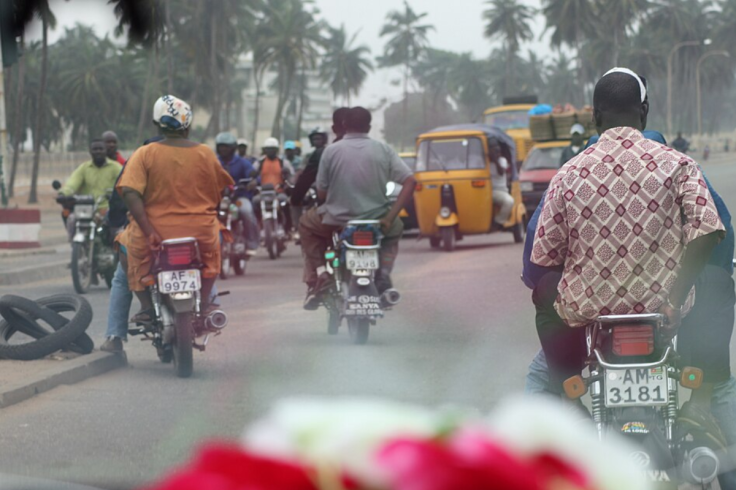
Togo has moved up the World Bank's global income rankings, becoming one of six countries reclassified in the lender's latest annual update. The shift, effective from 1 July 2026, pushes the West African nation from low income to lower-middle income status, though the reason behind it has little to do with economic growth.
The World Bank's Development Data Group reviews GNI per capita for 218 economies annually, sorting them into low, lower-middle, upper-middle and high income brackets. This year's edition covers 218 countries and serves as a global reference until June 2027. None of the countries assessed moved down. The remaining 212 economies simply stayed where they were.
A Population Count, Not a Growth Spurt
Togo's promotion is the most unusual of the six. Following the release of detailed results from the 2022 census, the country's population estimate was reduced by 11.7 per cent.
Since GNI per capita is calculated by dividing total national income by population, a smaller population figure alone can lift the per capita number even without a change in total income. The country's economy did also expand, with GDP growing by 5.9 per cent in 2025, and exchange rate movements also played a role, but the population revision was the deciding factor.
The @WorldBankGroup has released its 2026-2027 Country Income Classifications.
— World Bank Group (@WorldBankGroup) August 17, 2026
Six economies moved to a higher income category, and no countries moved down.
Behind those changes are different stories, from economic recovery to export-led growth and improved statistics.
Learn… pic.twitter.com/5WjQiI4DE4
Five Other Countries, Five Different Stories
Togo was not alone. Jordan, Micronesia, the Philippines, Sri Lanka and Vietnam all moved from lower-middle to upper-middle income in the same release, each for a different reason.
Vietnam's upgrade was driven by trade. Powered by an export-led model, the country saw exports surge by more than 15 per cent in both 2024 and 2025, with its GDP growing at 7 per cent and 8 per cent respectively.
The Philippines crossed the threshold through broad-based growth, with GDP averaging 5.8 per cent annually over five years across all major industries. Philippine Socioeconomic Planning Secretary Arsenio Balisacan said the milestone still leaves work to do. He noted the government's 'priority is to ensure that growth becomes more inclusive'. Its benefits must reach all Filipinos, he added.
Sri Lanka's climb came just three years after economic collapse. A rebound across industries, along with growth in financial and tourism services, drove real GDP growth of 5 per cent in 2025, though the World Bank notes the country only narrowly crossed the threshold.
Jordan's case is closer to Togo's than to Vietnam's. When Jordan's Department of Statistics completed a rebasing exercise, it found that the economy was nearly 10 per cent larger than previously estimated, a statistical correction rather than fresh growth, though steady growth of 2.8 per cent in 2025 also contributed.
Micronesia recorded the most modest upgrade of the six. Steady but modest growth followed a prolonged Covid-19 recovery, driven by construction and agriculture.
Why a Higher Income Bracket Can Be a Double-Edged Sword
The classifications are not just symbolic. They determine which countries can still access concessional loans and other development assistance, and are used by governments and researchers to track progress.
For countries moving up, that can be a double-edged sword. Economist Khuong Minh Vu of the Lee Kuan Yew School of Public Policy said the upgrades for Vietnam and the Philippines represent 'strong international recognition of the development progress achieved by the two economies', while also pushing both nations to confront the so-called middle income trap that has stalled other developing economies.
For Togo, the calculation is different again. A higher income bracket can eventually mean reduced eligibility for the cheapest development financing, even though the census revision behind its promotion reflects a more accurate population count rather than a genuinely stronger economy on the ground.
© Copyright IBTimes 2026. All rights reserved.