

Tom Homan Pulls Out 700 ICE Agents From Minnesota, More Pullouts Will Happen if There's More Cooperation From Protesters
Tom Homan announced the immediate withdrawal of 700 federal agents from Minnesota, leaving 2,000 officers in the state

The Trump administration has announced a reduction in the number of federal immigration officers deployed to the state of Minnesota. Tom Homan, the official in charge of border security, confirmed on Wednesday that approximately 700 agents will be leaving the state immediately. This decision follows weeks of intense standoff, public protests, and two fatal shootings involving federal agents and US citizens.
Homan stated that the 700 officers represent roughly one-quarter of the total federal force currently operating in Minnesota. Despite this reduction, about 2,000 officers will remain in the state. This figure is similar to the number of agents present in early January, when the Department of Homeland Security (DHS) launched what it described as its 'largest immigration enforcement operation ever.'
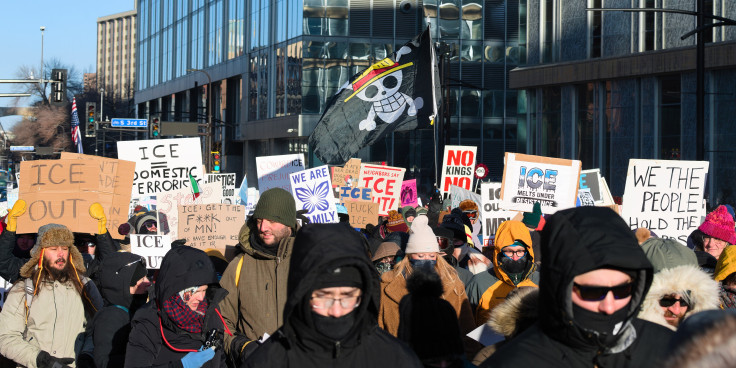
The operation has been marked by high visibility and high tension. Heavily armed officers, often wearing masks, have been conducting arrests, leading to significant pushback from local residents. The atmosphere became volatile following the fatal shootings of two US citizens, Renee Good and Alex Pretti, in Minneapolis. These incidents have turned the operation into a major point of conflict regarding President Donald Trump's mass deportation efforts.
Conditions for Further Reductions
While the initial withdrawal of 700 agents is moving forward, Homan made it clear that any further reduction in federal presence is conditional. He warned that a widespread pullout will only happen if there is increased cooperation from local authorities and, crucially, if protesters stop interfering with agents.
'You're not going to stop ICE. You're not going to stop Border Patrol,' Homan said regarding the ongoing demonstrations. 'The only thing you're doing is irritating your community.'
In an interview with NBC News, President Trump confirmed he ordered the reduction. He suggested that the turmoil in Minnesota offered a lesson for future operations. 'Maybe we can use a little bit of a softer touch,' the President said. 'But you still have to be tough.'
Disputes Over Local Cooperation
A central theme of Homan's announcement was the claim of 'unprecedented collaboration' with local officials. He argued that because jails are now agreeing to alert Immigration and Customs Enforcement (ICE) about inmates who could be deported, fewer officers are needed on the streets to hunt for suspects.
However, this narrative is disputed by local authorities. The Trump administration has frequently criticised 'sanctuary jurisdictions'—local areas that limit cooperation with federal immigration enforcement. Minnesota officials argue that their state prisons and most county sheriffs already cooperate.
Specifically, the Hennepin County Sheriff's Office, which covers Minneapolis, stated that its policies have not changed. County Attorney Mary Moriarty argued against the federal demands, stating that handing over individuals before they are convicted 'strips our community of the accountability it deserves and harms victims by robbing them of a court process.'
The Definition of Success
Despite the controversy and the deaths of two citizens, Homan categorised the Minnesota operation as a success. He cited the removal of numerous individuals wanted for violent crimes as evidence of the operation's effectiveness.
'I think it's very effective as far as public safety goes,' Homan said on Wednesday. 'Was it a perfect operation? No.'
He maintained a defiant stance regarding the mission's future. 'We are not surrendering the president's mission on a mass deportation operation,' he asserted. To manage the ongoing situation, a new unified command structure has been created to ensure better coordination between ICE and Customs and Border Protection agents remaining in the field.
© Copyright IBTimes 2026. All rights reserved.