Why Are Protesters Throwing Sex Toys at ICE Agents? Inside 'Operation Dildo Blitz'
Demonstrators across the US throw sex toys to challenge immigration enforcement.

A series of anti-immigration protests across the US has taken an unexpected and deliberately provocative turn, with demonstrators throwing sex toys at federal agents. What organisers have dubbed 'Operation Dildo Blitz' is designed to ridicule authority while forcing attention onto immigration enforcement.
F*** ICE With Dildos
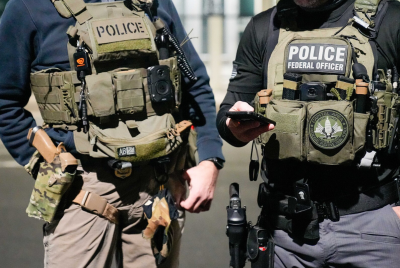
The most visible flashpoints unfolded outside federal facilities in cities including Los Angeles and Minneapolis, where crowds gathered to protest the actions of US Immigration and Customs Enforcement (ICE).
On Saturday, in downtown Los Angeles, police said a crowd of 200 to 300 people blocked streets and a freeway on-ramp before the Los Angeles Police Department declared an unlawful assembly.
Officers reported that instead of conventional projectiles, protesters hurled sex toys at vehicles and personnel. The objects were also waved, pressed against barriers, and used as props in chants aimed at mocking federal agents. Five people were arrested for failing to disperse, no injuries were recorded, though the protest was confrontational enough to prompt a sustained police presence after the streets were cleared.
'Operation Dildo Blitz' is not limited to LA and is not a separate incident.
In Minneapolis, protesters threw a mix of objects, including bottles, chunks of ice, and sex toys at officers and vehicles. According to the Hennepin County Sheriff's Office, a deputy was struck in the head, and a squad car's windscreen was damaged. Authorities declared the gathering an unlawful assembly and arrested 42 people who did not comply with dispersal orders.
Demonstrators gathered outside the Whipple Federal Building on 7 February, marking one month since the fatal shooting of Renee Nicole Good, a mother of three, by an ICE agent identified as Jonathan Ross.
Dozens of sex toys were left hanging from fences or scattered across the site. Some protesters used them as visual props, attaching them to clothing or waving them directly at law enforcement.
@brutamerica Protesters across the United States are getting creative with their demonstrations against ICE... #ICE #Immigration #Protest #Demonstration ♬ original sound - Brut.
'Operation Dildo Blitz' And The Politics Of Mockery
The protests have since been loosely grouped under the label 'Operation Dildo Blitz,' a name circulating widely on social media rather than through any formal organising body. Events tied to a broader 'National F ICE Day' on 11 April saw similar tactics deployed in multiple locations, including Broadview, Illinois, and Portland, Oregon.
Organisers and participants appear less interested in confrontation in the traditional sense and more focused on undermining the authority of federal agents through spectacle. The use of sex toys, distributed in large quantities at some events, turns the protest into something closer to performance.
Accordingly, that strategy is not accidental. Images of officers clearing brightly coloured objects from fences or roadways are more likely to circulate than standard scenes of placards and chants.
Law enforcement agencies have emphasised property damage and safety concerns, particularly where objects were thrown at moving vehicles or personnel.
A Movement Shaped By Anger And Optics
The backdrop to these protests is a hardening stance on immigration enforcement under President Donald Trump, whose policies have drawn sustained opposition. Demonstrators argue that detention practices and deportations demand urgent attention, and that conventional protest methods no longer cut through.
Immigration enforcement has shifted sharply towards mass operations backed by emergency powers and expanded authority for ICE. Programmes such as Operation Metro Surge have driven large-scale raids across major cities, resulting in thousands of arrests but also controversy over the detention of legal residents and even US citizens.
New rules, including nationwide expedited removal and mandatory registration schemes, have widened the government's reach. Courts have begun pushing back on some measures, exposing legal strain beneath an aggressive enforcement strategy.
Markwayne Mullin has been sworn in as the new head of US homeland security, stepping into a role defined by political turbulence and mounting operational strain. His appointment signals continuity on border policy, but with an attempt to steady an agency shaken by controversy.
On 24 March 2026, Markwayne Mullin took office as the ninth Secretary of Homeland Security, replacing Kristi Noem following her reassignment by Trump. A former Republican senator from Oklahoma and a citizen of the Cherokee Nation, Mullin becomes the first tribal citizen to hold a cabinet post in nearly two decades. His background is unconventional, spanning business ownership and an undefeated mixed martial arts career.
Noem's exit followed sustained criticism, including scrutiny over the deaths of two US citizens during an immigration operation in Minneapolis, backlash over a $220 million advertising campaign, and reports of veteran deportations. Her new role as Special Envoy for the 'Shield of the Americas' reframes, rather than resolves, that record.
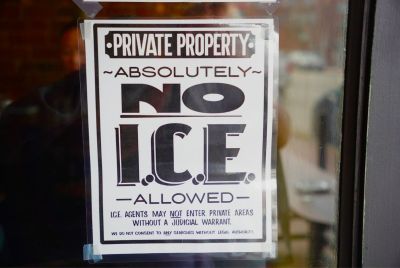
Mullin has pledged a more measured approach. He told lawmakers federal agents should seek warrants before entering private property, while still backing the administration's aggressive deportation agenda. His immediate task is stabilising the Department of Homeland Security, which has faced a funding impasse leaving staff unpaid, and restoring credibility to an agency under pressure.
© Copyright IBTimes 2026. All rights reserved.
- Recommended For You