

Is ICE Leaving Minnesota? Gov. Walz Says Federal 'Occupation' Could End After Deadly Shootings
The massive federal immigration crackdown in Minnesota could end within 'days, not weeks and months'

The tense standoff between the state of Minnesota and federal authorities may finally be coming to a close. Governor Tim Walz announced on Tuesday, 10 February, that he expects the massive federal immigration crackdown in his state to end within 'days, not weeks and months'. This statement follows a series of high-level conversations with top officials from the Trump administration, signalling a potential retreat of federal forces after weeks of unrest and violence.
Talks With the White House Signal a Shift
Governor Walz, a Democrat, held a press conference to share details of his recent communications with Washington. He reported speaking with 'border czar' Tom Homan on Monday and White House Chief of Staff Susie Wiles on Tuesday morning. These discussions appear to have paved the way for a de-escalation of what Walz has described as an 'occupation' and a 'retribution campaign' against Minnesota.
'We're very much in a trust but verify mode,' Walz stated. He expressed cautious optimism, noting that 'every indication I have is that this thing is winding up'. However, he remained wary, acknowledging that the situation could change rapidly. His expectation is that Homan will make an official announcement before Friday declaring that the operation is finished. 'That would be my expectation,' Walz said, hoping to see the federal presence reduced significantly in the coming days.
A History of Violence and Controversial Killings
The presence of Immigration and Customs Enforcement (ICE) and other federal agents in Minnesota has been marred by controversy and tragedy. The operation, which brought thousands of officers into the state, was intended to enforce strict immigration laws. However, it quickly spiralled into a conflict that resulted in the loss of life.
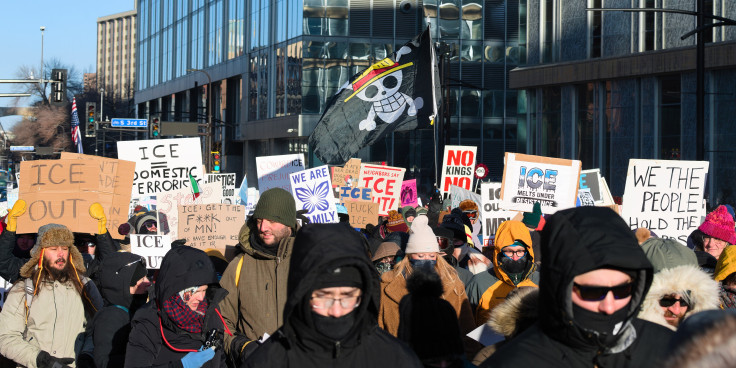
In late January, the situation reached a boiling point following the second fatal shooting of a civilian by federal officers. The victims, identified as Renee Good and Alex Pretti, were killed during confrontations that sparked outrage across the state. These incidents were not viewed merely as law enforcement actions but were seen by many as aggressive attacks on the community. The deaths of Good and Pretti led to massive protests and intensified the political backlash against the federal presence.
Following these shootings, Tom Homan took direct control of the Minnesota operation. However, friction between state and federal authorities has remained high. State investigators have complained that they were 'frozen out' of the inquiries into the deaths of Good and Pretti, with no access to crucial evidence. Governor Walz indicated that he now expects 'cooperation on joint investigations' into these shootings, a major shift from the previous obstruction faced by local officials.
Confusion Over Troop Numbers
There remains confusion regarding exactly how many federal agents are currently operating in Minnesota. Last week, Homan stated that 700 federal officers would leave the state immediately. He cited an 'increase in unprecedented collaboration' with local jails as the reason fewer officers were needed on the streets.
However, Governor Walz pointed out that even with 700 officers leaving, a massive force of 2,300 agents remained. This large number has kept the state on edge. While Walz said he has no reason to doubt Homan's word regarding the initial withdrawal, the sheer size of the remaining force continues to support his characterisation of the event as an occupation. The Governor is pushing for a complete withdrawal to restore normalcy to the region.
Economic 'Collateral Damage' in Local Communities
The impact of the crackdown has not been limited to violence and politics; it has also devastated the local economy. Governor Walz held his press conference at The Market at Malcolm Yards, a popular food hall, to highlight the financial toll the operation has taken on small businesses.
Patty Wall, the owner of the establishment, described the restaurant sector as 'collateral damage' from the federal surge. Matt Varilek, the governor's employment and economic development commissioner, supported this claim. He noted that places like Malcolm Yards, which would usually be bustling with customers, are now struggling.
'The fear that has been sown, I haven't really noticed any reduction in that,' Varilek said. Employees are afraid to come to work, and customers are afraid to leave their homes due to the heavy law enforcement presence. While the news of a potential withdrawal is welcome, officials argue that the economic scars and the atmosphere of fear may take much longer to heal than the few days it takes for the officers to leave.
© Copyright IBTimes 2026. All rights reserved.
- MOST POPULAR IN Politics


