

Trump's Food Cuts Leave Food Banks Scrambling as 5 Million Lose Food Stamps
Food pantries face longer queues and tighter supplies as changes to SNAP reshape America's food safety net
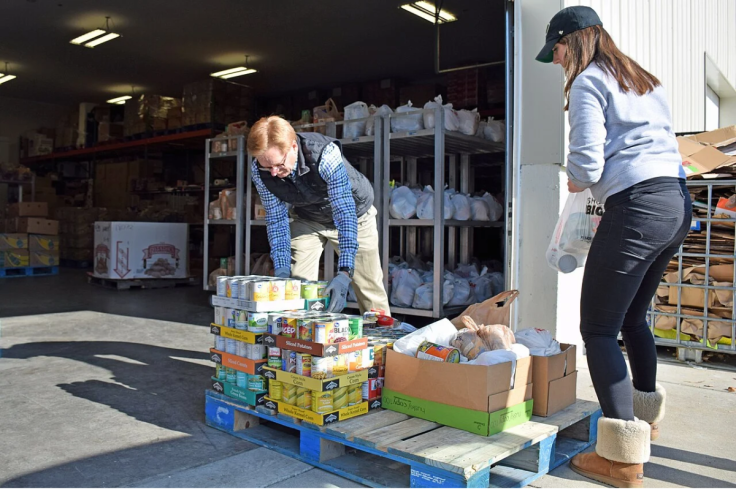
More than 5 million fewer Americans were participating in the Supplemental Nutrition Assistance Programme (SNAP) by June 2026, putting additional pressure on food banks already dealing with rising demand and higher operating costs.
The decline followed the July 2025 enactment of the Republican reconciliation law, which changed SNAP eligibility and work requirements. But the latest figures do not mean 5 million people were individually removed from the programme because of the law. Participation had already been falling before some of its major provisions took effect, while the decline accelerated afterwards.
The figures are nevertheless reshaping the US food safety net, with food pantries increasingly serving as a fallback for households facing tighter budgets and reduced access to government assistance.
SNAP Participation Has Fallen Sharply
An analysis by the Center on Budget and Policy Priorities using USDA and state data found that SNAP participation fell by more than 5 million people, or about 13%, between the law's July 2025 enactment and June 2026. USDA's latest national data, published in September, lists June 2026 as the most recent month available for state-level SNAP participation. The agency cautions that the latest figures are preliminary and subject to significant revision.
The decline has occurred across almost every state, although the reasons are not identical. Changes to eligibility, administrative practices, and work requirements are among the factors affecting participation. That distinction matters because the headline figure represents people no longer counted as SNAP participants, not a finding that each person has been left without any form of food assistance.
Food Pantries Are Feeling the Pressure
The impact is increasingly visible at local food distribution centres, where operators are trying to serve more households with limited supplies. In West Virginia, food pantry director Bill Likens recently faced a queue stretching for roughly half a mile. His pantry serves between 700 and 800 households, and he said it received 25% less food from USDA programmes over several years.
In August, the pantry received about 2.5 pounds of food per household, compared with roughly 20 pounds several years earlier. The pressure is not confined to households traditionally associated with extreme poverty. Another West Virginia pantry operator said middle-class families were increasingly asking for help, including parents looking for food to get their children through the week. That shift could make food banks an increasingly important part of the country's response to gaps in household food budgets.
USDA Defends Federal Food Assistance
The administration has defended the changes to SNAP, arguing that the programme should be sustainable and better targeted. White House spokesperson Anna Kelly said President Donald Trump was 'uplifting every American's financial situation' through tax cuts, jobs, and business investment. She also said the administration was working to strengthen SNAP and address waste, fraud, and abuse.
USDA has separately disputed claims that it has simply reduced the amount of food it provides to emergency food networks. The department said its mission to assist people in need had not changed. The Emergency Food Assistance Program (TEFAP) remains active.
USDA said it expected to purchase an estimated $465.2 million (£351 million) of food for distribution through the programme during fiscal year 2026. That creates an important tension in the food-assistance system: federal programmes continue to provide resources, but local organisations say they are struggling to match the scale and changing nature of demand.
Higher Costs Add to the Strain
Food availability is only part of the problem for households relying on emergency assistance. Food banks also face transportation costs, while families dealing with reduced benefits may have less money available for petrol, groceries, and other essentials.
The pressure is particularly acute in rural communities. In West Virginia, some residents travel long distances to reach supermarkets, while higher fuel costs can make even a trip for groceries more expensive.
For food banks, that means the challenge extends beyond obtaining enough food. They must also transport, store, and distribute it to communities where demand can rise quickly. The result is a food-safety net under greater pressure from both directions: fewer people are receiving SNAP, while emergency food providers are being asked to help households navigate the gap.
The scale of the participation decline means the pressure on food banks could become more important as states implement the new SNAP rules and the federal government continues to reshape food assistance.
© Copyright IBTimes 2026. All rights reserved.