

Trump Says There Will Be a Time When He Is No Longer at '100%' – Critics Say That Time Is Now
Trump's assertion of full capability fuels renewed debate over his fitness for office amid age-related concerns
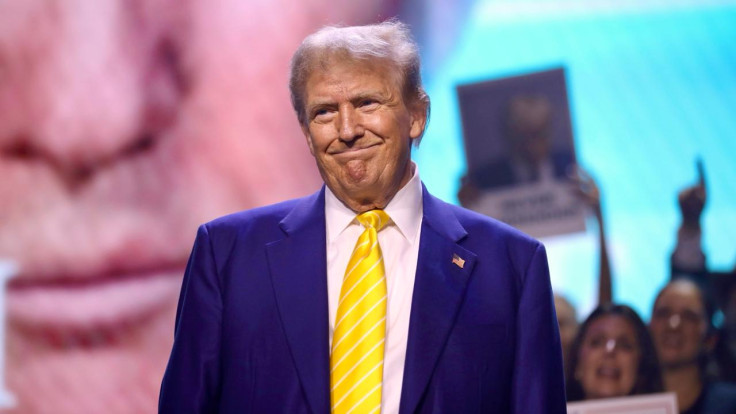
Trump has admitted that there will come a time when he is no longer at '100%', but he also insisted that that moment has not yet arrived. However, a growing chorus of critics says otherwise.
The US President, at almost 79 years old, sparked renewed debate over his physical and mental fitness after a short video clip shared on social media showed him addressing his current condition and performance.
Despite online speculations, the White House and Trump's allies point to formal medical evaluations that present a different picture.
Trump's Claim of Being at '100%': Official Statements and Public Remarks
In a video widely shared on clip, Trump alludes to a future moment when he may not be at '100%,' yet insists that he remains at full capacity now.
@davidpakmanshow Trump accidentally describes exactly what’s happening now
♬ original sound - David Pakman
Official medical documentation released by the White House undermines claims of decline. In April 2025, White House physician US Navy Capt. Sean Barbabella released a detailed report after Trump's physical exam.
The three-page memo concluded that the president, then 78, 'exhibits excellent cognitive and physical health and is fully fit to execute the duties of Commander-in-Chief and Head of State.' He reportedly scored a perfect 30/30 on the Montreal Cognitive Assessment (MoCA), a standard screening tool used to detect cognitive impairment, and showed no signs of depression or anxiety.
Barbabella highlighted Trump's active lifestyle and ongoing engagement in daily work and public events as evidence of his robust health.
In a more recent development, the White House also confirmed that an advanced MRI scan conducted as part of a routine cardiovascular checkup returned 'perfectly normal' results, reinforcing claims that his health remains stable.
Trump himself has publicly described his mental acuity as intact. In other public appearances, he proclaimed he was 'sharper than I was 25 years ago'.
Critics Question Fitness and Cite Actions as Evidence of Decline
Despite these official assessments, critics, ranging from political opponents to independent analysts and some medical professionals, argue that observable behaviours and public appearances raise legitimate concerns about Trump's fitness.
Independent media and commentators have pointed to multiple public events where Trump appeared to struggle with completing coherent thoughts, wandered between topics, or delivered remarks that seemed disconnected from context. A report documented several of such instances in late 2024 where Trump's speeches were described by PBS NewsHour as 'rambling,' prompting questions about potential cognitive decline.
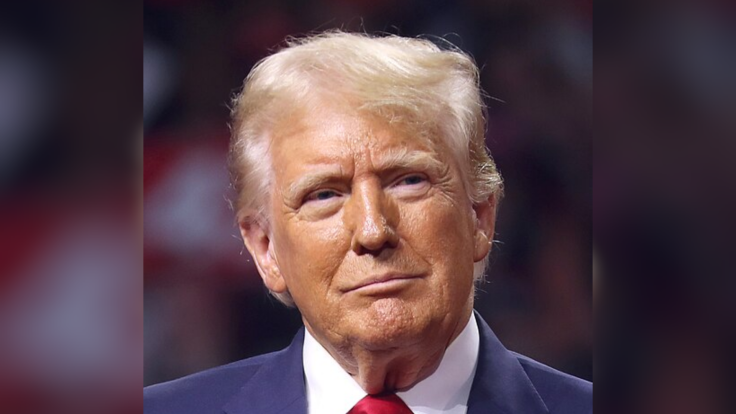
These concerns echo broader public debates about the age of world leaders. At nearly 79 years old, Trump would become the oldest U.S. president to serve a full second term, a fact that critics have used to question whether age and related health factors might affect his performance.
Although anecdotal, these concerns have been amplified in social media discussions and political commentary, where phrases like 'no longer at 100%' are used to characterise Trump's recent conduct.
Political and Legal Context of Health Scrutiny
The scrutiny of presidential health and cognition is not new in US political history. During the 2024 race, questions about age and fitness factored into former vice-president Joe Biden's decision not to seek re-election, after public discussion over his performance in debates and public appearances.
Although Biden's doctors had previously declared him fit to serve, the political weight of perception played a defining role.
In response to ongoing debates about cognitive fitness benchmarks for presidents, lawmakers previously introduced the proposed STABLE GENIUS Act in 2018 and 2019. The bill would have required presidential candidates to undergo and publicly disclose a medical examination before general elections. Advocates framed the proposal as a transparency measure.
Although neither iteration of the bill advanced out of committee, it reflects long-standing concerns around health disclosures for high public office seekers.
Trump maintains that he remains at '100%,' asserting that there will be a time when he is no longer so, but he insists that time is not now. Only ongoing public scrutiny and future medical disclosure will determine whether that claim holds water under sustained examination.
© Copyright IBTimes 2026. All rights reserved.