

Trump Signals Falklands Review as Argentina Renews Claim and Britain Says 'Nothing Will Change'
Trump's remarks on Falkland Islands create diplomatic uncertainty
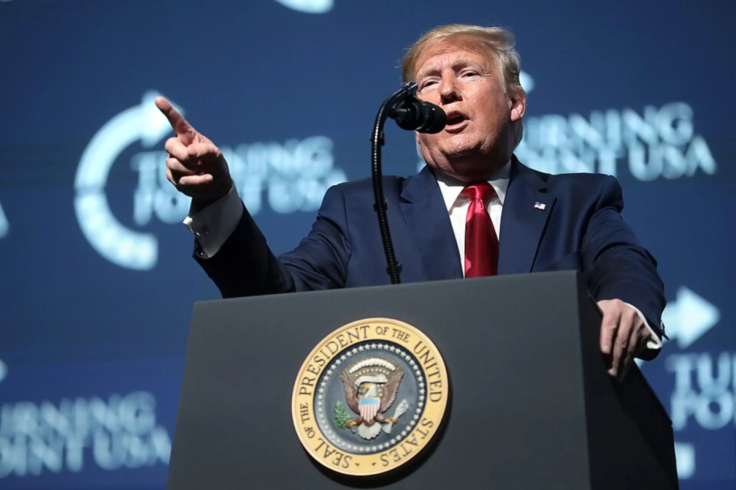
Donald Trump has signalled that the United States is reviewing its position on the Falkland Islands as Argentina renews its sovereignty claim and Britain insists the territory's status will not change.
The US president was asked in the Oval Office on Monday, 31 August, whether Washington was reconsidering its approach to the British Overseas Territory.
'I always review every position. That's just one of many,' Trump replied.
His remarks were welcomed in Argentina, where President Javier Milei's government continues to call for negotiations with Britain over the islands, known there as the Malvinas.
Britain maintains that sovereignty is not open to negotiation unless the islanders themselves request it.
Trump Leaves US Position Unclear
The United States has traditionally remained neutral on the competing sovereignty claims while acknowledging that Britain administers the islands.
Washington initially tried to mediate after Argentina invaded the Falklands in April 1982. It later provided political and logistical support to Britain, which regained control after a 74-day war.
Trump's brief answer did not clarify whether his administration was conducting a formal review or examining the issue alongside other foreign-policy positions.
No new policy, executive action or State Department statement recognising Argentina's claim has been announced.
A change in Washington's position would carry diplomatic weight, particularly because the United States is a close British ally and Milei has developed a strong relationship with Trump. It would not, however, change the islands' legal or administrative status by itself.
Argentina Renews Call for Sovereignty Talks
Argentina says it inherited sovereignty over the islands from Spain and argues that Britain unlawfully occupied them in 1833.
In an official statement, the Argentine government described recovering the 'effective exercise' of sovereignty as a permanent constitutional objective. It said diplomacy remained the only acceptable route and again urged Britain to resume bilateral negotiations.
The United Nations Special Committee on Decolonization has repeatedly called on Argentina and Britain to pursue a peaceful negotiated solution.
Buenos Aires rejects Britain's reliance on self-determination, arguing that the dispute concerns territorial integrity rather than the right of the islanders to determine sovereignty.
Milei's government says it will pursue Argentina's claim through peaceful diplomatic means.
Britain Says Islanders Will Decide Their Future
The British government says its support for the Falkland Islanders is 'long-standing and unwavering.'
It maintains that the islands are and will remain a British Overseas Territory for as long as their residents wish. Downing Street has previously said that 'nothing is going to change that.'
In a June statement, Britain said calls for sovereignty discussions could not change that position and that there would be no negotiations without the islanders' consent and participation.
In a 2013 referendum, 99.8 per cent of voters chose to retain the islands' status as a British Overseas Territory. Turnout was 92 per cent.
Argentina does not recognise the referendum as resolving the sovereignty dispute.
Review Could Test US-UK Relations
Trump's comments have created uncertainty without changing the status quo.
Any move towards Argentina's position could strain the US-UK relationship and encourage Buenos Aires to increase diplomatic pressure. Yet the White House has not explained the scope, timetable or purpose of any review.
Britain has made clear that neither pressure from Argentina nor a possible shift in Washington will alter its approach.
Unless the United States announces a formal policy change, its longstanding neutrality remains in place. The islands remain a self-governing British Overseas Territory, while Argentina continues to pursue its claim through international diplomacy.
© Copyright IBTimes 2026. All rights reserved.