

Russia Could Hit the 'Soft Underbelly of the UK' With Covert Bioweapons, Former Official Warns
Christopher East says biological threats could be used in grey-zone warfare, while stressing there is no evidence of a planned attack on Britain
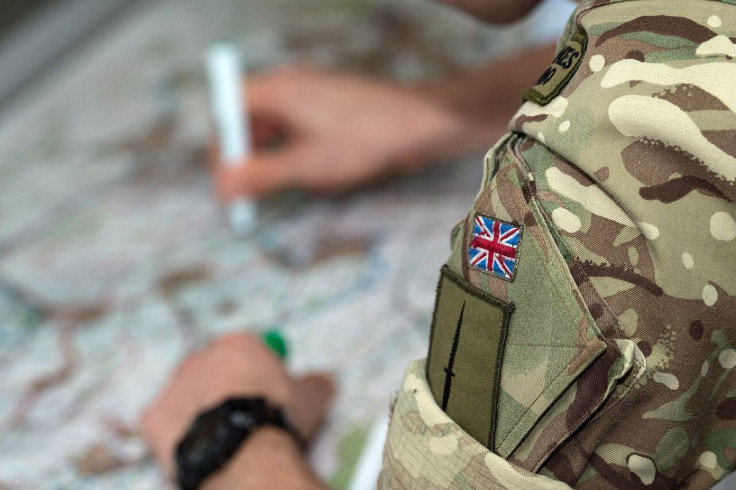
Russia could use covert biological weapons to disrupt Britain's food supply or weaken military forces while making an attack appear to be a natural outbreak, former UK government biosecurity official Christopher East has warned.
East, who served as chief of staff for biological security at the Cabinet Office, told The iPaper that hostile states could exploit biological threats as part of 'grey-zone' warfare, causing economic damage while making responsibility difficult to establish.
'If you wanted to hit the soft underbelly of the UK, such as the food supply chain, with an unattributable weapon designed to sow discontent and inflict economic scarring, it's potentially a lot easier than we think,' he said.
The warning describes a possible threat, not evidence that Russia has planned or carried out such an attack against Britain.
Why Russia's Research Facilities Raise Concern
The warning comes amid longstanding US concerns about Russian military biological research facilities, including the institute at Sergiev Posad, outside Moscow. The US State Department has assessed that Russia maintains an offensive biological-weapons programme, citing concerns about the legacy of the Soviet programme and the lack of transparency surrounding military research institutes.
That is a US government assessment, which Moscow disputes. Russia says its biological research is defensive, and public information does not establish that the Sergiev Posad facility is currently developing a specific weapon or preparing an attack on Britain.
The site is associated with Soviet-era biological research, including work on dangerous pathogens. Reports have also described expansion at the facility. However, construction and historical links alone do not establish the purpose of its current activities.
How a Covert Attack Could Work
East told The iPaper that adversaries could seek to make an engineered outbreak appear to be a naturally occurring disease. He identified the food supply chain as a potential target because disruption could cause economic damage and public anxiety while making it difficult to identify the perpetrator.
He also outlined a hypothetical scenario in which a disease outbreak among military personnel could weaken operational readiness. These scenarios have not been established as Russian plans, and there is no evidence presented in the reporting that Russia has introduced a biological agent into British food supplies or deployed one against NATO forces.
MI5 Warns of AI Risks
On 13 October, MI5 Director General Sir Ken McCallum warned that artificial intelligence could change the risks posed by existing or new biological weapons. He described this potential misuse as 'not yet realised' but said it was the AI-related threat to which he attached the greatest weight.
McCallum said the UK Intelligence Community was working with the AI Security Institute to assess the danger. He also announced the AI Threat Assessment Centre, housed within MI5 and bringing together expertise from several agencies. His remarks addressed the broader risk of AI misuse, rather than confirming a Russia-linked biological attack.
Anthropic's September 2026 threat-intelligence report described five case studies involving use of its Claude models in ways that could support biological-weapons development. The company said the cases raised difficult questions about dual-use research and explicitly did not claim that the scientists involved intended harm.
AI assistance does not, by itself, create a working biological weapon. Developing and testing dangerous agents still requires scientific expertise, laboratory access, materials and practical work. The concern is whether AI could lower some barriers for people already equipped to conduct such research.
Russia's Bioweapons Legacy
East has argued that the Soviet Union's Biopreparat programme left expertise and infrastructure that were not fully dismantled. US assessments also raise concerns about the legacy of Soviet biological-weapons research, but that history does not prove the present purpose of any individual Russian facility.
Russia denies maintaining an unlawful offensive biological-weapons programme. The US continues to dispute that position, while publicly available evidence does not establish that Sergiev Posad is preparing a specific attack.
The central question raised by East's warning is whether hostile actors could exploit biological science to disrupt food supplies or military readiness while making an outbreak difficult to attribute. The warning highlights a potential security challenge; it does not establish that an attack on Britain is imminent.
© Copyright IBTimes 2026. All rights reserved.