

Psychiatrist Dr. Henry Abraham Allegedly States Donald Trump Is Literally a 'Maniac' Due to Behaviour
In an AlterNet interview, Dr Henry Abraham discussed behaviour he viewed as concerning while stressing that he lacked medical records, brain scans and cognitive test results
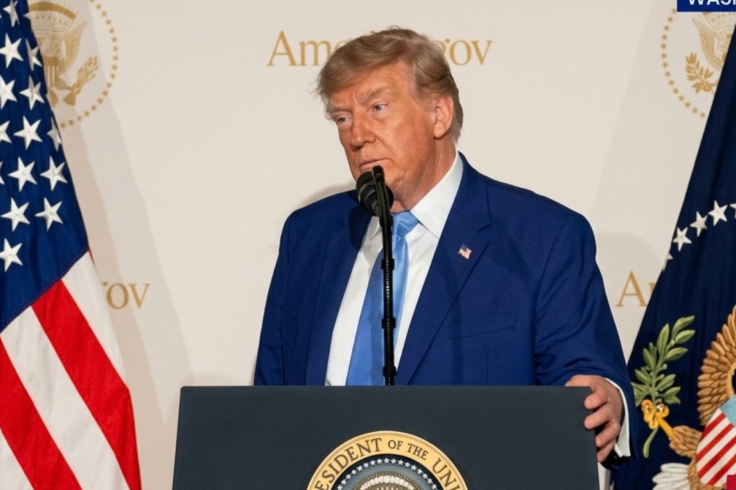
Psychiatrist Dr Henry Abraham described US President Donald Trump as a 'maniac' at night in an exclusive AlterNet interview, citing late social media activity and what he characterised as daytime drowsiness.
The publication also reported that 36 health professionals wrote to Congress in May warning of cognitive decline. Abraham, formerly of Tufts University, distinguished the behaviours he regarded as warning signs from a diagnosis requiring fuller evidence and a patient's participation.
Donald Trump's Night-Time Activity Raises Concerns
Abraham argued that prolonged overnight posting, combined with apparently falling asleep during the day, merited medical scrutiny. He described several possible explanations but acknowledged that he could not identify the cause from his observations.
Describing that pattern, he told the publication, 'He's a maniac at night, but he's not a maniac during the day, generally.'
He also expressed concern about what he viewed as anger and poor emotional control, linking those concerns to the responsibilities of the presidency. These were his interpretations of Trump's behaviour, rather than findings from an examination presented in the interview.
Speech Patterns Inform Abraham's View of Donald Trump
The psychiatrist described Trump's tendency to depart from a subject as tangentiality. As an example, he recalled remarks that moved from electric vehicles to boats, sharks and electrocution, arguing that the shifts left the original topic difficult to follow.
He separately described moments when he believed Trump struggled to express a coherent point. Abraham treated those concerns about logic and language as distinct from digressions in which a speaker follows a recognisable, if unrelated, train of thought.
His comparison extended to recordings from decades earlier. Abraham claimed that Trump's command of language had diminished, citing difficulty returning to a main thought after inserting an extra clause into a sentence.
Abraham also characterised personal remarks during professional exchanges as disinhibition, meaning difficulty restraining an impulse. He pointed to comments about the NASA chief's ears during an Oval Office event with Artemis astronauts, an episode he recounted in the interview.
Apparent disorientation was another concern. Abraham described occasions when Trump seemed unsure where to walk, although he acknowledged that possible causes of the behaviours he discussed remained unresolved.
Evidence Gaps Complicate Claims About Donald Trump
To assess possible change over time, Abraham described consulting an unnamed member of the White House press corps who, he stated, saw Trump daily. He reported that the journalist considered half of the behaviours he listed to have worsened over the preceding year.
Grandiosity was among them. Abraham cited images depicting Trump as the Pope, a Christ-like healer and shaking hands with God, interpreting the posts as examples of exaggerated self-importance.
He also argued that Trump's approach to Barack Obama reflected an effort to dismantle his predecessor's legacy. That explanation concerned Abraham's interpretation of political motives, rather than evidence establishing a medical condition.
The psychiatrist repeatedly returned to the limits of assessment without fuller medical information. Establishing whether someone has deteriorated, he explained, requires distinguishing longstanding characteristics from changes over time.
He framed that difficulty directly. 'The real question here is, what is baseline and what is decline?'
He discussed the Montreal Cognitive Assessment as a screening tool, arguing that following a score should not replace investigating an underlying cause. Abraham stated that he did not have Trump's brain scans or the actual results of those cognitive screening tests.
© Copyright IBTimes 2026. All rights reserved.