

Donald Trump Faces Backlash and Is Called 'Putin's Lapdog' After Striking Deal for Russian Diesel
The announced deliveries come as US diesel prices rise, while lawmakers question whether the administration followed legal requirements and whether the deal will lower costs
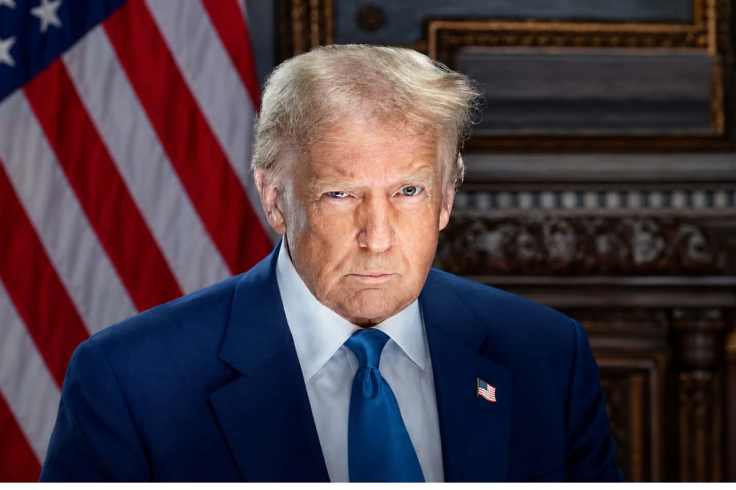
US President Donald Trump has agreed a deal for hundreds of thousands of tonnes of Russian diesel despite a congressional ban on such imports, triggering bipartisan fury in Washington and accusations online that he is acting as 'Putin's lapdog.'
Trump announced on Friday, 9 October 2026, that he had reached an accord with Russian President Vladimir Putin to increase diesel supplies, alongside a temporary easing of US sanctions on Russian fuel. Critics argue the move risks weakening pressure on Moscow over its war against Ukraine.
Trump said the arrangement would bring additional Russian diesel to US and global markets. The announcement prompted objections from Democrats and Republicans, with critics questioning its legality and likely impact on fuel prices.
Trump said Russia would initially supply more than 300,000 metric tons of diesel. He also announced another 500,000 tons for November, followed by 1 million tons 'immediately thereafter.' A further 3 million tons would arrive 'within a short period of time,' he said, subject to the circumstances affecting supply.
These figures represent the president's announced schedule, not independently verified deliveries. The agreement's full commercial terms and the precise distribution of the fuel have not been established in the available information.
The US Senate Foreign Relations Committee published a bipartisan statement on Sunday, 11 October, calling on the administration to reverse course. Seven senators signed the statement, which said the administration had failed to consult Congress or submit an explanation required by statute.
Why Congress Has Erupted Over the Diesel Deal
The dispute centres on the apparent tension between easing restrictions on Russian fuel and Washington's efforts to limit Moscow's energy revenues. Congress prohibited Russian energy imports in 2022 following Russia's full-scale invasion of Ukraine. The latest sanctions decision has renewed questions about the consistency of US policy.
In its official statement, the Senate group argued that allowing Russian diesel imports conflicted with the law. The senators also said the administration had failed to consult Congress or provide the required justification. These are the lawmakers' legal objections, rather than a judicial ruling that the decision is unlawful.
'The United States should not provide Putin with a financial lifeline while Russia continues to kill Ukrainian civilians. The Administration must immediately reverse course,' the senators said.
The four Republican signatories were Susan Collins of Maine, Lisa Murkowski of Alaska, Thom Tillis of North Carolina and John Curtis of Utah. They were joined by Democrats Jeanne Shaheen of New Hampshire, Richard Blumenthal of Connecticut and Ron Wyden of Oregon.
The controversy comes amid sharply higher US diesel prices. Reuters reported on 9 October that the average price had reached $6.28 per gallon on Thursday, according to the American Automobile Association. The Iran conflict and disruptions to global fuel supplies have contributed to pressure on energy markets.
Trump has defended the need to increase supplies as consumers and businesses face higher costs. However, critics argue that easing restrictions on Russian fuel could provide Moscow with additional revenue while its war against Ukraine continues.
Trump also criticised Ukrainian President Volodymyr Zelensky during remarks to reporters on Saturday, 10 October. He argued that the war could have been resolved earlier and suggested Zelensky had missed opportunities to reach an agreement. Those remarks reflect Trump's position on the conflict, rather than establishing responsibility for the war's continuation.
Trump also spoke favourably about Putin's interest in a settlement and the potential benefits of additional oil supplies. His comments have intensified criticism from those who believe Washington should maintain pressure on Russia.
Will the Diesel Deal Really Cut Fuel Prices?
The deal's practical impact remains uncertain. Energy policy experts have questioned whether the additional diesel will be sufficient to produce a sustained reduction in prices across the United States. The announced quantities must also be distinguished from fuel that has actually reached the market.
The Associated Press reported that analysts expected the arrangement to have limited effects on prices. Michael Lynch of the Energy Policy Research Foundation said Russian supplies could simply redirect fuel away from existing customers, who would then need to find alternative sources. Such redistribution would not necessarily increase the amount of diesel available globally.
Daniel Sternoff, a senior fellow at Columbia University's Center on Global Energy Policy, also cautioned that supply constraints could keep prices elevated. Disruptions affecting energy infrastructure and refining capacity have added pressure to international markets.
The potential financial benefit to Russia is another concern. Additional exports could provide revenue to Russian suppliers, even if American consumers experience little relief at the pump. That possibility is central to the senators' argument that the arrangement could undermine sanctions policy.
Online criticism has included descriptions of Trump as 'Putin's lapdog.' However, individual social media reactions should be treated as opinion, not evidence of the agreement's legal status or economic consequences. Specific posts should be linked and verified before publication.
For American drivers, the key question is whether the additional supplies will translate into lower prices. For Congress, the dispute concerns the legal authority and strategic consequences of easing restrictions on Russian fuel. Until delivery figures, implementation details and the agreement's full terms are established, its overall impact remains uncertain.
© Copyright IBTimes 2026. All rights reserved.