

US Army Warns Future War Could Threaten American Bases as Chinese Cyber Risks Grow
Gen. Christopher LaNeve says power projection could be contested as the Army prepares for cyberattacks, drone threats and failures affecting essential systems
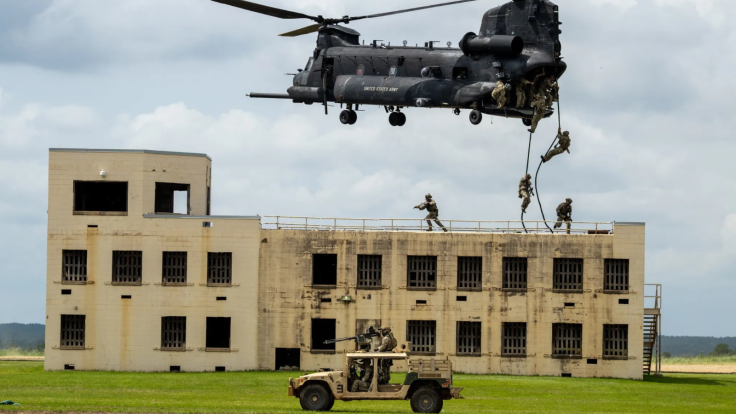
The US Army is preparing for attacks on American bases, communications networks and supply routes that could disrupt troop deployments during future wars. Gen. Christopher LaNeve, its acting chief of staff, outlined the threat in Washington on Wednesday, 14 October.
He warned that operations against an advanced adversary could face disruption before American forces reach an overseas battlefield.
Separately, the Pentagon has identified Chinese cyber activity inside US critical infrastructure, raising concerns about potential wartime disruption. The Army's latest operational guidance also emphasises defending the homeland and keeping forces effective when essential systems fail.
The warning follows the Army's publication of How the Army Fights on 7 October, a framework for military operations under contested conditions.
LaNeve contrasted the emerging threat with the years of fighting in Iraq and Afghanistan, when American forces could generally depend on secure installations and supply lines at home.
US Army Warns Bases Could Face Disruption Before Troops Deploy
LaNeve described the challenge at the Association of the United States Army's annual conference in Washington.
'If we're going against a pacing threat, power projection will be contested,' he told Fox News Digital during an interview on Wednesday.
Power projection is the military's ability to assemble forces, move them overseas and sustain them once deployed. An adversary capable of interfering with military bases, transport systems or communications could make each step more difficult.
The warning does not amount to a prediction that China will attack American territory. Instead, it reflects concerns that a technologically capable opponent could disrupt installations supporting US operations far beyond a conventional battlefield.
The consequences could be substantial. Even forces stationed thousands of miles from a conflict depend on electricity, secure communications and reliable transport at home. Disruption could delay deployments, complicate coordination and interrupt supplies reaching troops abroad.
Chinese Cyber Risks Put US Army Deployment Networks Under Scrutiny
The China-specific concern is documented in the Pentagon's 2025 report on Beijing's military capabilities. The assessment identifies Chinese state-sponsored cyber activity associated with Volt Typhoon inside American critical infrastructure.
US cybersecurity authorities have separately identified compromises affecting communications, energy, transportation and water systems. Those sectors serve civilian communities while also supporting the infrastructure on which military operations depend.
The Pentagon said the intrusions demonstrated China's capacity to prepare cyber capabilities for a future crisis or conflict.
Investigators have raised concerns that attackers could potentially interfere with the mobilisation of American forces.
That assessment does not establish that Beijing has already launched wartime attacks on US military installations. The documented cyber intrusions are distinct from the destructive actions that officials warn could occur during a future confrontation.
The potential consequences extend beyond military facilities. Disruptions to civilian transport and communications could affect the movement of personnel and equipment, while interruptions to essential services could create wider problems for the public.
US Army Revises Warfighting Strategy and Strengthens Drone Defences
The Army's new operational framework, How the Army Fights, establishes four interconnected elements known as convergence, strike, close battle and endurance.
The guidance addresses wider challenges in modern warfare rather than responding solely to Chinese hacking. It outlines how American forces should organise, deploy and sustain operations against sophisticated adversaries.
Endurance is particularly relevant to homeland security. It involves protecting, deploying and sustaining military capabilities across long distances and under contested conditions.
The document also emphasises resilient networks, autonomous systems and artificial intelligence-enabled technology. However, Army leaders maintain that technological advances cannot replace fundamental battlefield skills and military judgement.
'Technology will extend our reach and strengthen our combat power, but war remains a human contest of wills,' LaNeve said in the Army's announcement.
Protecting military installations also means addressing threats beyond cyberspace.
US authorities have previously acknowledged drone incursions at Joint Base Langley-Eustis in Virginia and Picatinny Arsenal in New Jersey. Neither incident has been publicly attributed to China.
The Pentagon's Joint Interagency Task Force 401 is expanding counter-drone protection through its Domestic Shield initiative. The Army announced new contracts in September covering systems designed to detect, track and defeat drones around priority military installations.
Acting Army Secretary Adam Telle has also highlighted soldiers' counter-drone experience along the southern border as preparation for evolving threats. These efforts form part of broader military readiness measures, not evidence that a conflict with China is imminent.
For American commanders, the challenge is ensuring troops can deploy, communicate and continue operating even when the infrastructure supporting them is disrupted. The Army's guidance places that requirement alongside battlefield readiness, recognising that domestic installations could face threats during a future war.
LaNeve's warning does not establish that war with China is approaching or that American military bases will inevitably be attacked. It underscores the Army's changing approach to future conflicts, in which protecting the infrastructure supporting overseas operations may become as important as preparing troops for combat.
© Copyright IBTimes 2026. All rights reserved.