

UK Slams Argentina's Falklands Oil 'Intimidation' as Milei Government Takes Drilling Dispute to Tribunal
Argentina seeks to halt Falklands oil development as the UK vows to protect businesses

The United Kingdom has strongly condemned Argentina's escalating legal campaign against oil exploration in the Falkland Islands under President Javier Milei. Argentina filed a 49-page Request for the Prescription of Provisional Measures with the International Tribunal for the Law of the Sea to stop ongoing oil development in the area.
'Through these proceedings, Argentina aims to protect sovereign rights over the continental shelf under UNCLOS (United Nations Convention on the Law of the Sea) pending the settlement of the territorial sovereignty dispute, which remains unsettled due to the persistent refusal of the United Kingdom to resolve it,' the Argentine request stated.
Economic Coercion
Argentina has consistently opposed ongoing activities in the islands, which the country refers to as las Islas Malvinas, including during the licence and permit application process. Argentina maintains that the underlying territorial sovereignty dispute remains unresolved.
However, the British Government called Argentina's actions a form of 'economic coercion' against the islanders. 'The Falkland Islanders have a right to develop their natural resources as they see fit,' said Ed Miliband, Secretary of State for Foreign, Commonwealth and Development Affairs. 'Attempts to intimidate those taking part in legitimate commercial activity are unacceptable.'
The Falkland Islanders have a right to develop their natural resources as they see fit.
— Ed Miliband (@Ed_Miliband) October 13, 2026
Today we have announced new measures under Protection of Trading Interests legislation to ensure people and companies are shielded from Argentinian threats.
Attempts to intimidate those… pic.twitter.com/uOr3CcZxsD
Miliband announced plans for new measures under the Protection of Trading Interests legislation to protect businesses and individuals from 'Argentinian threats.' The proposed measures are intended to protect UK and UK-based companies from being compelled to comply with requirements or levies imposed by the Argentine government, regulatory entities and other extraterritorial measures.
'The Falkland Islands Are a British Overseas Territory'
The government emphasised that the Falklands are a British Overseas Territory and that the UK continues to administer the islands, which have their own Falkland Islands Government. The islands have a governor, Colin Martin-Reynolds, who represents the Crown and performs functions under the territory's constitutional arrangements.
While the governor is appointed, Falkland Islanders go to the polls every four years to elect eight members of the Legislative Assembly. However, the United Nations lists the Falkland Islands as a Non-Self-Governing Territory and recognises the sovereignty dispute between Argentina and the UK.
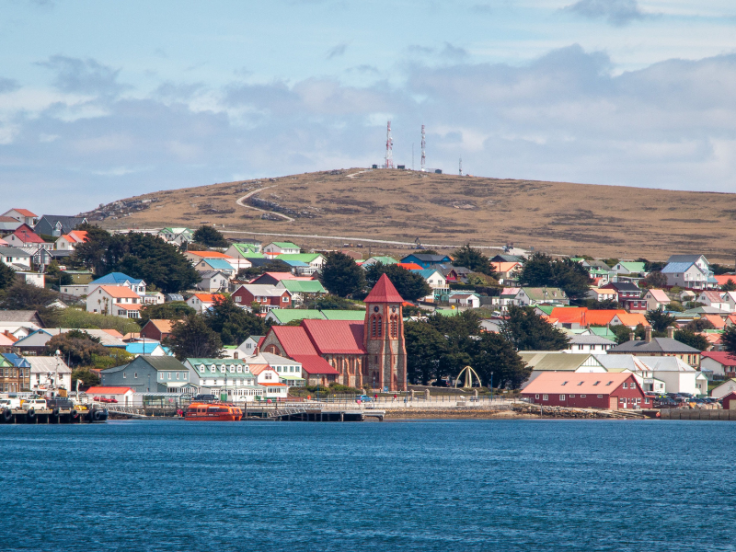
Argentina argues that it inherited the Islas Malvinas from the Spanish Crown. Britain, meanwhile, has maintained control of the islands since 1833, when British forces removed the Argentine military garrison. The events surrounding the removal of the garrison remain central to the competing historical narratives underpinning the sovereignty dispute.
Hydrocarbon Exploration
Energy exploration has been going on in the Falklands for years. However, the Sea Lion oilfield project, a joint venture involving Israel's Navitas Petroleum and Britain's Rockhopper Exploration, has recently been gaining ground. The project aims to begin commercial oil production in 2028.
'Argentina warned Rockhopper Exploration plc and Navitas Petroleum Development and Production, the companies involved in the exploitation of the "Sea Lion" field, as well as others, that their planned hydrocarbon activities would take place in an area disputed between Argentina and the United Kingdom and would be in breach of the applicable Argentine legislation,' the request read.
The UK stands shoulder to shoulder with the Falkland Islanders.
— Uma Kumaran MP (@Uma_Kumaran) October 13, 2026
We will always support their right to determine their own future, and today announced new Protection of Trading Interest legislation to defend UK businesses from Argentine domestic measures. pic.twitter.com/CMQTLX552O
MP Uma Kumaran, Parliamentary Under-Secretary of State for Foreign, Commonwealth and Development Affairs with responsibility for the Overseas Territories, replied: 'This Government will not stand by while Argentina uses economic coercion against the people of the Falkland Islands. We will always stand up for the Falkland Islanders and their right to determine their own future.'
© Copyright IBTimes 2026. All rights reserved.