China's Djibouti Upgrade Could Give Beijing a Window on US Operations Without Cracking Encryption
A CSIS analysis of satellite imagery identifies new communications compounds near US and allied bases, while stressing that open sources cannot confirm intelligence collection
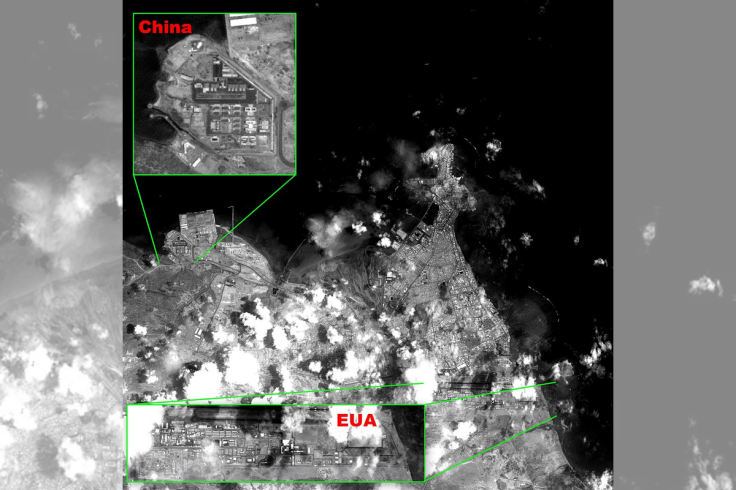
China's military may now be able to gain valuable insight into US and allied military operations in the region by watching when, where and how often forces transmit.
It would not necessarily need to read a single encrypted message, according to a new analysis of satellite imagery of the People's Liberation Army base in Djibouti, which sits less than 10 miles from bases run by the US, France, Italy and Japan.
The report, published on 17 September by the Center for Strategic and International Studies, identifies two communications facilities that have emerged at the base since mid-2024.
Its authors say the new equipment 'would almost certainly support a SIGINT mission set', meaning signals intelligence, while adding that open-source methods cannot confirm whether any passive SIGINT collection is actually taking place.
Antennas, Satellite Dishes and an Unidentified Radome
The larger compound, in the base's south-eastern corner, has a control building, three 30-metre dipole antennas for high-frequency radio and two smaller antennas for very/ultra-high-frequency communications. Beside them are three mobile satellite dishes, four probable 5G towers and a radome covering an unidentified asset.
A smaller site in the north-western corner has two crossed dipole antennas, a second radome and a main control building. Imagery in the CSIS summary document also shows reinforced cable trenches laid in 2025, which the researchers say suggest that more antennas may be added in the future.
The researchers believe the two sites very likely work together as one base-wide system for command, control, communications, computers, intelligence, surveillance and reconnaissance, known as C4ISR.
The CSIS analysis says the equipment could provide the People's Liberation Army with redundant, over-the-horizon communications with Chinese ships and aircraft in the region, as well as secure communications channels with military headquarters in China.
How Beijing Could Learn Without Decoding
Because military transmissions are encrypted, the value can lie in their patterns rather than their content. The CSIS team says monitoring where signals originate, the direction they travel, the frequencies used and how often they are sent could reveal useful information about US and other military activity.
The proximity of other forces makes this significant. Camp Lemonnier serves as a key location from which US and coalition forces operate in the Horn of Africa, while the US Navy says its staff supports more than 4,000 US, joint and allied military and civilian personnel and Department of Defense contractors.
The report links the growing intelligence value of the new capabilities to recent conflicts. Houthi attacks on Red Sea shipping since late 2023, and the escalation of US and Israeli operations against Iran, have increased the potential intelligence value of Chinese SIGINT capabilities in the region, according to CSIS.
What China Says the Base Is For
Beijing has consistently described the facility, which entered service on 1 August 2017, as a support base.
A Chinese government overview published by the State Council Information Office says the base strengthens the military's ability to 'protect national interests abroad' and lists naval escort missions, UN peacekeeping, humanitarian rescue and the evacuation of Chinese nationals.
China’s only acknowledged overseas military base sits less than 10 miles from U.S., French, Italian, and Japanese bases in Djibouti. CSIS experts find new upgrades are expanding People’s Liberation Army intelligence capabilities and regional reach.
— CSIS (@CSIS) September 21, 2026
More: https://t.co/PtZaBGPhgN pic.twitter.com/LLSQavpmVf
That description does not mention intelligence gathering. According to CSIS, however, the upgrades could also help China follow developments across Africa, where it has built ground-based space infrastructure to close gaps in its global space-tracking and data-relay networks.
Djibouti overlooks the Bab al-Mandeb Strait, a 20-mile-wide passage that carries an estimated 16 per cent of global maritime trade. A permanent Chinese communications facility at that chokepoint, close to US, French, Italian and Japanese military bases, could strengthen Beijing's presence on a key shipping route between Asia and Europe.
For the US and its allies, the findings suggest that encrypted communications could still reveal useful information about military operations conducted from Djibouti.
The report concludes that the upgrades could give China a persistent forward C4ISR node covering much of the Middle East and Africa, supporting its wider effort to understand the regional operational environment and project military power farther from home.
© Copyright IBTimes 2026. All rights reserved.
- Recommended For You