

'Fix Leaks First!': Outrage as £270K Nanny-State Scheme Tells Families To Stop Washing Rice To Save Water
Controversial campaign targets South Asian and Muslim water use practices
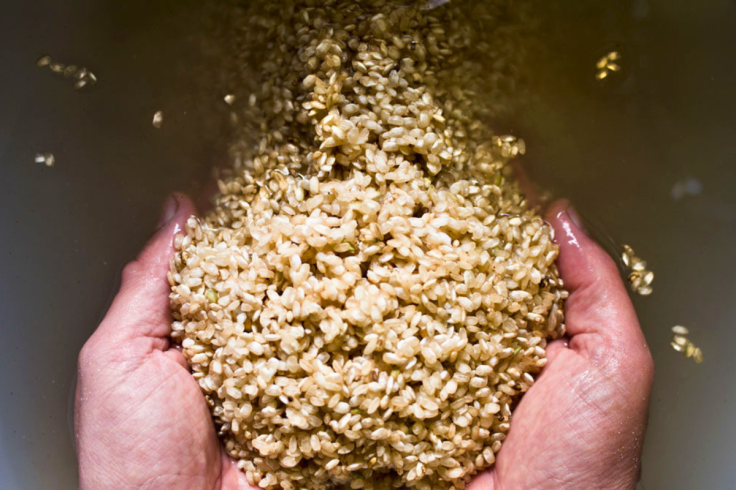
Water companies losing an estimated three billion litres a day through leaks are spending £270,000 of taxpayer-funded money on a campaign telling families to change basic household rituals, including urging South Asian households to wash rice fewer times and Muslims to use less water for wudu.
Funded through Ofwat's Innovation Fund and led by South Staffs Water and Cambridge Water, the scheme forms part of a wider effort to cut demand during drought conditions in England.
The campaign, which has attracted political criticism, targets everyday routines in specific ethnic and faith communities on the grounds that small adjustments could help ease pressure on supplies.
Rice-Washing Advice Sparks Debate Over Safety and Nutrition
The first strand of the campaign focuses on rice, a staple in many South Asian households that is often rinsed repeatedly before cooking. Campaign material advises washing rice twice rather than the five to seven rounds some families practise and suggests reusing the leftover cloudy water on houseplants instead of pouring it away.
In one video, cook and influencer Poppy Coombes demonstrates the method and encourages viewers to reuse the water in their gardens.
Journalist Sonia Haria suggests in a separate clip that the starchy water could be used as a beauty product, saying it can be dabbed on the face as a toner. She noted 'there aren't lots of clinical studies.'
Dietitian Shalini Bliss, Head of Dietetics at PSRI Hospital, said washing rice twice under clean running water is generally sufficient to remove dust, loose surface starch and minor impurities.
She said washing 'over and over again seven times does not really make the rice much safer.'
She said rinsing is not an effective way to remove arsenic, a naturally occurring contaminant sometimes found in rice, noting that 'research and FDA findings indicate it has minimal effect on arsenic levels.'
She added that repeated washing can strip out water-soluble and enriched nutrients such as iron, folate, thiamin and niacin, particularly in polished or parboiled rice, and suggested the practical balance for most households is to rinse rice two or three times until the water is reasonably clear, rather than washing until it runs completely transparent.
'Reviving the Sunnah' Targets Wudu Water Use
The second strand, branded 'Reviving the Sunnah', works in partnership with Cambridge Central Mosque to encourage Muslims to reduce water use during wudu, the ritual ablution performed before prayer, which some worshippers repeat up to five times a day.
Campaign material states that many people perform wudu under a running tap using around six litres of water a minute, contrasting this with the Islamic tradition that the Prophet performed wudu with one mudd, approximately one litre.
Imam Sejad Mekic of Cambridge Central Mosque appears in the material demonstrating the practice using a one-litre jug instead of a running tap.
£270k Bill Fuels Anger Over Leaks and Priorities
The £270,000 cost of the scheme has drawn criticism at a time when water companies are losing an estimated three billion litres a day through leaks in ageing pipes.
Conservative shadow cabinet office minister Mike Wood said families already facing steep bill increases 'will not be best pleased' that their money was being spent on 'bizarre schemes' aimed at changing longstanding practices.
Supporters of the campaign describe it as an attempt to align everyday habits with water conservation goals during a period of strain on supplies. Critics argue the scheme diverts attention from the scale of water lost through leaking infrastructure, a debate that, for now, remains more political than scientific.
© Copyright IBTimes 2026. All rights reserved.