

3I/ATLAS Mystery: Avi Loeb Shares The Brutal Reason Interstellar Guest Is 'Ignoring' Earth
Why interstellar mystery 3I/ATLAS is snubbing Earth for Jupiter.

Humanity has a long-standing habit of showing up late to the party and assuming the DJ is playing our favourite song. For over four centuries, we were certain the universe spun around us, a comforting delusion that has slowly been dismantled by the sheer scale of the cosmos.
We now know our galaxy is crowded with billions of planetary systems, many of which formed eons before our own sun. Yet, even as we gaze at the stars, we cling to the hope that any interstellar visitor might be dropping by specifically to see us. But on Dec. 19, 2025, a silent traveller from the void delivered a rather blunt reality check.
As the interstellar object known as 3I/ATLAS reached its closest point to Earth, it did not deviate from its path, nor did it offer a signal or a salute. Passing at a distance of 268.91 million kilometres — roughly twice the span between the Earth and the sun — it simply kept moving. The object, also designated C/2025 N1 (ATLAS), was first detected on July 1, 2025 by the Asteroid Terrestrial-impact Last Alert System in Chile.
Since then, NASA's Hubble and Webb telescopes, along with the Parker Solar Probe, have tracked its progress. For this ancient voyager, we were not even a footnote. While we might find this cosmic cold shoulder insulting, the truth is that at its current speed of 60 kilometres per second, 3I/ATLAS has been drifting through the Milky Way for billions of years. When it first began its lonely trek, humans did not even exist.

A Million-Kilometre Mystery: The Defiant Anti-Tail of 3I/ATLAS
Even though it seems like the scientific community doesn't care that we're here, they are fascinated by the object's strange physical properties. Recent pictures, mostly taken by dedicated amateur astronomers like Dr. Sebastian Voltimer and Teerasak Thaluang, have shown a huge anti-tail jet that doesn't make sense according to normal cometary logic.
This stream of material is perfectly aligned with the sun and goes on for an amazing one million kilometres. There has never been a structure this long or focused in our solar system before.
Researchers need to explain why this jet acts so strangely in order to understand what 3I/ATLAS is. Solar radiation and the solar wind usually push gas and dust away from the sun, which is how the famous tails we see in films like Interstellar are made. However, this visitor seems to be playing by a different set of rules.
Avi Loeb suggests the anti-tail could be a 'swarm of objects' or fragments of ice shedding from the sun-facing side, which evaporate before they can be pushed back into a traditional tail. He has even noted that the probability of the object's rotation axis alignment occurring by chance is a staggering 1 in 40,000. While some might be tempted to imagine the object as a derelict craft — reminiscent of the mysterious visitor in the book Rendezvous with Rama — most astronomers believe the answer lies in the unique composition of matter from another star system.
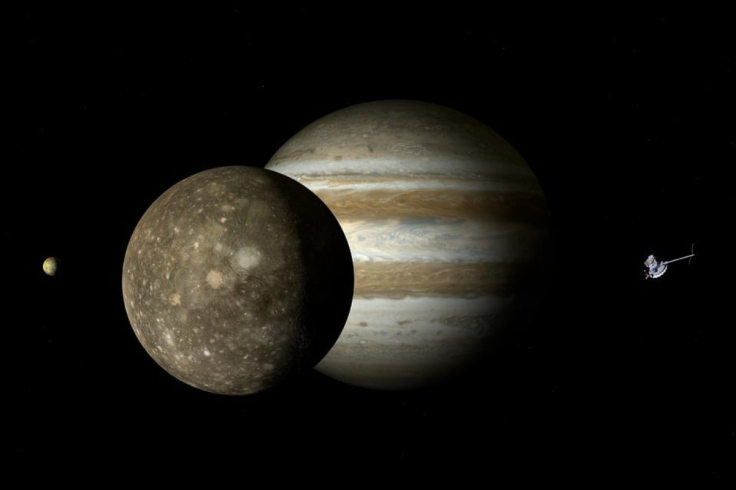
Chasing the King of Planets: Why 3I/ATLAS Is Setting Its Sights on Jupiter
If 3I/ATLAS is looking for a dance partner in our neighbourhood, it has already chosen one far more substantial than Earth. In the cosmic hierarchy, Jupiter is the undisputed centre of attention, boasting a mass 318 times greater than our own planet. The visitor's trajectory seems to reflect this reality.
Having avoided Earth by passing on the far side of the sun on Oct. 29, 2025, it is now hurtling toward a rendezvous with the gas giant. The object has also undergone a striking colour change, shifting from an entirely red hue to a vibrant greenish glow caused by the release of diatomic carbon as it warms.
On March 16, 2026, 3I/ATLAS will reach its closest point to Jupiter, a distance of 53.6 million kilometres. This puts it right at the edge of the Hill radius, where Jupiter's gravity begins to dominate over the sun's influence. Scientists are eager to monitor this pass using the Juno spacecraft, watching for any 'unusual activity', such as the potential release of satellites at Jupiter's Lagrange points, where fuel requirements for any hypothetical technical devices would be minimal.
As we watch from the sidelines, this encounter serves as a humbling reminder of our place. We are latecomers to a very old party, and for visitors who have attended for billions of years, the real action is happening elsewhere. Regardless of what we discover, the message from 3I/ATLAS is clear: in the vast theatre of the stars, we are rarely the lead actors.
As 3I/ATLAS continues its high-speed trek toward the outer reaches of our solar system, it leaves behind a trail of scientific wonder and a stark reminder of our cosmic insignificance. While we may never know if this visitor was a natural phenomenon or something more deliberate, the data gathered during its March 2026 rendezvous with Jupiter could redefine our understanding of the galaxy.
© Copyright IBTimes 2026. All rights reserved.