

3I/ATLAS Mystery Solved: Is it a Comet Or An Alien Spacecraft From The Milky Way?
Interstellar visitor 3I/ATLAS recedes from Earth

In the vast, quiet theatre of deep space, not many things capture the human imagination like a traveler from another world. For months, the arrival of 3I/ATLAS has sparked a firestorm of speculation that has made it hard to tell what is real science and what is science fiction. While some parts of social media have been buzzing with ideas about alien probes, the truth about this interstellar traveler is probably even more interesting.
We are not looking at a man-made craft; we are looking at a relic from a galaxy that is much older than our own. It has been a silent witness to cosmic history since before our sun even existed. The object came the closest to Earth on Dec. 19, 2025, at 6:00 a.m. GMT, when it was 168 million miles (270 million kilometres) away.
The 'I' in its designation signifies its status as an 'interstellar' traveller, the third such guest ever detected by humanity following the high-profile visits of 1I/'Oumuamua and 2I/Borisov. This celestial nomad offers a vanishingly rare opportunity to study the material of another stellar system without ever leaving our own. Emerging from the Milky Way's thick disk — a region populated by the galaxy's ancient stars — 3I/ATLAS is estimated to be billions of years older than our entire planetary system.
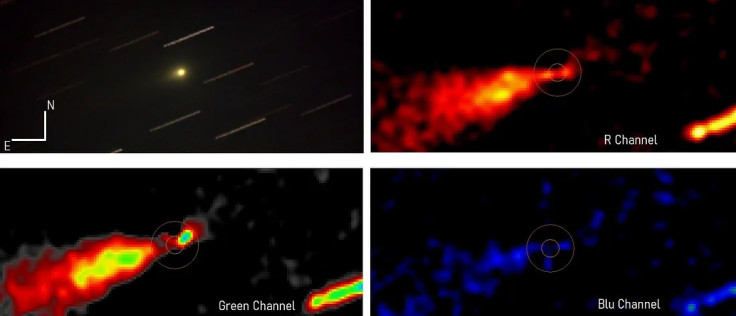
The Great Debate: Is 3I/ATLAS a Natural Wonder or Artificial Tech?
Much of the fervour surrounding the object's true nature has been stoked by the vocal assertions of Harvard University astronomy professor Avi Loeb. Loeb, who has frequently appeared in the media to discuss the object, argues that the scientific community has been too dismissive of artificial origins.
One of his more controversial claims suggests that evidence of cometary activity, such as outgassing, was actually an illusion created by astronomers blurring the object's image through incorrect tracking. Loeb noted on Monday that '3I/ATLAS did not manoeuvre or display any unusual activity' during its recent flyby, although he maintains its 'anti-tail' jet deserves further study.
However, the broader astronomical community remains unconvinced. Following the famous maxim of Carl Sagan — 'Extraordinary claims require extraordinary evidence' — researchers have countered Loeb's assertions with data proving the object was tracked with precision.
The prevailing consensus is that 3I/ATLAS behaves like a comet because it is, quite simply, a comet, albeit one with a passport from a distant star system. NASA's Europa Clipper spacecraft has even captured ultraviolet images of the guest from 102 million miles (164 million kilometres) away to assist in this analysis.

Tracking the 3I/ATLAS Legacy and the Search for Technosignatures
The question of why anyone would suspect an alien origin in the first place is not entirely unfounded. Humanity has already minted its own interstellar ambassadors. The NASA probes Pioneer 10 and 11, Voyager 1 and 2, and New Horizons are all currently on trajectories that will carry them out of our solar system forever. If our own fledgling technology is destined to drift between the stars, it stands to reason that other civilisations might have sent their own hardware into the dark.
A compelling paper by astronomer James R.A. Davenport suggests that while we should remain sceptical, it is 'worthwhile' to monitor these objects for signs of 'unnatural activity'. Scientists look for specific red flags: unusual orbital changes, bizarre geometric shapes, artificial surface reflections, or radio transmissions.
To date, 3I/ATLAS has exhibited none of these 'weird' behaviours. While technically visible in large binoculars, the comet appears at a faint magnitude 11, resembling a 'tiny, slightly out-of-focus star' near the constellation Leo.
As the object begins its long retreat back into the interstellar void, it serves as a humbling reminder of our place in the cosmos. It may not be a scout ship from a distant empire, but as a 7-billion-year-old traveller, it carries a story of the galaxy that is far more ancient than any technology we could currently conceive.
© Copyright IBTimes 2026. All rights reserved.