

3I/ATLAS Mystery: CIA Refusal to Confirm Records Sparks Interstellar Security Row
Why is the CIA keeping secrets about this interstellar visitor?

When a visitor from another solar system streaks through our cosmic backyard, the world's leading astronomers usually reach for their telescopes. However, when that same visitor triggers a wall of silence from the heart of the American intelligence community, people start reaching for their conspiracy theories.
The object in question, a fast-moving interstellar traveler named 3I/ATLAS (officially known as C/2025 N1), is at the center of a fascinating battle between state secrecy and scientific openness. The Asteroid Terrestrial-impact Last Alert System (ATLAS) in Chile found the object on July 1, 2025. It was moving at an incredible 58 kilometers per second.
It is only the third confirmed guest from beyond our solar system to be detected, following in the footsteps of the cigar-shaped 'Oumuamua in 2017 and the comet Borisov in 2019. But while its predecessors were debated in academic journals, 3I/ATLAS is currently being debated in the shadows of Langley.
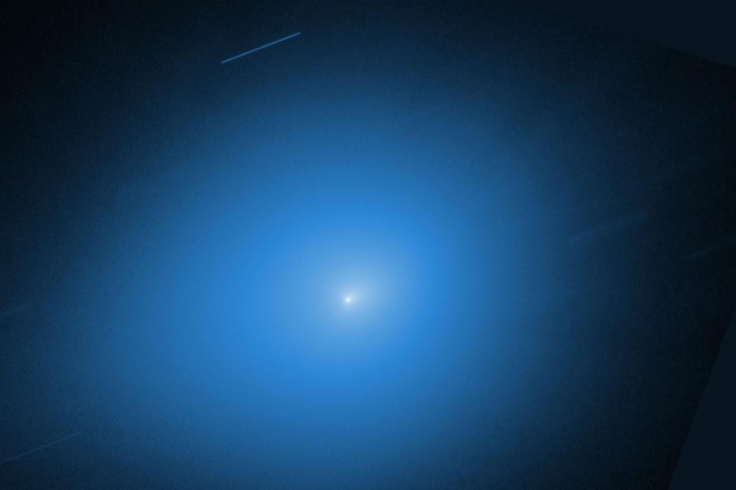
The 'Glomar' Mystery Surrounding 3I/ATLAS
The controversy erupted following a Freedom of Information Act (FOIA) request regarding the object, filed in November 2025 by John Greenewald Jr., the founder of the government transparency site The Black Vault. Rather than providing a standard briefing or even a redacted report, the CIA issued what is known as a 'Glomar' response on Jan. 5, 2026. In the world of espionage, this is the ultimate 'no comment': the agency stated it could 'neither confirm nor deny' the existence of any records pertaining to 3I/ATLAS.
This kind of refusal is usually only used for very serious national security issues, like secret satellites, black sites in other countries, or experimental weapons technology. By using it on a ball of ice and rock flying through space, the CIA has accidentally made things worse.
If 3I/ATLAS is just a natural comet, as NASA says, why does the intelligence community need to keep its data so secret? Harvard astrophysicist Professor Avi Loeb adds to the tension by saying that the object shows 'anti-tail' brightness patterns and signatures of atomic nickel, which he says are not typical of a comet.
Former intelligence officials are quick to downplay the drama, suggesting the response is likely a protective measure for 'sources and methods'. If the CIA acknowledged it was tracking the object, it might reveal the terrifyingly precise capabilities of its surveillance satellites — tech that is meant to be watching rival nations, not hunting for space rocks. Yet, in an era where the Pentagon is increasingly open about 'Unidentified Aerial Phenomena' (UAPs), this sudden return to opacity feels like a step backward for public trust.

Geopolitical Stakes and the 3I/ATLAS Legacy
While the scientific community remains 99% certain that 3I/ATLAS is a natural body — with researchers like Associate Professor Michele Bannister estimating it could be up to 14 billion years old — the 'what if' scenario carries immense weight. If an interstellar object were ever found to be artificial — a piece of 'space junk' from a distant civilisation — the discovery would be the single most disruptive event in human history.
The potential upsides are the stuff of science fiction: breakthroughs in propulsion, energy and materials science that could leapfrog human technology by centuries. However, the risks are equally daunting. A scramble to retrieve interstellar technology would likely trigger a fresh Cold War, as superpowers vie for a 'winner-takes-all' advantage in orbital dominance.
Beyond the alien theories, there is a more grounded reality: space is becoming big business. The detection of 3I/ATLAS has highlighted a booming market for 'space situational awareness'. Private aerospace firms and AI startups are now competing for government contracts to build better sensors and autonomous anomaly detection software. Whether these objects are comets or something more exotic, the ability to track fast-moving, non-traditional targets is now a permanent line item in national budgets.
As 3I/ATLAS begins its long journey back into the freezing void of interstellar space, scheduled for a final planetary assist from Jupiter in March 2026, it leaves behind a complicated legacy. It has proven that our telescopes are getting better at spotting visitors, but it has also exposed a widening rift between the scientists who want to share knowledge and the gatekeepers who want to guard it.
© Copyright IBTimes 2026. All rights reserved.