

3I/ATLAS Mystery: Harvard Scientist Avi Loeb Reveals 'Weird' Hubble Discovery Regarding Interstellar Visitor
Hubble images show 'weird' sunward jets defying solar physics
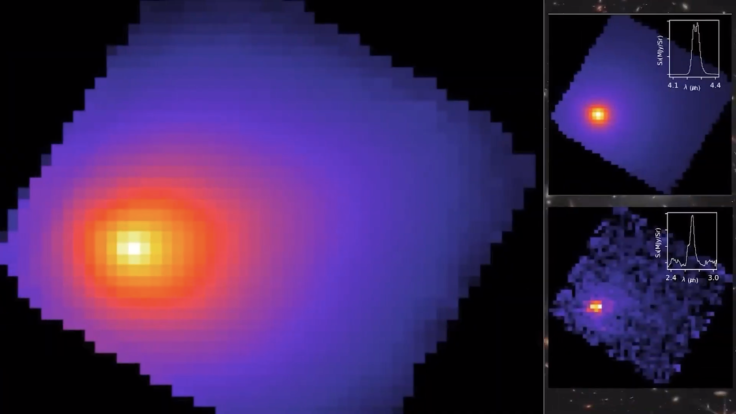
The cosmos has a knack for upending our expectations just when we think we have the neighbourhood mapped out. On Jan. 14, 2026, the Hubble Space Telescope swivelled its gaze toward the interstellar visitor known as 3I/ATLAS, capturing a series of six images that have left the astronomical community — and Harvard's Professor Avi Loeb — grappling with a genuine enigma. This is not your average comet; it is a celestial rebel that appears to be defying the very laws of solar physics we rely on to categorise our own solar system's icy wanderers.
The latest snapshots reveal a massive, glowing halo of material surrounding the object's nucleus, extending more than 130,000 kilometres toward the sun. To put that in perspective, that is roughly a third of the distance between the Earth and the moon. However, the real 'weirdness' began when researchers applied a specific digital filter to the data. The brightness map captured by Hubble represents the state of 3I/ATLAS after its perihelion, showing how the interstellar guest is reacting to the intense heat of our local star.

The Geometric Puzzle of the 3I/ATLAS Jets
The Larson-Sekanina Rotational Gradient filter, which is meant to remove the circular glow and show the structures underneath, gave very surprising results when it was used on the Hubble images. 3I/ATLAS has a strange arrangement of outflows instead of the usual swept-back tail that looks like hair blowing in the wind.
The data shows a prominent 'anti-tail' shooting directly toward the sun, accompanied by a trio of 'mini-jets.' These mini-jets are arranged with an almost mathematical precision, separated from one another by exactly 120 degrees. Most bafflingly, not a single one of these jets is pointing away from the sun. In the world of cometary science, where solar wind and radiation usually push material back into a long, trailing tail, this sunward orientation is effectively unheard of.
Adding to the mystery is the object's rhythmic movement. A recent paper co-authored by Professor Loeb and Toni Scarmato, which analysed previous Hubble data from December 2025, found that this jet system is not static. It wobbles periodically by approximately 20 degrees every 7.1 hours. During the half-hour window that Hubble watched the visitor on Jan. 14, the orientation shifted by about 5.6 degrees, suggesting a complex, rotating engine at the heart of this interstellar traveller.

Seeking Answers as 3I/ATLAS Reaches Opposition
The next few days are critical for unravelling this mystery. On Jan. 22, 2026, a rare celestial alignment will occur: the Earth will be aligned to within 0.69 degrees of the line connecting 3I/ATLAS to the sun. This 'opposition' is similar to the geometry of a full moon; because we will be looking at the visitor from the same direction as the sun's light, we will see its reflective surfaces in their maximum possible brightness.
Crucially, because we will be looking at the object from the sun's perspective, that defiant sunward anti-tail will be pointed directly at us. Scientists hope that measuring the surge in brightness and the way light is polarised during this alignment will reveal what the anti-tail is actually made of. This rare vantage point will allow researchers to see the glowing dust and the nucleus at their absolute peak visibility from Earth.
The big question remains: what kind of material can punch through hundreds of thousands of kilometres of solar wind and radiation without being deflected? Is it composed of large dust grains, fragments of ice, or something even more substantial? Early data from the SPHEREx space observatory indicated the presence of icy fragments before perihelion, but this signature vanished in December 2025.
In its place, SPHEREx found a twenty-fold increase in water production and a cocktail of organic molecules including methane (CH4), ethane (C2H6), methanol (CH3OH) and formaldehyde (H2CO). For these delicate organics to have survived a multi-billion-year journey across the void of interstellar space, Loeb argues they must have been protected deep within the object — at least 10 metres beneath its surface. Whether 3I/ATLAS is a natural relic of a distant star system or something more remains to be seen, but for now, it is the most intriguing guest the solar system has ever hosted.
© Copyright IBTimes 2026. All rights reserved.