

3I/ATLAS Radio Scan: Most Sensitive Alien Search Ever Ends With Shock Result
No alien signals found on 3I/ATLAS: Why the visitor's silence is a major win for SETI.
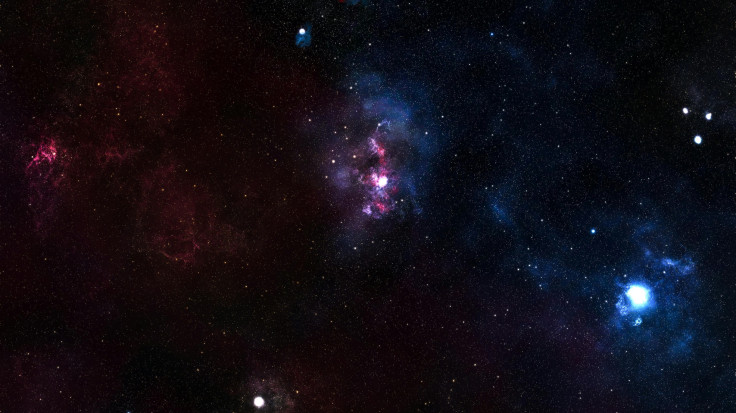
The vast, silent void between the stars occasionally coughs up a visitor that sets the scientific world—and the internet—ablaze. When the interstellar wanderer known as 3I/ATLAS first appeared on our cosmic radar in July 2025, it was more than just a speck of light; it was a potential bridge to another world. Discovered on 1 July 2025 by the Asteroid Terrestrial-impact Last Alert System (ATLAS) in Rio Hurtado, Chile, the object—officially designated C/2025 N1—screamed into our view at a blistering 58 kilometres per second.
Following in the enigmatic footsteps of 'Oumuamua and Borisov, this third known interloper carried the weight of our greatest existential question: are we truly alone? While the romantic in us hoped for a sleek, metallic scout from a distant star system, the reality, as revealed by a massive dish in the hills of West Virginia, offers a more grounded, yet no less fascinating, truth.
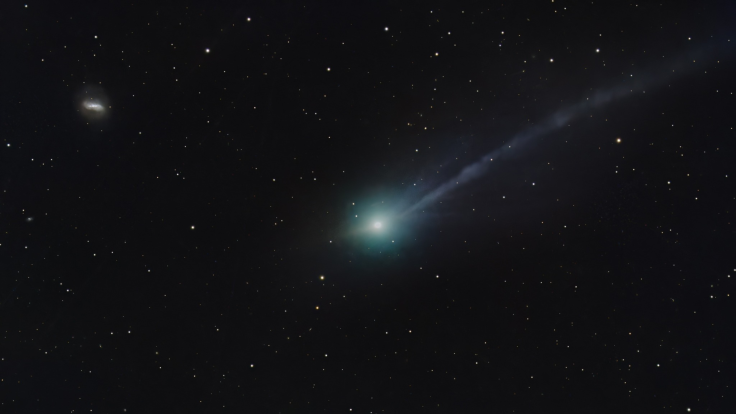
3I/ATLAS arrived at a time when public fascination with 'technosignatures'—the electronic fingerprints of advanced civilisations—was at an all-time high. Unlike the cigar-shaped 'Oumuamua, this object looked very much like a comet, sporting a visible coma and a rounded nucleus estimated by the Hubble Space Telescope to be between 0.3 and 5.6 kilometres in diameter.
Yet, the scientific community knew that looks could be deceiving. In the world of interstellar archaeology, one does not simply ignore a guest from another star that may be up to 11 billion years old—potentially making it one of the oldest objects ever witnessed in our solar system.

The 100-Metre Search For Artificial Life On 3I/ATLAS
On 18 December 2025, just as the object was making its closest approach to Earth at a distance of 270 million kilometres, the Breakthrough Listen project took action. They pointed the 100-metre Green Bank Telescope directly at the visitor. This was not a casual glance; it was the most sensitive radio search ever conducted on an interstellar object.
Situated in the National Radio Quiet Zone, where most terrestrial transmissions are strictly prohibited, the telescope provided an unnervingly clear ear to the cosmos. The team scanned the visitor across four distinct radio bands (L, S, C, and X), ranging from 1 to 12 GHz. This window is often called the 'goldilocks zone' for interstellar communication because it is quiet enough to hear the faintest whispers through the background noise of space.
The initial results were enough to make anyone's heart race. The raw data revealed more than 471,000 candidate signals. However, the reality of modern astronomy is a constant battle against our own 'noise.' To find a genuine alien transmission, scientists had to filter out the stray pings of our own satellites and ground-based electronics. After a rigorous process of sky localisation and interference checks, that mountain of data was whittled down to just nine signals.
Further analysis, however, revealed these were phantoms—false positives caused by terrestrial interference or detected during off-target scans. The study, recently detailed in the arXiv preprint server, set a definitive threshold: there were no isotropic continuous-wave transmitters broadcasting at anything above 0.1 watts from the location of 3I/ATLAS.
To put that into perspective, a modern mobile phone emits roughly 1 watt of power. This means that had there been a device on the comet with even a tenth of the power of a child's walkie-talkie, our telescopes would have caught it red-handed.
Why The Silence Of 3I/ATLAS Still Matters For Science
While some may feel a pang of disappointment that the object did not turn out to be a messenger from the stars, the lack of a signal is a scientific triumph. 'There is currently no evidence to suggest that ISOs are anything other than natural astrophysical objects,' the study's authors noted. However, the sheer sensitivity of the search has provided a new gold standard for future monitoring.
By testing our instruments on a real-time interstellar visitor, we have refined our ability to distinguish between a genuine cosmic message and the electronic hum of our own civilisation. The search also coincided with the observation of a rare 'anti-tail'—a sun-facing plume of dust that defies typical cometary behaviour—and rhythmic 'wobbling' jets that suggest the nucleus rotates every 15 hours.
As 3I/ATLAS continues its lonely journey back into the dark on a hyperbolic trajectory that will see it exit our system forever, the scientific community remains undeterred. With the Square Kilometre Array on the horizon and AI-driven processing getting sharper by the day, we are finally learning how to listen to the silence properly.
© Copyright IBTimes 2026. All rights reserved.