

3I/ATLAS Reveals Alien Secrets as Largest Interstellar Object Ever Found
Record-breaking interstellar comet 3I/ATLAS reveals 'alien' secrets and ancient chemistry

The vast, silent expanse of our solar system has just played host to a visitor from the deepest reaches of the galaxy, and it is proving to be unlike anything astronomers have ever witnessed. While most of the cosmic debris we encounter is 'local' — leftovers from the birth of our own sun — every so often, an interloper from another star system comes screaming through our neighbourhood. Travelling at a staggering hyperbolic excess velocity of 58 kilometres per second — far faster than its predecessors 1I/ʻOumuamua and 2I/Borisov — this visitor arrived with an energy that has forced a rethink of our cosmic surroundings.
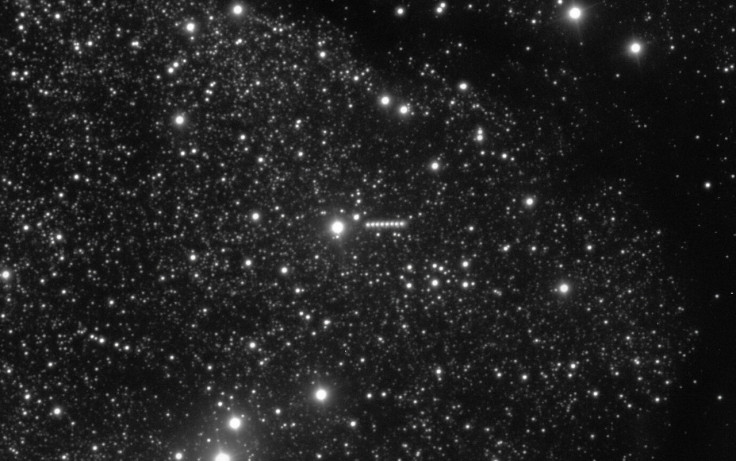
The newest and maybe most important of these guests is 3I/ATLAS. The ATLAS system in Chile found this interstellar comet in July 2025. Since then, every major telescope on Earth has been poking and prodding it. Even now, weeks after it came closest to Earth on Dec. 19, 2025 and sailed by us at a safe distance of 270 million kilometers, scientists are still trying to make sense of the data this fast-moving object left behind.
A Cosmic Time Capsule From Another Star
This object is officially known as C/2025 N1 (ATLAS). It is only the third interstellar visitor ever confirmed, following the mysterious 1I/ʻOumuamua and 2I/Borisov. The name '3I' means that it is only the third known macroscopic interstellar object in history. But 3I/ATLAS is already setting records.
It is officially the largest interstellar object we have ever tracked, with a core that is thought to be between 440 meters and a staggering 5.6 kilometers wide. Its orbital eccentricity of 6.1 is also the highest ever recorded, which makes its path look almost straight as it cuts through the plane of our planet.
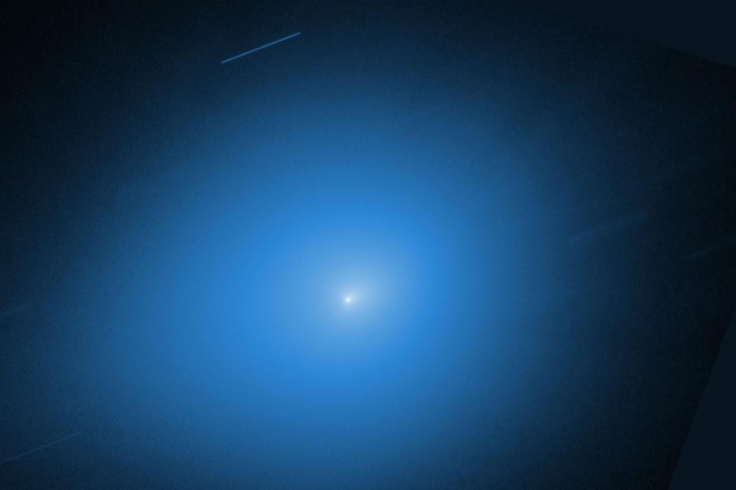
What truly sets this comet apart is its behaviour during its perihelion — its closest point to the sun — which occurred on Oct. 29, 2025. As it warmed up just 210 million kilometres from the sun, the comet erupted in a display of intense activity. Instruments on the James Webb Space Telescope and the Hubble Space Telescope captured a massive coma and a brilliant tail.
Spectroscopic analysis showed a strange mix of chemicals: a lot of carbon dioxide and carbon monoxide, along with small amounts of cyanide and atomic nickel. A lot of people are talking about the discovery of atomic nickel vapor without iron. Avi Loeb from Harvard and others questioned whether the object was made by humans at first because this 'chemical anomaly' is more common in industrial alloys on Earth.
People were especially impressed by its unusual blue color, which came from volatile gases that changed from a gas to a solid and gave it a ghostly glow. Kinematic analysis suggests that the comet likely originated from the galaxy's 'thick disk', a cluster of ancient stars that formed during the 'cosmic noon' approximately 9 to 13 billion years ago.
This means that the comet was born in a part of space with older stars. This could mean that the comet is billions of years older than our solar system. It is, in the most literal sense, a piece of history from a part of the Milky Way that we may never see.
What the Departure of 3I/ATLAS Means for Planetary Defence
As we move into early 2026, the comet is beginning its long goodbye. It is currently following a hyperbolic trajectory that will eventually sling it back out into the void between stars. Before it leaves, however, it has one more major appointment: a close flyby of Jupiter scheduled for March 16, 2026.
This path has allowed a fleet of spacecraft, including the Parker Solar Probe and various Mars-orbiting missions, to gather supplementary data. The Mars Reconnaissance Orbiter even managed a high-resolution snapshot on Oct. 3, 2025, providing the first clear look at the scale of the nucleus hidden beneath the coma.
Interestingly, the European Space Agency's Juice probe managed to capture observations in November 2025, though scientists are having to wait until February 2026 to see the results due to specific thermal constraints on the craft. In the meantime, the search for anything 'unusual' continues. While some had hoped for the kind of anomalous signals that spark science-fiction fantasies, observations from the Green Bank telescope found no artificial emissions. 3I/ATLAS appears to be a purely natural, albeit extraordinary, phenomenon.
The legacy of this visitor will be felt long after it disappears from our dawn skies this spring. The discovery has already prompted calls for a new 'global strategy' for interstellar monitoring, as the newly operational Vera C. Rubin Observatory is expected to identify dozens of similar objects every year. The fact that the observatory actually caught glimpses of the comet days before its official discovery on July 1, 2025 proves that our ability to spot these interstellar 'needles in a haystack' is improving rapidly.
As we refine our planetary defence models and our understanding of chemical diversity across the galaxy, 3I/ATLAS serves as a cold, glowing reminder that we are part of a much larger, much older celestial story. For now, those with medium-sized telescopes and an aperture of at least 400mm can still catch a glimpse of this ancient wanderer before it vanishes into the dark forever.
© Copyright IBTimes 2026. All rights reserved.