

3I/ATLAS Shock: Interstellar Comet Could Be 14 Billion Years Old, Pre-Date Our Sun
Is 3I/ATLAS a 14-billion-year-old comet or an alien probe? Explore the latest findings on this mysterious interstellar visitor and its ancient galactic roots.
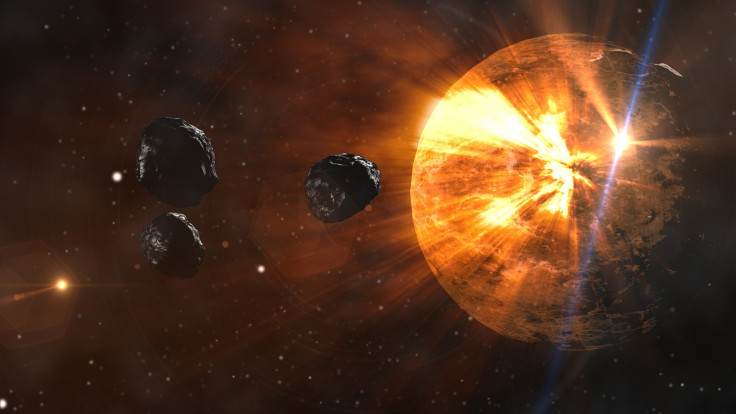
A newly discovered object, 3I/ATLAS, is sparking debate among astronomers. Early data suggests it could be a remnant from the early universe.
Unlike most comets, which originate in our solar system, this object appears to have come from another galaxy. Some researchers have even speculated it could be artificial, though this remains highly controversial.
The Asteroid Terrestrial-impact Last Alert System (ATLAS) station in Chile first saw the object on July 1, 2025. Michele Bannister, an associate professor at the University of Canterbury in New Zealand, is leading a thorough investigation into it. The results of her team's work are nothing short of revolutionary.
They suggest that we are currently hosting a guest who is much older than the Earth itself. This is the third confirmed interstellar visitor to our solar system, after 1I/'Oumuamua and 2I/Borisov. It is officially called C/2025 N1 (ATLAS).
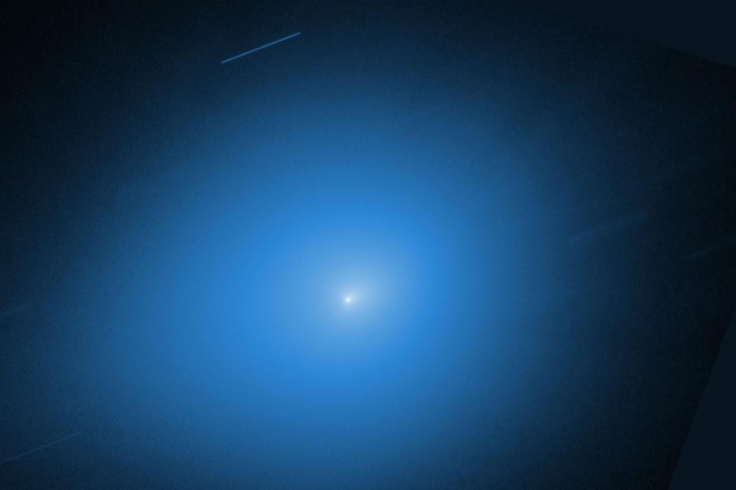
The Ancient Origin Of 3I/ATLAS And Its Galactic Journey
According to Bannister, 3I/ATLAS is estimated to be between eight and 14 billion years old. To put that into perspective, our entire solar system has only existed for roughly 4.6 billion years. This means the comet was already ancient when the Sun was just a cloud of dust. 'The UC team, in partnership with Professor Chris Lintott at the University of Oxford, was the first to provide the theoretical study that showed how old the comet was based on its velocity, just days after it was first identified,' Bannister told Astrobiology.
The comet's staggering speed measured at approximately 58 km per second (129,000 mph) relative to the Sun suggests it likely originated from the Milky Way's 'thick disk,' a region populated by the galaxy's oldest stars.
The discovery has sent shockwaves through the scientific community because the chemistry of the object is fundamentally different from anything we have seen before. As it entered our skies, researchers detected unusually rich atomic nickel and iron emissions, marking it as a true outsider. 'The chemistry of 3I/ATLAS is distinctive relative to our solar system comets, which is one of the things that will tell us what its home environment was like,' Bannister explained.
Observations from the James Webb Space Telescope (JWST) have also confirmed the comet is unusually rich in carbon dioxide, indicating it formed in a frigid environment far from its original parent star.
For astronomers, this is more than just a passing rock; it is a 'calling card from the past' that offers a glimpse into planet formation around a star that may have died billions of years ago. However, the window of opportunity is closing fast. After reaching perihelion (its closest point to the Sun) on 29 October 2025, the object made its closest approach to Earth on 19 December at a distance of 170 million miles.
Scientists estimate they have only a few hundred days to interpret the data before the object vanishes back into the void of interstellar space, with its final planetary flyby of Jupiter expected in March 2026.

Is 3I/ATLAS A Natural Wonder Or An Alien Spaceship?
The University of Canterbury team thinks the object is a primordial comet, but other people are looking into a more interesting idea. Avi Loeb, a well-known professor at Harvard University, has once again caused a stir by saying that 3I/ATLAS might not be a natural event at all. Loeb, who is known for his unusual ideas about interstellar objects, says that the object's strange glow and path could mean that it is an artificial alien probe on a reconnaissance mission.
Loeb's suspicions are bolstered by recent images from the Hubble Space Telescope, which revealed a mysterious 'double jet' structure. Specifically, Loeb is focused on the object's 'anti-tail' directed toward the Sun.
While mainstream astronomers believe this 'anti-tail' is simply a stream of large dust grains being pushed forward by internal activity, Loeb argues that if 3I/ATLAS were a standard comet, this anti-tail should not contain 'streaming gas beyond a distance of 5,000 kilometres from the nucleus.' To settle the debate, he is calling for the use of a molecular tracer to determine once and for all if the object is composed of ice and dust or something manufactured.
Whether it is a 14-billion-year-old piece of cosmic history or a scout from another civilisation, 3I/ATLAS remains the most significant astronomical event of the decade. As observations continue throughout January, during which time the comet remains visible through small telescopes in the pre-dawn sky, the world waits to see what this ancient traveller will reveal next.
© Copyright IBTimes 2026. All rights reserved.