

3I/ATLAS Update: Harvard Expert Avi Loeb Says Comet's Rank Stays as 2026 Jupiter Date Looms
Is 3I/ATLAS alien technology? Harvard's Avi Loeb maintains a 'Rank 4' assessment ahead of its 2026 Jupiter flyby
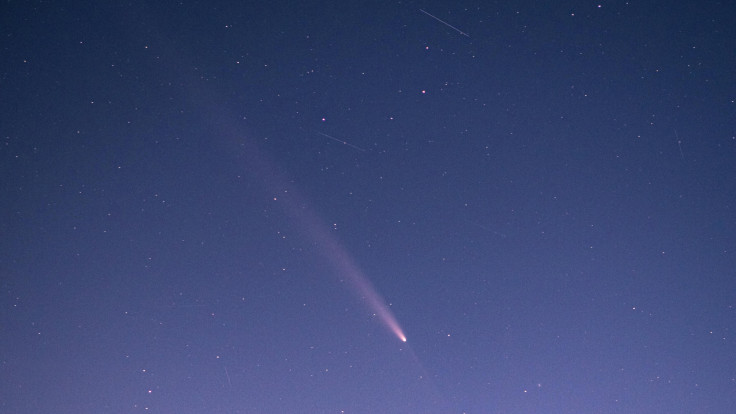
When the third interstellar visitor, 3I/ATLAS, flew into our cosmic backyard in July 2025, it brought with it a familiar storm of scientific debate and sensational headlines. The Asteroid Terrestrial-impact Last Alert System (ATLAS) in South Africa found the object on July 1. It was quickly identified as a rare interloper from outside our solar system.
The man who famously backed the 'alien technology' theory for 'Oumuamua' is not backing down now that the object is moving past its closest approach to Earth on Dec. 19. Avi Loeb, a Harvard professor and the head of the Galileo Project, has said that he is sticking by his controversial 'Rank 4' assessment of the object, even though the mainstream scientific community is putting more and more pressure on him to call it a simple, natural comet.
The fight over 3I/ATLAS is more than just a fight over a space rock; it's a fight between different ways of thinking about science. Most planetary scientists and NASA are happy with the 'dirty snowball' explanation, but Loeb says we are ignoring a growing list of strange things that can't be easily explained away.

The Scientific Mystery of 3I/ATLAS and the Loeb Scale
At the heart of this controversy is the Loeb Classification Scale, a quantitative system designed by the Harvard astrophysicist to rank the likelihood that an interstellar object is artificial. The scale ranges from 0, representing a standard icy body, to 10, indicating clear evidence of extraterrestrial technology. Loeb's decision to maintain 3I/ATLAS at a Rank 4 suggests a 'grey area' where natural explanations are prevalent but do not yet account for the object's specific, odd behaviours.
'3I/ATLAS is most likely a comet of natural origin, but there are 8 anomalies that endow it with a rank of 4 on the Loeb scale,' Loeb stated back in October. Since then, however, that list of peculiarities has nearly doubled.
Loeb now points to 15 distinct anomalies, ranging from its strange orbital plane — which sits almost perfectly within 5 degrees of our ecliptic despite being on a retrograde path — to a chemical composition that appears remarkably rich in nickel compared to iron. Spectral data shows a nickel-to-cyanide ratio that is orders of magnitude higher than thousands of known comets, a trait often associated with industrial aerospace alloys rather than primordial ice.
Perhaps the most baffling feature is the 'anti-tail'. Unlike a typical comet, which sports a tail pointing away from the sun due to solar wind, 3I/ATLAS has displayed a tightly collimated jet stretching a million kilometres towards the sun.
Loeb has likened this to a cat whose tail is growing from its forehead rather than its back, a visual that challenges the standard models of cometary outgassing. He notes the statistical improbability of such a jet remaining stable both before and after its Oct. 29 perihelion, suggesting it could be a beam used to mitigate solar wind damage.
Waiting for the Jupiter Encounter to Settle the Debate
Critics, however, are not convinced. Many in the field argue that comets are notoriously unpredictable and that Loeb is 'just asking questions' to fuel media interest. Yet, Loeb maintains that his caution is rooted in the same logic used by intelligence agencies. He points to 'black swan' events — low-probability occurrences with massive consequences — arguing that the potential impact of discovering alien tech is so high that we cannot afford to be dismissive.
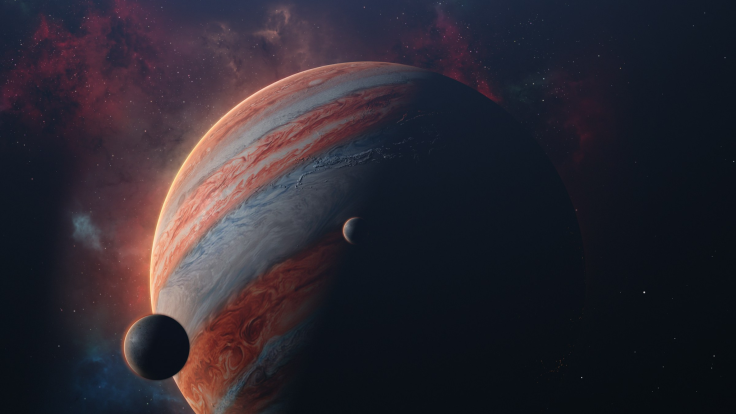
The scientific 'moment of truth' is now set for March 16, 2026, when 3I/ATLAS makes its closest approach to Jupiter, passing within 53.6 million kilometres of the gas giant — a distance remarkably close to Jupiter's Hill radius. This flyby will provide the ultimate testing ground. If the object is natural, the intense heat and gravitational forces should produce a predictable signature of carbon dioxide and water vapour moving at standard speeds. If, however, the spectral analysis reveals anomalous gases or exhaust speeds that defy physics, the Rank 4 assessment could climb significantly higher.
Loeb has promised to remain objective, stating that in the absence of a clear technological signature after the Jupiter data is analysed, he will finally revise the rank downwards. Until then, the world remains in a state of cosmic suspense, watching a visitor that refuses to be easily categorised.
Whether 3I/ATLAS is a rare natural marvel or a relic of sophisticated extraterrestrial engineering remains the most tantalising question in modern astronomy. As the object hurtles towards its definitive 2026 rendezvous with Jupiter, the line between science fiction and scientific fact continues to blur. Professor Avi Loeb's refusal to dismiss the anomalies reminds us that the universe is often far stranger than our current models allow.
© Copyright IBTimes 2026. All rights reserved.