

3I/ATLAS Shock: Harvard Professor Avi Loeb Flags 15 'Anomalies' in Interstellar Object
Avi Loeb flags 15 anomalies in mysterious interstellar guest 3I/ATLAS

When a strange visitor from another star system comes into our neighbourhood, people tend to go back and forth between not caring and being afraid of what might happen. For hundreds of years, we've looked into the dark and wondered if we're alone. But when the interstellar object 3I/ATLAS appeared in July 2025, it brought with it a mystery that can't be easily explained.
Professor Avi Loeb, a Harvard astronomer who is now the most important person in the search for alien technology, is at the centre of this mystery. Loeb is currently walking a fine line between being sceptical of science and being aware of the huge effects that a possible 'black swan' event could have.
To bring order to the chaos of interstellar discovery, the Loeb scale was developed. It is a system that ranks cosmic objects on a scale from 0 to 10. A 0 represents a standard, natural icy rock — your typical comet or asteroid — while a 10 signifies alien technology that could pose a direct threat to humanity.
The scale isn't just a thought experiment; it has been quantified in two peer-reviewed publications and recently expanded to include a formalism that allows the ranking to evolve as fresh data arrives. This evolving metric is particularly crucial given the object's sheer speed; entering our system at 58 kilometres per second, it is significantly faster than previous interlopers 1I/'Oumuamua and 2I/Borisov.
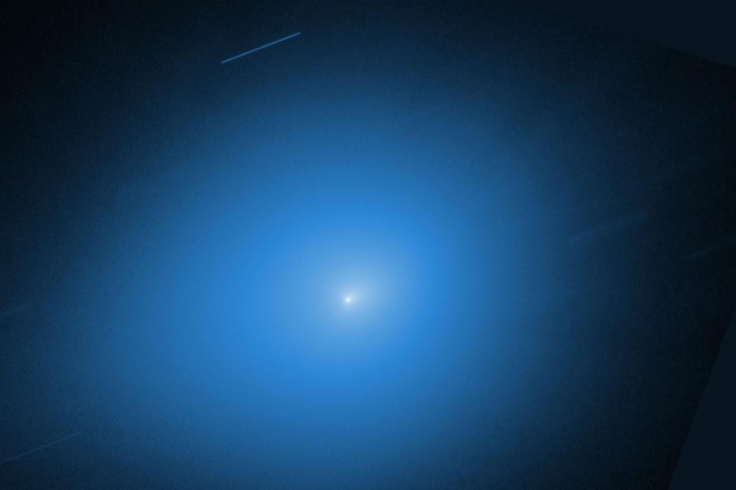
Deciphering the 15 Anomalies of 3I/ATLAS
Shortly after its discovery, Loeb assigned 3I/ATLAS a rank of 4. This wasn't a declaration of 'little green men', but rather a recognition of strange behaviour that couldn't be ignored. While many were quick to demand an updated ranking following the object's recent movements, Loeb has remained steadfast, refusing to alter the score until the data from its closest approach to Earth is fully analysed.
This process is painstaking and may not conclude until the object reaches its perijove — its closest point to Jupiter — on March 16, 2026. Among the most baffling features is a massive, sunward-pointing 'anti-tail' jet, stretching one million kilometres in length. Unlike temporary perspective effects seen in local comets, this appears to be a real physical jet that contradicts standard radiation pressure models.
In a recent appearance on NewsNation, interviewer Elizabeth Vargas pressed the professor on the true nature of this visitor. Loeb's response was characteristically nuanced, though it was quickly seized upon by headlines. He reiterated his long-held view that 3I/ATLAS is most likely a natural object. However, he was quick to point out that 'most likely' is not the same as 'certain'. As early as July 2025, his peer-reviewed conclusions suggested a natural origin, yet the object possesses a growing list of peculiarities.
On Oct. 29, Loeb flagged eight specific anomalies; today, that number has climbed to 15. These include its unusual diatomic carbon emissions, which have turned the object a vibrant green, and a staggering 1-in-40,000 probability regarding the alignment of its rotation axis. It is these 15 deviations from the norm that keep 3I/ATLAS at a rank of 4, keeping the door to a technological explanation firmly ajar.
Pascal's Wager and the Technological Mystery of 3I/ATLAS
It's not about being sensational; it's about being ready to take the technological interpretation seriously. Loeb compares the situation to Pascal's Wager, which says that the risks of being wrong are so high that one must act as if the unlikely event is true. He says that the intelligence failures on Sept. 11, 2001, and Oct. 7, 2023, were due to not being ready for 'black swan' events, which are rare but have a big impact.
Today, both intelligence agencies and scientists are changing the way they work so that they can gather as much information as possible about these events that have a low chance of happening but a big impact. For 3I/ATLAS, this means looking closely at every flare of its light and every kilometre of its path. Right now, the world's scientists are treating the flyby as a big planetary defence drill.
NASA and the ESA are using telescopes like Hubble and Webb to follow the object's path through the asteroid belt. We are in a waiting game right now, caught between the most likely reality of a lonely comet and the slim, world-changing chance of a message from the stars. Loeb says that we have to follow the data wherever it goes, even if it makes us question our place in the universe.
As 3I/ATLAS hurtles toward its next major milestone near Jupiter, the 15 anomalies flagged by Avi Loeb serve as a profound reminder that our understanding of the cosmos is still evolving. Whether this visitor is a unique natural phenomenon or a rare 'black swan' event of technological origin, the data collected will undoubtedly reshape our approach to planetary defence.
© Copyright IBTimes 2026. All rights reserved.