OpenAI's Sam Altman Says AI Could Cure Diseases — But We're Not Ready for Change
The world is unprepared for the swift job disruption and ethical upheaval this power will unleash

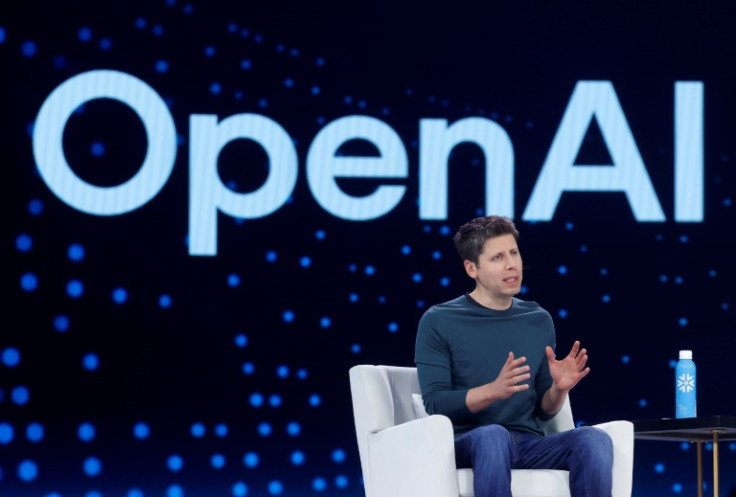
Sam Altman, the head of OpenAI, paints a dramatic picture of the future: an era where artificial intelligence eradicates major diseases. It's a vision that promises a radical improvement in human life, yet Altman warns we are deeply unprepared for the monumental changes such power will unleash.
In the three short years since ChatGPT was introduced globally, it has profoundly altered sectors, expedited scientific breakthroughs, and inspired dreams of healing illnesses and reducing the working week.
However, the very same technology responsible for these hopeful outcomes is simultaneously fuelling fresh concerns—and nobody feels this more sharply than the individual who helped set it free.
The Hidden Costs of Acceleration
OpenAI's Chief Executive, Sam Altman, recently disclosed that a 'long list of things' have accompanied ChatGPT's swift development, beginning with the sheer pace at which it has transformed our world. He elaborated during his appearance on The Tonight Show that the very platform capable of eliminating sickness could also be deployed improperly in ways that society is far from ready to handle.
Altman conveyed his apprehension directly to Jimmy Fallon: 'One of the things that I'm worried about is just the rate of change that's happening in the world right now. This is a three-year-old technology. No other technology has ever been adopted by the world this fast.'
📁 Sam Altman says the real risk is speed, because this technology is only three years old and already the fastest adopted in history.
— Jon Hernandez (@JonhernandezIA) December 9, 2025
What can cure diseases can also be misused and the tension rises when jobs change faster than society can adapt. New jobs will come, but not… pic.twitter.com/UE4KeDIOHp
He then went on to elaborate, 'Making sure that we introduce this to the world in a responsible way, where people have time to adapt, to give input, to figure out how to do this—you could imagine us getting that wrong.'
However, with over 800 million individuals now accessing ChatGPT weekly, the resulting risks are immense. This technology is already integrated into daily routines—spanning educational settings and corporate offices—and frequently outpaces the development of essential safety measures.
Career Shifts and Fierce Competition
Altman suggests that roles could begin to transform 'rather quickly'—yet he remains confident that we will all find new kinds of work to pursue.
These remarks arrive at a time when he also holds concerns regarding the pace of advancement demonstrated by his competitors. Altman, 40, reportedly issued an internal 'code red' last week to allocate additional resources to enhance ChatGPT amid pressure from rivals in the AI field, including Google, Meta, and Anthropic.
Collectively, the AI efforts of these organisations have driven significant efficiency gains and developed novel ways to collect and interpret data—but they have also deepened doubts about the long-term state of employment. The head of Anthropic, Dario Amodei, has been particularly outspoken, cautioning that artificial intelligence may abolish 50% of all junior-level office positions.
Altman, conversely, has maintained a mostly positive perspective. Even if the upheaval in employment is immediate, he contended that entirely different kinds of roles will neutralise it. 'The rate at which jobs will change over may be pretty fast. I have no doubt that we'll figure out all new jobs to do, and I hope, much better jobs,' he further commented during his appearance on The Tonight Show.
Altman has even hinted that some of these future occupations might literally take place off-world. Earlier this year, he told video journalist Cleo Abram, 'In 2035, that graduating college student, if they still go to college at all, could very well be leaving on a mission to explore the solar system on a spaceship in some completely new, exciting, super well-paid, super interesting job.'
Space-related job expansion is also an area that Google's Chief Executive, Sundar Pichai, feels strongly positive about—suggesting growth could begin within just a decade. Pichai commented on Fox News late last month: 'One of our moonshots is to, how do we one day have data centres in space so that we can better harness the energy from the sun that is 100 trillion times more energy than what we produce on all of Earth today?'
Five Years to Cures
Altman forecasts that AI will eliminate diseases within five years. Despite doubts about AI's effects on employment, learning, and our communities, one field where technology executives are almost entirely hopeful is healthcare.
Amodei has stated that the technology has the potential to eliminate most cancers, while Microsoft co-founder Bill Gates has foreseen 'breakthrough treatments.' Already, artificial intelligence is demonstrating success in accelerating the discovery of new medicines and assisting researchers in analysing biological data at capacities previously considered unattainable.
Altman predicted that AI programmes might initiate an age of innovation focused on eliminating illnesses as early as 2030. 'Five years is a long time,' Altman said.
He concluded with his hopes for the immediate and near-future impact: 'Next year, I hope we'll start to see these models really make small but important new scientific discoveries. And in five years, I hope they're curing diseases.'
© Copyright IBTimes 2026. All rights reserved.
- MOST POPULAR IN Technology