How Donald Trump's New AI Rule Will Affect US and You
Why Donald Trump's AI Rulebook Faces Fierce Pushback Across the US
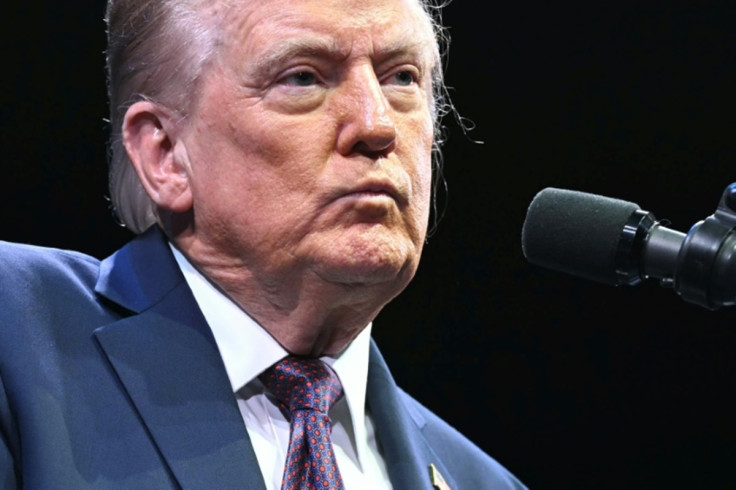
The Donald Trump administration is about to redraw the regulatory map for artificial intelligence in America. As of 8 December 2025, Trump announced plans to sign an executive order this week establishing a single national framework for AI.
Simply put, this will replace a patchwork of state laws with a single uniform rulebook, and the decision could be a turning point not only for technology companies but also for everyday users, shaping how AI is developed, deployed, and regulated across the US.
Trump's Single Rulebook for AI: What's Changing
Until now, states across the US have been free to draft and enforce their own laws governing artificial intelligence. Some have reportedly banned deepfake political ads or the non-consensual creation of sexual imagery via AI, and others have focused on requiring developers to explain how they plan to address risks such as bias, data privacy or catastrophic failures.
So, the result is a bunch of sometimes contradictory rules, which in a way is a regulatory maze for any company looking to launch AI services nationwide. Moreover, Trump's forthcoming executive order plans to strip away that complexity by preempting state laws and placing oversight solely under federal authority. In a post on his social media site, he said,
'There must be only One Rulebook if we are going to continue to lead in AI... I will be doing a ONE RULE Executive Order this week. You can't expect a company to get 50 Approvals every time they want to do something,'
The decision comes after quite a few months of deliberations, during which the White House reviewed drafts that reportedly include legal preemption of state laws via lawsuits and even schemes to withhold federal funding from noncompliant states, according to sources.
Furthermore, the technology industry has actually applauded the proposed massive change. Big Tech players such as OpenAI, Google (Alphabet), Meta Platforms and the venture capital firm Andreessen Horowitz reportedly elucidate that national AI standards are critical to ensure America does not fall behind in the global race for AI dominance.
So, for these companies, a consolidated regulatory environment reduces compliance burdens and accelerates deployment across multiple states.
Read More: Donald Trump To Decide Fate Of £62B Netflix-Warner Megamerger? - 'I'll Be Involved'
Read More: SinfulXAI Debuts Consent-Focused Adult AI After Creators Warn of 'Infantilising' Trends
What It Means for US Citizens
For American citizens, the centralisation of AI regulation could bring both benefits and potential drawbacks. On the positive side, national standards may accelerate the deployment of innovative AI services. Moreover, consistent rules would allow developers to launch apps and tools coast-to-coast without navigating a confusing mesh of state requirements.
This could also lead to the launch of new AI-driven products, ranging from healthcare diagnostics and educational tools to improved automation and travel-planning services. Furthermore, in line with the administration's bigger goals, the revamped regulatory framework also ties into America's AI Action Plan, which focuses on accelerating innovation, building AI infrastructure and maintaining global AI leadership.
However, many state leaders and consumer protection advocates are reportedly apprehensive. Civil-rights and consumer-protection organisations, as reported by Common Dreams and others, warn that a federal override could eliminate state-level safeguards against harms from AI, such as bias, privacy violations, deepfakes, child safety risks, and unfair algorithmic decisions. In the words of one critic, it would be like giving 'Big Tech free rein to use our children as lab rats for AI experiments.'
Moreover, critics also say that this potential law could effectively remove a layer of democratic oversight. As one statement, as per a report by NextGov, put it, threatening states with lawsuits or withdrawal of federal funding for passing their own AI rules amounts to 'an alarming overreach that is not driven by the public interest, but by the influence of Big Tech elites.' So, without state-level experimentation and competition, there is a risk that specific dangerous uses of AI might proliferate unchecked under general federal guidelines.
Furthermore, there is a significant question of accountability, as centralised regulation could make it harder for citizens to influence AI policy through their state governments. Loss of diversity in regulatory approach means fewer chances for experimentation or local innovation in oversight. Therefore, effectively, Americans may end up with less say in how AI affects their privacy, civil rights and consumer protection.
© Copyright IBTimes 2026. All rights reserved.
- MOST POPULAR IN Technology