'Appalling' TPUSA Turns Charlie Kirk's Place of Execution Into 'Selfie Booth'
Conservatives divided as attendees take selfies inside recreated site of Charlie Kirk's assassination
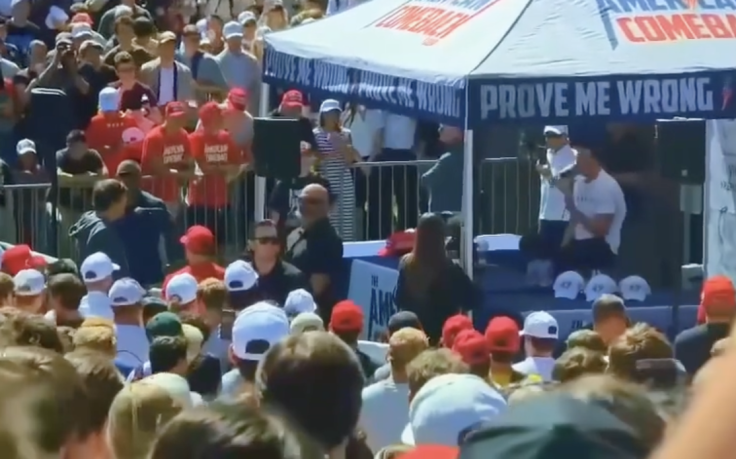
A display at Turning Point USA's (TPUSA) annual AmericaFest convention in Phoenix, Arizona, has drawn criticism for recreating the tent where the organisation's founder, Charlie Kirk, was fatally shot, allowing attendees to take photographs in front of it.
The installation replicates the booth where Kirk was assassinated on Sept. 10, 2025 while hosting a political event at Utah Valley University, and has become a central feature of the four-day conference. Attendees have been seen posing for selfies with the tent backdrop, an act critics have described as morbid and insensitive.
Controversial Exhibit at Political Conference
The reproduced tent closely resembled the scene of Kirk's fatal shooting at Utah Valley University, where the 31-year-old conservative commentator was killed while speaking under a white canopy marked with his signature slogans, including 'Prove Me Wrong'.
Turning Point USA has recreated the tent where Charlie Kirk was assassinated as part of its AmericaFest event.
— Shadow of Ezra (@ShadowofEzra) December 20, 2025
Attendees are now posing for photos and selfies inside the replica tent which depicts the assassination scene. pic.twitter.com/F60AIc41su
Witness accounts and official reports confirmed that a sniper shot Kirk in the neck during the event, in front of a crowd of thousands.
The exhibit drew attention at AmericaFest. Journalists on the ground reported attendees lining up to take photographs with the replica, some wearing copies of the 'Freedom' T-shirt Kirk had worn on the day he was shot.
Turning Point USA described the installation as a tribute to Kirk, the organisation's co-founder and principal public face. Since his death, his widow, Erika Kirk, has assumed leadership of the group and endorsed high-profile conservative figures at the conference.

Division Within Conservative Movement
The display, however, has caused a rare split within conservative ranks. Self-described MAGA commentators and supporters have criticised the installation as 'disturbing' and in poor taste, with personalities such as Michael Flynn Jr. publicly denouncing it.
Anyone else find this disturbing? https://t.co/vup0dYi8Nf
— Michael Flynn Jr (@realmflynnJR) December 20, 2025
Social media has amplified the backlash, with users across the political spectrum condemning the exhibit. Comments on X described the setting as strikingly inappropriate, even 'dark' or 'macabre'.
Public sentiment surrounding the recreated tent has grown so heated that some conservative commentators have openly questioned the leadership decisions of Erika Kirk and other TPUSA executives in approving it.
Fast Evolving Public Reaction
Coverage of the AmericaFest exhibit has extended far beyond the convention hall. Commentary from mainstream outlets noted that reactions were not confined to partisan lines, with even those critical of Kirk's ideology finding the use of the recreated tent alarming.
🚨 SICK BEYOND WORDS: TPUSA Turns Charlie Kirk's Assassination Tent Into AmFest Photo Op – Trash Can Included for Extra Disrespect!😱
— Project Constitution (@ProjectConstitu) December 20, 2025
At AmFest 2025, Turning Point USA set up a full replica of Charlie's "Prove Me Wrong" debate tent – the very one he was sitting under when he was… pic.twitter.com/tsddqVNRm7
Some commentators emphasise that memorials to the deceased typically reflect a period of mourning and dignity. They argue that what is unfolding at TPUSA's event may shift public understanding of how political movements navigate the commemoration of controversial figures.
Despite the heated controversy, TPUSA continues to support the exhibit, and AmericaFest goes ahead. The organisation has not released detailed visitor figures or explained how the installation fits its long-term strategy, apart from its role in a wider tribute to the late founder.

In the end, what remains clear is that the recreated tent has become a powerful and polarising symbol, highlighting tensions over how society should remember violent deaths in highly politicised environments.
A nation's mourning can be reflected in many ways, but few spectacles have ignited debate as starkly as this one.
© Copyright IBTimes 2025. All rights reserved.
- Recommended For You