Canadian Reveals How She Lived in Notting Hill for Just £80 a Week — and What the Catch Was
Zahra Khozema reveals how she managed to live in Notting Hill for just £80 a week but with a catch
A Canadian moved to the UK for an unpaid internship and, despite carrying £30,000 (approximately $39,600) in debt, pushed through — putting the problem to the back of her mind — and still managed to live in London, a notoriously expensive city, even staying in Notting Hill.
She has now revealed how she managed to live in the capital on just £80 (around $105) a week. While it sounds amazing, there was a catch.
A Canadian Lived in Notting Hill for £80 a Week
In 2019, when she was 23 years old, Zahra Khozema was studying for a Master's degree in journalism when she was offered an unpaid role at the Canadian Broadcasting Corporation's international news bureau in London — an opportunity that felt too good to pass up.
Zahra put her money troubles aside and focused on the opportunity — taking on a new role in a foreign country, in an expensive city where rent can cost around £500 (about $660) a month.
The freelance journalist and podcast producer from Toronto, Canada, knew that she couldn't pay that much, so she had to think creatively about where she was going to live. So she moved into a hostel.
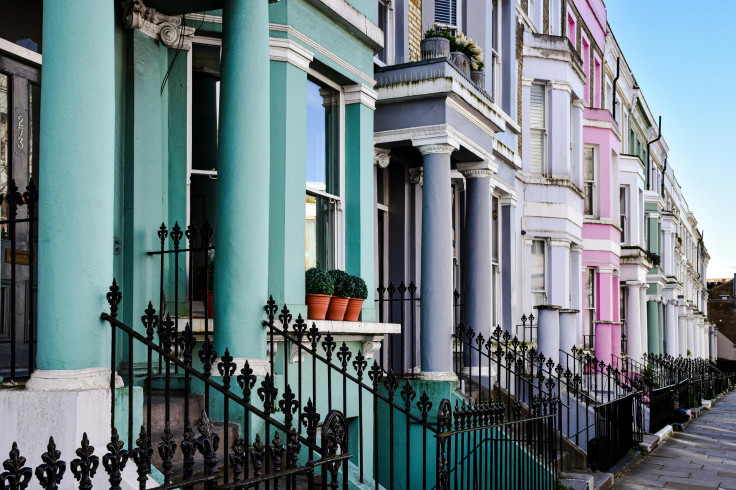
She found a hostel in a highly desirable area known for its pastel-coloured houses, Portobello Road Market, the Notting Hill Carnival, and its starring role in the romantic comedy featuring Julia Roberts and Hugh Grant. At Bowden Court hostel in Notting Hill, she took a shared room.
There, Zahra pays £80 a week for the bottom bunk in a room shared with three other women. The price includes two meals a day, access to laundry facilities and a gym — all in one of London's most prestigious postcodes.
The Bowden Court Hostel in Notting Hill
As reported by the Daily Mail, Bowden Court describes itself as a 'charity-run hostel and student accommodation in the heart of Notting Hill, London, offering budget-friendly stays with shared or private rooms.'
Zahra, now 30, recalled that Bowden Court was the cheapest option she could find.
'The room was tiny; if one person was standing up, it felt crowded,' Zahra said.
Well-travelled and accustomed to staying in hostels, Zahra noted that they often get a bad reputation, particularly as accommodation for adults. However, she said hostels can be just as clean as more expensive options.
'I've often found hostels to be as clean as Airbnbs, and I very much prefer them to hotels.'
Bowden Court was cleaned twice a day, with sheets changed weekly. It also had 24-hour security and offered a deal where the longer you stayed, the cheaper the rent became.
So a supposed short-term solution became a year-long one.
'By the end, I was paying maybe £50 to £60 a week,' she said.
Although the cheap rent was her main reason for staying long-term, she said the sense of community among residents also encouraged her to stay.
They held parties, taught one another different languages, and shared meals.
'The people I met were really diverse. There was a Japanese guy who cut everyone's hair, a British gentleman who liked to paint portraits, lots of students, people who came from the EU to learn English, those working in retail and hospitality, and even a few British pensioners too,' Zahra said.
Here's the Catch
Although rent as low as £50 to £80 a week is an amazing deal, there is a catch that not everyone might be comfortable with or happy with.
Staying in such accommodation comes with a downside: there is little privacy and limited space for personal belongings.
The then journalism intern shared an example of how privacy could be an issue:
'My roommate started dating someone. He was very nice, but they would use the top bunk while I was sleeping on the bottom. And there were two other women in the room as well!' Zahra said.
She added, 'When he slept over and rolled around in bed, the whole structure of the bed moved. Also, sometimes the food was terrible. I just wanted to cook something, and I couldn't.'
Zahra shared that everything she owns fits into her suitcase, a nightstand, and a narrow wardrobe.
She said that some of the residents of the hostels made it their own, 'Some people really made it their own. People had furniture that they brought in, beautiful sets of matching beddings, curtains that they bought, fluffy pillows, and rugs.'
Zahra also described the room's layout and her experience while staying there:
'There were no chairs in the room, and my roommate would sit on my bed. I really don't like outside clothes on my bed, so I would have to ask her not to.'
She added, 'If you sit on the bed, your head hits the bunk above, so there was nowhere to chill with a laptop or watch a movie in the evening.'
Zahra also got creative in finding some peace and quiet to work: 'I spent a lot of time exploring the area and found some empty coffee shops and parks where I could work for long periods when I didn't want to be around people.'
Zahra Saved up and Cleared Her Debt
Eventually, Zahra was able to save up and even clear her debt while staying at the hostel, after starting full-time work in communications, and after a year, moved into a house with four others she had met at the hostel, which felt like a palace in comparison.
'I was able to save all that money because my living costs were low at the hostel, and the pandemic meant I wasn't going out,' she said.
She reflected: 'All in all, I have great memories from that time. I made friends for life. When I moved to the UK, I only had enough for a one-way ticket, but when I returned home after two years, I was debt-free. I was really grateful that I was able to do that.'
© Copyright IBTimes 2025. All rights reserved.
- Recommended For You