

How Clément Messeri Took Wearable Cooling From Prototype to Customer Delivery
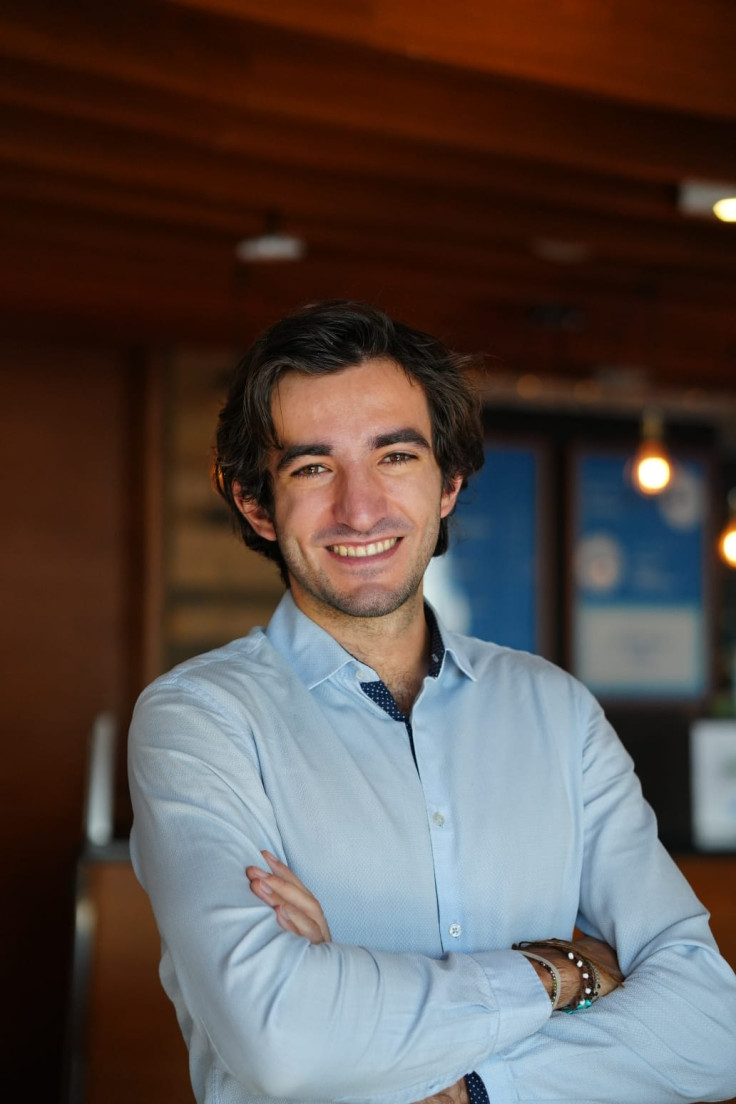
Turning an early hardware prototype into something customers can actually use requires more than proving that the underlying idea works. Clément Messeri confronted that gap directly when Clema moved its wearable cooling technology from an early prototype into a 100-unit build for customers. As the company's CTO, Messeri designed the system, coordinated the engineering and supply chain behind it, and worked with his team to build 100 units in-house and deliver them to customers in less than four months. The milestone gave him a practical test of whether the product could move beyond experimentation and survive the demands of manufacturing, logistics, and real-world use.
Messeri's role covers nearly every technical decision surrounding the product. He is responsible for product design, engineering, manufacturing strategy, supplier decisions, in-house capabilities, outsourcing, supply chain, and logistics. His technical foundation includes M.S. and B.S. studies at UC Berkeley in materials science and nuclear engineering, research at Lawrence Berkeley National Laboratory, and work that contributed to a 2025 paper in *ACS Energy Letters*. His experience with battery technology at Tyfast and energy infrastructure at E3 also shapes how he approaches Clema's engineering decisions, particularly when the product has to balance thermal performance with weight, power, durability, and manufacturing constraints.
The problem is not abstract for Messeri. He is French, and Europe's record-breaking heatwaves in the summer of 2026 reached Clema's own supply chain when two of its garment suppliers in Poland had to halt work for several days because conditions were too hot to continue. In the UK, the same summer brought renewed calls from unions and MPs for a legal maximum workplace temperature, a debate centred on the construction crews, warehouse staff and outdoor workers Clema is designing for.
"The hardest part is rarely proving that one component can work," Messeri said. "The harder problem is making the whole system work together in a form that someone can actually wear, manufacture, ship, and use in the conditions it was designed for."
That systems view became especially important as the product moved toward customer use. Messeri says Clema deliberately started with the problem rather than committing to a particular technology and searching for an application afterward. That gave the team room to change materials, manufacturing methods, and technical approaches when the realities of the use case demanded it.
One of the central constraints was weight. Cooling technologies that work well in stationary equipment do not automatically translate to something worn on the body. Messeri argues that measuring energy efficiency in the traditional sense can become less useful when a system has to be carried for hours. In wearable cooling, he focuses heavily on how much heat can be removed relative to the mass and volume of the complete system.
The current design reflects those tradeoffs; every additional component can improve one part of the system while making the device heavier or harder to wear. Messeri's job is to keep those competing demands from overwhelming the basic purpose of the product.
"The design has to be judged as something a person is carrying, not as a cooling machine sitting on a bench," Messeri said. "If you improve efficiency but make the system too heavy or uncomfortable, you may have solved the wrong problem."
Customer feedback has influenced several of those decisions. Clema's system uses electricity instead of depending on water or ice because users told the company that refilling a water-based cooling system may not be practical at some worksites. Messeri treats those operational constraints as engineering requirements, because a technically effective system still fails if the user cannot recharge, refill, carry, or comfortably work in it.
One worker who tested the prototype said the system cooled effectively, remained comfortable to wear, and did not interfere with his work.
Interestingly, the most familiar solution is not always the one that fits the constraints. His work often requires identifying which limitation actually matters, discarding methods that appear stronger on paper but fail in practice, and finding a solution that preserves the larger design. This type of engineering decisiveness is what defines the product.
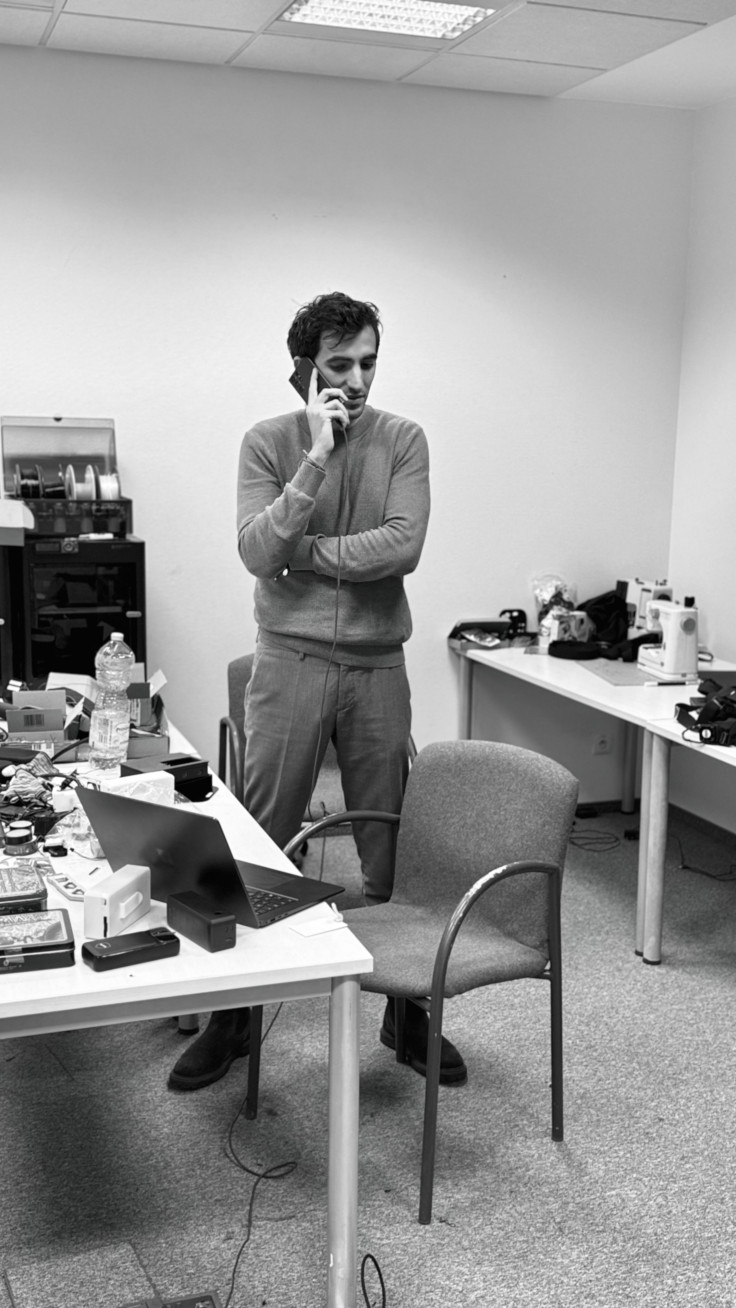
Manufacturing presented a different set of problems. Messeri had to order parts, coordinate suppliers, manage imports and exports, deal with customs, and organize assembly. He worked with interns and specialist engineers to get the 100-unit run completed and delivered, while acknowledging that the work was collaborative and depended on advisors and contractors with expertise in areas outside his own. The 100-unit build also gave Clema its first opportunity to test the product through actual customer deliveries.
Messeri has been careful about how far to extend the claims around Clema's technology. He describes the product as still being in the early production phase and says he prefers conservative language around what it can ultimately deliver. That caution matters for a device designed around worker heat exposure, where laboratory performance and real-world effectiveness cannot be treated as interchangeable.
For Messeri, the 100-unit production run matters because it forced the engineering to encounter the parts of hardware development that prototypes often avoid. Components had to arrive on time. Customs had to be cleared. Assembly had to be repeatable. The product had to remain wearable after all of the necessary hardware was included.
Those constraints now shape the next stage of development. The broader challenge remains the same one that defined the first customer-ready units: deliver enough cooling to make a practical difference without asking the wearer to carry a system that becomes a burden of its own. For Messeri, solving that balance is what turns an interesting thermal technology into usable hardware.
© Copyright IBTimes 2026. All rights reserved.