

Ivy League Official Who Warned Against AI Cheating Resigns After Investigation Finds He Used AI in His Writing
Dartmouth's review found undisclosed AI use in academic work and a newspaper opinion article, raising integrity questions
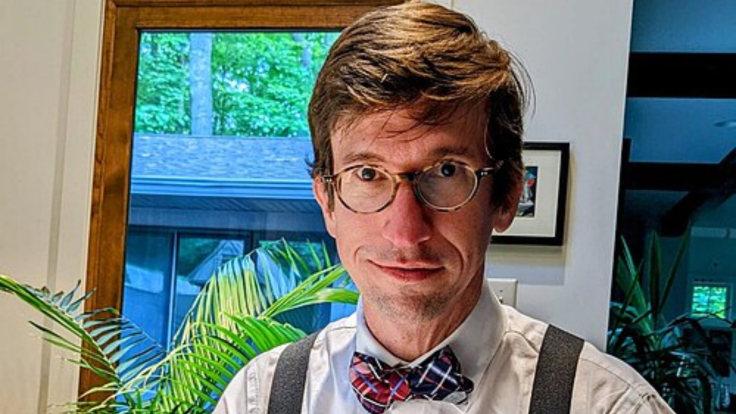
Santiago Schnell has resigned as provost of Dartmouth College after a faculty-led investigation found that he used artificial intelligence to make meaningful changes to his writing without meeting publishers' disclosure requirements.
The findings have placed the former senior administrator at the centre of a debate about transparency in academic work, particularly as universities develop rules governing students' use of generative AI. Schnell had publicly warned about the challenges AI presents to higher education, making the findings an especially difficult test of Dartmouth's own approach to academic integrity.
What Dartmouth's Investigation Found
The investigation examined Schnell's use of AI in academic publications and public commentary. A committee of faculty members concluded that he had used AI in ways that meaningfully altered writing, but had failed to disclose that assistance in accordance with the relevant publication requirements.
One case involved a research paper submitted to ChemSystemsChem. The committee found that Schnell used Anthropic's Claude to revise writing, troubleshoot code, and work on figures. The journal had required authors to disclose relevant AI assistance since at least 2023.
On 6 October, Schnell disclosed his use of ChatGPT to the journal but did not mention Claude, according to the committee's findings. The committee concluded that his public descriptions of the extent of AI assistance did not fully reflect the work documented in the records it reviewed.
The review also considered a separate co-authored paper published in Bulletin of Mathematical Biology. In that case, the committee found no breach of the journal's disclosure rules and no evidence that Schnell had used AI to edit or manipulate the paper's text. The distinction is significant: the investigation did not conclude that every instance of his AI use breached publication standards.
Why Disclosure Became the Central Issue
Schnell had argued that AI tools served as editorial assistance and a discussion partner, rather than replacing his research, ideas, or intellectual judgement. He acknowledged using chatbots to refine arguments and check grammar, while maintaining that he remained responsible for his work.
However, the committee's concern was not simply that he had used AI. It found that the extent and nature of the assistance had not been disclosed as required by publishers. Dartmouth President Sian Leah Beilock said the findings also raised concerns about Schnell's conduct under the university's Code of Ethical Conduct, Academic Honor Principle, and Geisel School of Medicine's Policy on Professionalism.
The committee reviewed records including Schnell's Dartmouth enterprise Claude account, correspondence, and material from a university-issued laptop. It said he did not provide logs from personal AI accounts relevant to the review and did not meet with the committee.
The findings were based on the records examined by investigators, not an AI-detection score. The committee did not rely on automated AI detectors to determine whether his writing had been generated by a chatbot.
Schnell Disputes the Review Process
Schnell resigned as provost and left Dartmouth following the findings announced on 28 October. Beilock said the decision to leave was his.
His lawyer, Andrew Miltenberg, subsequently said Schnell had not been given a meaningful opportunity to present his account. Miltenberg said his client chose to leave to avoid further distraction, while disputing the fairness of the review process.
Schnell had previously apologised for failing to disclose AI assistance in his work. His position has been that using AI as an editorial tool does not make the technology an author or mean that it produced the underlying research. The dispute leaves two issues to consider separately: whether academics can use AI as part of their work, and whether they have met the disclosure rules attached to the publications in which that work appears.
Dartmouth's Wider AI Challenge
The resignation comes as Dartmouth continues to debate how universities should respond to generative AI. Beilock has advocated greater engagement with the technology while stressing the importance of transparency and human judgement.
The university has also been preparing an event marking 70 years since the 1956 Dartmouth summer research project that helped establish artificial intelligence as a field of study. Its title, 'AI at 70: What Must Remain Human?,' captures a question now facing institutions well beyond the campus.
The case illustrates why clear disclosure rules matter: universities can encourage experimentation with AI, but confidence in academic work depends on authors being transparent about how that work was produced.
© Copyright IBTimes 2026. All rights reserved.