

'No One Has Helped Me... I'm Worse': Acid Attack Survivor Seeks Euthanasia After Decades of Pain
Maria Consuelo Cordoba, a Colombian acid attack survivor, requests euthanasia after 26 years of suffering and over 80 surgeries, citing lack of promised state support and unbearable pain
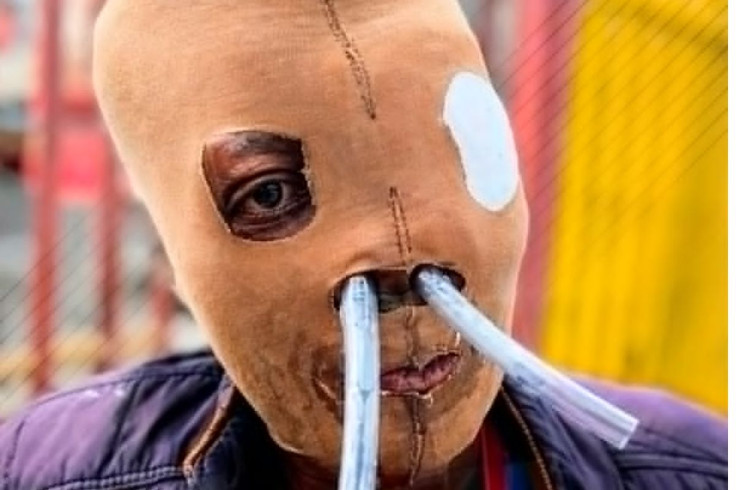
A 58-year-old acid attack survivor in Bogota, Colombia, has formally requested euthanasia after enduring 26 years of severe physical pain and undergoing more than 80 surgeries.
Maria Consuelo Cordoba announced her decision during a local television broadcast this week, explaining that she is entirely physically and financially exhausted following the assault by her former husband in 2000.
The public plea highlights a tragic turning point for the acid attack survivor, who previously abandoned her pursuit of euthanasia following a personal meeting with Pope Francis.
The religious leader reportedly convinced her to continue living under the premise that she would receive comprehensive state assistance for her life-changing injuries.
Daily Reality for Acid Attack Survivor
Cordoba secured an audience with the pontiff during his widely documented visit to Colombia in 2017. During their exchange regarding her emotional and physical deterioration, she promised him that she would not seek to end her life.
She told Colombian news outlet CityTV that the promise was anchored to hopes of intervention that never materialised. 'He told me, Colombia will help you get the surgeries you need, but you know what? No one has helped me... I'm worse,' she recalled.
Originally from Choco, Cordoba relocated to the capital city nearly three decades ago alongside her then-husband in search of steady employment.
The violence occurred after she refused to return to their home region with him. She explained that her former partner concealed the true contents of the bottle.
'When I opened the door he threw the acid at me... I didn't know it was acid because he had it in a bottle of liquor... I just thought he was drinking... When I went out he threw that liquid in my face,' she told the broadcaster.
She recounted how he immediately fled the scene while she ran inside to throw water over her burning skin.
Today, her medical reality is stark. During her television appearance, she wore a protective mask over her extensively scarred face. Two plastic tubes remain permanently inserted into her nose to facilitate basic breathing.
With only a small opening where her mouth should be, she struggles to consume food and continues to wait indefinitely for facial reconstructive surgery.
Unable to secure employment due to the severity of her disfigurement, she spends her days walking the streets of Bogota to beg for enough loose change to cover the rent for a small, single room.
Capital Salud Addresses Euthanasia Request
The deeply personal interview quickly gained significant online traction, with thousands of viewers openly condemning authorities for failing to provide sufficient support to the survivor.
In direct response to the mounting public scrutiny, Colombia's regional health entity, Capital Salud, issued a formal statement addressing the situation.
The agency confirmed that Cordoba has been officially approved for euthanasia, though officials insisted they would guarantee the delivery of all required medical care should she choose to delay the procedure.
They stated they would fully support whatever path she ultimately decides to take. 'María Consuelo will continue to be supported with respect, humanity and dignity... we will be available to attend to all her health needs,' the statement read.
Colombia First Latin American Country To Decriminalise Euthanasia
Colombia holds a unique position in the region, having been the first Latin American country to decriminalise euthanasia. It remains one of the most progressive nations globally regarding assisted dying legislation, allowing individuals enduring intractable suffering to legally end their lives.
The desperation expressed by Cordoba echoes other recent international cases involving severe domestic abuse and state failure. Just months ago, a 28-year-old Spanish chef named Ainhoa Caballero Medina initiated a similar request for an assisted death.
She survived an alleged attempted murder by her former boyfriend but was left navigating chronic agony, severe brain damage, and the permanent loss of her senses of taste and smell.
Despite her physical deterioration, local council authorities repeatedly refused to officially recognise Caballero Medina as a victim of domestic abuse. This administrative failure occurred while her ex-partner continued to issue threats against her from a provisional detention facility, where he remains subject to a restraining order.
Having lost all expectation that the state would intervene to protect or assist her, the young woman turned to Spain's own euthanasia laws to escape severe physical trauma and a lack of administrative support.
© Copyright IBTimes 2026. All rights reserved.