

Cancer Survivor and Asylum Seeker Faces Potentially Life-Threatening Health Crisis in ICE Detention
A federal habeas petition seeks emergency relief for Katsiaryna Bartko amid concerns about her detention and medical treatment

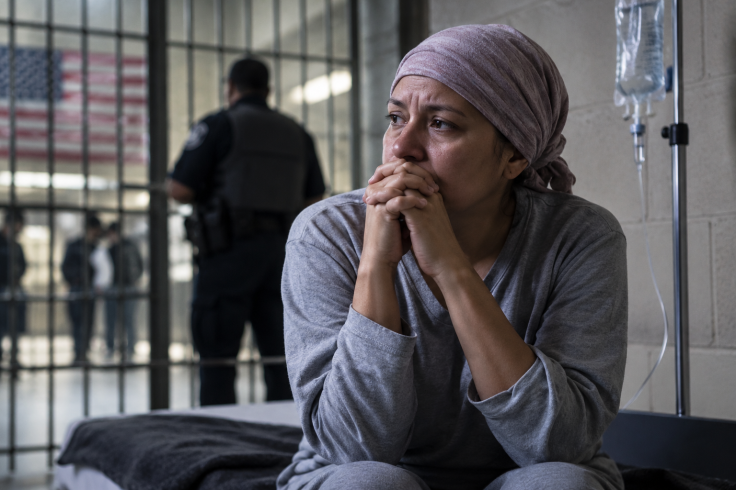
Katsiaryna Bartko, a 33-year-old Belarusian asylum seeker and cancer survivor, is facing serious health concerns while being held in US Immigration and Customs Enforcement (ICE) custody in Kansas, according to medical records and federal court filings. Bartko's partner, Dmitry Shyshov, says he worries about her deteriorating health and calls her whenever she has access to a phone.
Bartko had her thyroid and parathyroid glands surgically removed in her early 20s following cancer treatment. She has since relied on hormone replacement medication and calcium. Her medical treatment has become a central issue in a federal court case challenging aspects of her detention.
Three Hospital Visits in Four Days
Before her transfer to Kansas, Bartko was held in ICE custody in Florida. Medical records cited in the case show that she was hospitalised three times between 6 June and 9 June. She was transferred to the Midwest Regional Reception Center in Leavenworth, Kansas, on 18 June. CoreCivic operates the facility for ICE.
According to an 11 August court filing, Bartko had not been examined by an endocrinologist or another outside physician since arriving in Kansas. ICE deportation officer Aaron Wendler said in a sworn filing that CoreCivic medical staff classified an outside consultation as routine rather than emergency or urgent. He said facility policy required such consultations within 12 weeks.
Hormone Levels Deteriorate
Medical records show a substantial rise in Bartko's thyroid-stimulating hormone, or TSH, level during her detention. An 11 August blood test recorded her TSH at 148.77 mIU/L, roughly 30 times the upper end of the normal range cited in reporting about the case. Because Bartko no longer has a thyroid, she cannot produce thyroid hormones normally.
Sarah Raza, a board-certified physician with Physicians for Human Rights, reviewed Bartko's laboratory results and submitted sworn statements to the court. Raza described the results as severe overt biochemical hypothyroidism.
She warned that worsening hormone and electrolyte abnormalities could increase Bartko's risk of myxedema coma, a rare but potentially fatal complication of severe hypothyroidism. Raza also noted that myxedema coma requires clinical assessment and cannot be diagnosed from laboratory results alone.
Dispute Over Medication
Shyshov says Bartko was initially allowed to keep levothyroxine in her cell and administer it herself. He alleges the medication was confiscated on 23 June and withheld until 10 July, when CoreCivic staff took over its administration. Medical records show that Bartko reported symptoms during that period, including severe pain, dizziness, and blurred vision.
A 2 July clinical note stated that Bartko had reportedly identified herself as allergic to levothyroxine. Raza challenged that account, saying Bartko had taken the medication for more than a decade and that previous records documented continuous use and tolerance.
Raza also questioned a facility record indicating that levothyroxine and calcium were not administered because Bartko had reportedly identified herself as allergic to both. On 3 July, Bartko said she attempted to explain to a nurse that calcium and levothyroxine needed to be taken at different times. The facility recorded the incident as a refusal of treatment. Bartko disputes that description, saying she was not refusing medication but was attempting to take it safely.
ICE and CoreCivic Defend Care
CoreCivic spokesperson Ryan Gustin declined to address the specific medication allegations, citing medical privacy laws. He said Bartko was being regularly monitored and that her medical conditions were being treated. DHS spokesperson Robert Hughes II likewise said Bartko was receiving appropriate care for hypothyroidism and hypocalcemia.
DHS characterised Bartko as a criminal illegal alien. Court filings show, however, that her current detention relates to civil immigration proceedings. Bartko was arrested in Florida on 5 May on a misdemeanor battery charge.
The state attorney's office took no action on the case on 2 June, according to a court filing, and she was not convicted. ICE later placed an immigration detainer because of her expired student visa. An immigration judge denied Bartko bond on 22 July, finding that she presented a flight risk.
Asylum Claim and Court Battle
Bartko entered the US legally on an F-1 student visa in March 2022 and later sought asylum. Shyshov says she left Belarus because of her political activities and opposition to the government's support for Russia's invasion of Ukraine. He says she participated in protests and criticised Belarusian authorities online.
Bartko's asylum claim remains part of her immigration proceedings. She filed a federal habeas petition on 7 August challenging her detention and seeking emergency relief. The court appointed counsel on 31 August and scheduled a 4 September hearing on her request for emergency measures. ICE and CoreCivic maintain that Bartko is receiving appropriate medical care.
Her supporters and Raza argue that her worsening laboratory results warrant evaluation by an outside specialist. The federal case will now address both her continued detention and the medical-care concerns raised in court.
© Copyright IBTimes 2026. All rights reserved.