

Why Anshul Sawant Thinks the Future of AI May Be Smaller
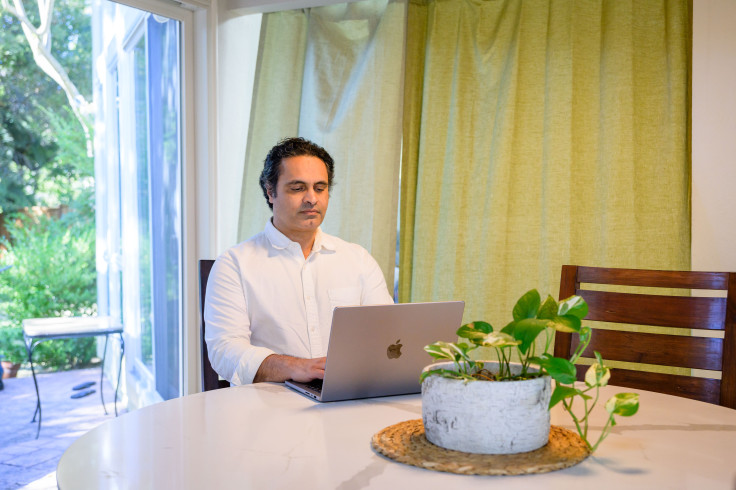
Five hundred milliseconds can turn a technically correct AI system into a useless one when the decision has to arrive in 50. Anshul Sawant learned that lesson through years of building systems expected to operate continuously at enormous scale. Now a Principal Applied Scientist, he focuses on making advanced AI practical under strict limits on speed and computing resources. For Sawant, a model's intelligence means little if the system cannot affordably deliver its answer when the answer is actually needed.
"If the requirement is 50 milliseconds, a solution that takes 500 has failed regardless of how elegant the algorithm looks," Sawant says. "That is the kind of reality you encounter once these systems have to operate outside a research setting."
The experience has shaped his skepticism toward automatically choosing the largest available AI model for every problem. Sawant argues that massive general-purpose models can carry far more capability than a narrowly defined application requires, adding computing expense and slowing execution. His work increasingly emphasizes specialized models built around a particular responsibility.
That view developed in part at Google, where Sawant built predictive AI for million-unit supercomputer fleets. The work was aimed at improving compute throughput and preventing major hardware failures, generating hundreds of millions of dollars in annualized efficiency savings. Operating at that scale taught him that a technical inefficiency repeated often enough quickly becomes an economic problem.
"When something runs across millions of units, small inefficiencies stop being small," Sawant says. "Scale forces you to understand what every decision costs and whether the architecture can keep performing under that load."
That experience now informs his interest in what he calls hyper-specialized micro-models. Instead of asking an enormous model to perform every possible kind of reasoning, a smaller model can be trained around a clearly defined task. Sawant believes that approach can reduce latency and computing requirements while still providing the level of intelligence the application actually needs.
"The biggest model is often solving much more than the task requires," he says. "You can end up paying for capability you are not actually using."

The economics become particularly important when an AI system has to make the same type of decision repeatedly. A difference that seems negligible during a demonstration can become significant once computation is multiplied across a large operating environment. Sawant's current work continues to involve millisecond latency requirements, reinforcing the lesson that intelligence has to arrive within the time available for the decision.
That focus also explains his interest in continual learning. Data changes after a model is deployed, and Sawant sees repeated full retraining as an expensive response to every shift. He is interested in architectures that can adapt as information changes without requiring the same computational investment each time.
"The interesting problem is how you let the system adapt as the data changes without paying the full retraining cost each time," Sawant says. "If adaptation is too expensive, maintaining the system eventually becomes part of the problem."
Continual learning introduces its own technical difficulty. A system has to incorporate new information without losing what it has already learned, a problem Sawant identifies as catastrophic forgetting. His interest lies in developing architectures that can respond to data drift while avoiding the cost of repeatedly rebuilding the entire model.
Sawant also argues that current large language model architectures rely too heavily on massive amounts of computation to increase capability. He sees that approach as an important stage in AI development rather than a permanent answer. Future architectures, in his view, will have to become substantially more efficient if advanced AI is going to be deployed broadly.
That question reaches beyond technical optimization. Sawant's longer-term goal is to make production-grade AI capabilities available to independent sellers and growth-oriented businesses that do not maintain large in-house machine-learning teams. He believes much of the infrastructure required to deploy sophisticated, highly specialized AI remains concentrated among the largest technology companies.
Sawant sees cost as one of the barriers preventing smaller businesses from using the same class of AI infrastructure. A company may have a valuable commercial problem for AI to solve without possessing the computing resources or technical staff required to operate a massive general-purpose system continuously.

"Useful AI has to make economic sense after deployment," he says. "If the system is technically impressive but only a very large company can afford to operate it at the required scale, then you still have a deployment problem."
His vision is to push more of that capability into specialized systems designed around a company's particular requirements. Rather than requiring a business to maintain a large machine-learning organization, Sawant wants narrowly focused AI to handle defined commercial workflows within manageable computing limits.
That ambition reflects a lesson running through his work from Google to his current role. Technical capability becomes meaningful only after it survives the conditions under which it must operate. Computing cost matters. So does execution time. A model that ignores either may work beautifully in isolation and still fail once repeated use turns theoretical inefficiency into an operating expense.
Sawant's argument challenges the assumption that progress in artificial intelligence should always be measured by the size or general capability of the model. Specialized systems can pursue a different goal: enough intelligence to perform the required job while using fewer resources to do it.
The 50-millisecond requirement captures the principle more clearly than a benchmark ever could. The system has to make the required decision at the speed the environment demands without making the economics of running it impossible. That practical threshold is where Sawant believes some of the most consequential AI engineering now begins.
© Copyright IBTimes 2026. All rights reserved.