Elon Musk Warns 'Humanity Is Dying Out' as Census Bureau Reports Seniors Outnumber Young Children
The data behind Elon Musk's bleak four‑word warning reveal not an imminent extinction, but a world that is swelling in numbers while tilting sharply towards old age
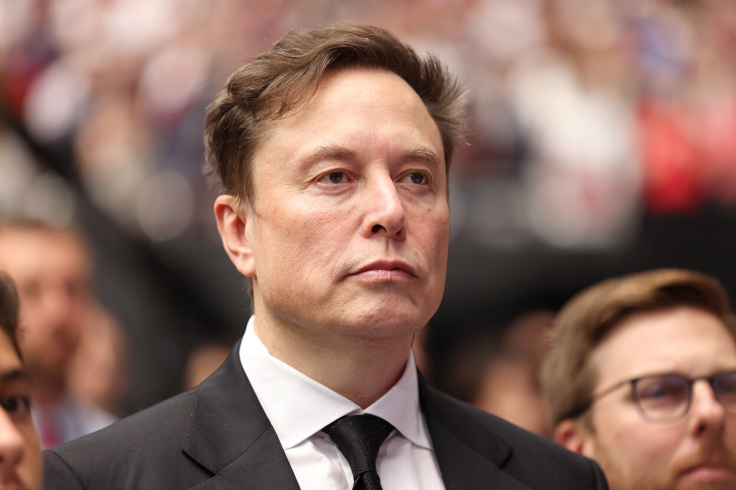
Elon Musk has warned that 'humanity is dying out' after new US Census Bureau data showed that, by 2025, the share of people aged 65 and over exceeded the share of children ages 0 to 5 worldwide for the first time in human history.
The Tesla and SpaceX chief's latest alarm followed the Census Bureau's confirmation of a demographic crossover that demographers have watched approach for years, as older adults become a larger slice of the global population than the very youngest children. The bureau framed the shift as a historic milestone in global ageing.
Separately, US Social Security projections show that demographic change is eroding the ratio of workers to beneficiaries, with knock‑on effects for the programme's long‑term finances.
Elon Musk Seizes on Census Warning About Ageing Humanity
Musk, 55, reacted to the Census findings in a brief post on X on 5 September, replying to the report with the stark line: 'Humanity is dying out.' He has repeatedly argued that falling birth rates represent what he sees as a threat to civilisation, turning global fertility and population trends into one of his favourite themes online.
The Census Bureau reported that, between 2020 and 2025, the global population aged 65 and over overtook children ages 0 to 5 as a share of humanity. The agency described this as the first such reversal in human history and projected that the gap between the two age groups will widen significantly rather than close in the decades ahead.
According to its projections, the number of people aged 65 and older is expected to rise from 852 million in 2025 to about 2 billion by 2060. That older cohort accounted for roughly 10.5 per cent of the world's population in 2025 and is projected to reach 19.6 per cent by 2060, which would mean nearly one in five people on the planet will be at least 65.
None of that, however, means the global population is currently shrinking. The Census Bureau still expects the world's headcount to grow from around 8.1 billion in 2025 to 10.2 billion by 2060. Musk's four‑word warning is his interpretation of the trend rather than a conclusion drawn by government statisticians.
Elon Musk, Fertility Decline and a Tightening Pool of Workers
The ageing trend is only half the story that caught Musk's attention. The other half is a sharp and increasingly widespread fall in fertility. According to Census‑based data, more than 71 per cent of the world's population lived in countries at or below the approximate 'replacement level' of 2.1 births per woman in 2023, up from about 45 per cent a decade earlier.
Even China and India, still the two most populous nations, have now dipped below replacement fertility. That means their future population structures will be shaped less by today's birth rates and more by the accumulated effects of past high fertility, rising life expectancy and other demographic forces.
On the surface, the planet is still adding people, and lots of them. Yet a world of smaller birth cohorts and longer lives looks very different in economic terms from one where each generation is bigger than the last. Over time, smaller generations of children typically translate into smaller generations of workers, even as older generations live longer and continue drawing pensions and benefits.
Demographers and economists point out that this changing balance can pile financial pressure on public pension and social insurance systems. Fewer workers relative to retirees make it harder to fund the same promises, which is where Social Security enters the conversation and where Musk's alarm intersects with some very dry actuarial tables.
Ageing Population Piles Pressure on US Social Security
The Census charts are not just abstract stuff for conference slides. They feed into the assumptions that underpin Social Security, the core US retirement and disability programme that sends monthly payments to tens of millions of people.
Social Security is not a personal savings pot. According to the Social Security Administration, payroll taxes from today's workers and employers, along with other income, are used to pay benefits to today's retirees, survivors and disabled workers. The health of the system depends heavily on how many workers are paying in for each person drawing money out.
That worker‑to‑beneficiary ratio has been deteriorating for decades. In 2000, there were about 3.4 covered workers for every Social Security beneficiary. By 2025, the 2026 Social Security Trustees' Report put that figure at roughly 2.6 workers per beneficiary, and it is projected to fall further in the coming decades as the population ages.
The programme's finances are already feeling the strain. Combined income for the Old‑Age and Survivors Insurance and Disability Insurance trust funds totalled around 1.45 trillion dollars in 2025, while expenditures reached about 1.61 trillion dollars, according to the Social Security Administration. The shortfall was covered by drawing on accumulated trust‑fund reserves.
Those reserves are finite. The 2026 Trustees' Report projects that the Old‑Age and Survivors Insurance Trust Fund, which pays retirement and survivor benefits, will deplete its reserves in the fourth quarter of 2032 if current law remains unchanged. At that point, continuing income would be enough to cover about 78 per cent of scheduled OASI benefits.
Humanity is dying out https://t.co/J04M8dV0Ks
— Elon Musk (@elonmusk) September 5, 2026
Looking at Social Security's retirement, survivor and disability components together, the combined OASI and Disability Insurance reserves are projected to support full scheduled benefits until 2034. After combined reserves are depleted, incoming revenue is expected to cover about 83 per cent of scheduled benefits unless Congress acts.
Trustees said several assumptions had shifted since their previous report. They highlighted a reduction in the programme's ultimate fertility‑rate assumption as the single largest contributor to the significantly higher 75‑year actuarial deficit in the 2026 projections. In plain English, they now expect fewer babies over the long run, and that worsens the maths.
That technical finding gives extra context to Musk's social‑media warnings about declining birth rates. It does not, on its own, prove that 'humanity is dying out.' The official numbers instead describe a world that is still growing in absolute terms but getting older fast, with all the policy headaches that follow.
© Copyright IBTimes 2026. All rights reserved.
- Recommended For You