Supreme Court Reportedly Removes Major Immigration Detention Case From Docket Following Legal Review
A single state pardon wiped out a Supreme Court showdown, but the constitutional battle over how long migrants can be held without bond is still waiting in the wings

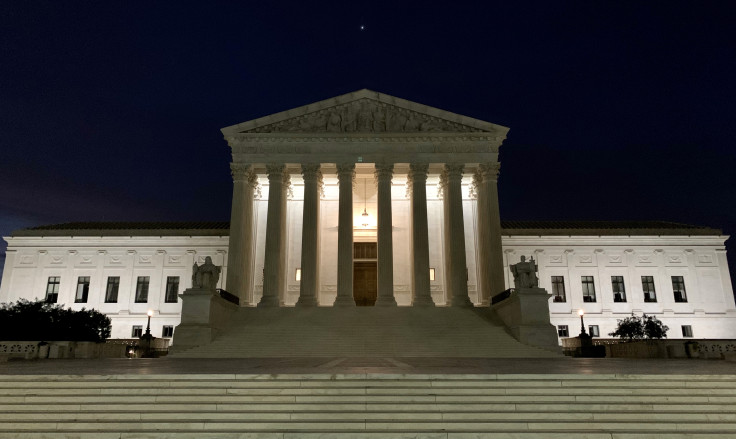
The Supreme Court on Friday dropped a major immigration detention case from its docket in Washington after the Supreme Court was told that New York Governor Kathy Hochul had pardoned the migrant at the centre of the dispute, effectively rendering the Supreme Court controversy moot.
The dismissed Supreme Court immigration detention case, Genalo v. Black, had been framed as a potential landmark on how long the federal government can hold people in mandatory immigration detention without a bond hearing.
More Details on the Appeal
It can be recalled that the appeal was being pursued by the Trump administration and was expected to test the limits of detention powers against constitutional guarantees of due process in the court's upcoming October 2026 term.
The Supreme Court case grew out of the detention of two lawful permanent residents who were held for extended periods while the government tried to remove them. Court records show that one man, identified as Carol Williams Black, was detained for seven months, while the other, identified as 'Keisy G.M.' and later named as Keisy Guerrero Mariano, spent 21 months in immigration custody. Neither was given a bond hearing in which a judge could decide whether continued detention was justified.
In May 2024, the 2nd US Circuit Court of Appeals ruled that such unreasonably prolonged detention under Section 1226© of federal immigration law violates due process when it occurs without a bond hearing. The appeals court declined to set a rigid time limit but said detention beyond six months raises serious constitutional concerns and upheld a requirement that the government carry the burden of proving why detention should continue. That decision set binding precedent in New York, Connecticut and Vermont.
The case that reached the Supreme Court involved both Black and Mariano. Black's individual dispute later became moot when his immigration proceedings ended and he left the United States, but Mariano's situation remained live, keeping the broader legal questions before the justices.
Pardon Knocks Out Supreme Court Immigration Detention Case
That changed when Hochul granted Mariano a full pardon on 28 August 2026 for his 2015 second-degree assault conviction. According to the governor's clemency announcement, Mariano was one of six people who received pardons, all of whom had completed their sentences and, in the state's view, 'lived crime-free lives for a significant period of time and have made positive contributions to their communities.'
Mariano's lawyers had already told the Supreme Court that the assault conviction was the sole basis for the removal charge and detention at issue in Genalo v. Black. They argued that if the conviction were fully pardoned, he would no longer be removable on that ground and his case would become moot.
Once the pardon was issued, that prediction effectively came true. With the underlying conviction wiped away for the purposes of the removal charge, there was no longer a live controversy over Mariano's detention for the Supreme Court to resolve.
The dismissal followed a joint move by the Trump administration and Mariano's legal team. Both sides told the court that, in light of the pardon, dismissal was appropriate under the justices' own rules.
'The government has decided to stipulate to the dismissal of these cases under this court's Rule 46.1, with the aim of identifying alternative vehicles, including from the Second Circuit, that would still allow this court to resolve the questions presented during October term 2026,' Solicitor General D. John Sauer wrote.
In other words, the Supreme Court case is over, but the underlying fight about prolonged detention is not. Sauer signalled that the administration would search for another case that raises the same constitutional questions and can be moved quickly onto the Supreme Court's docket.
The solicitor general also pointed to differences between the 2nd Circuit's approach and that of other federal appeals courts on bond hearings for people detained under Section 1226©. The government has cited those conflicting approaches as a reason why the Supreme Court should eventually step in.
The 2nd Circuit's ruling remains in place. Lawful permanent residents and other noncitizens detained for long periods in New York, Connecticut and Vermont retain the right to seek bond hearings once their detention becomes unreasonably prolonged, while people held elsewhere may be subject to stricter rules or none at all. It is an uneven landscape, and the court has chosen not to smooth it out, at least not yet.
Reaction to Hochul's Move and What Comes Next for the Supreme Court
Rights groups welcomed the way this particular Supreme Court immigration detention case ended. The American Civil Liberties Union was among the organisations representing Mariano at the Supreme Court stage, and advocates have long argued that indefinite mandatory detention without a bond hearing offends basic due process principles.
Iowa Solicitor General Eric Wessan publicly criticised Hochul's decision on X. He argued that by pardoning Mariano, the governor had both prevented his removal on the assault conviction and deprived the Supreme Court of the opportunity to decide the detention questions presented in Genalo v. Black.
What is clear from court filings is that Mariano's lawyers themselves had told the justices that a full pardon would end his removability on the relevant ground and moot the dispute. The Trump administration then accepted that reality and agreed the case should be dismissed, even as it made plain that it wants another vehicle to revisit the same questions soon.
The Supreme Court's brief order does not disturb the 2nd Circuit's May 2024 ruling, nor does it provide any nationwide guidance on when mandatory detention under Section 1226© becomes unconstitutional without a bond hearing. Instead, it leaves the lower court framework intact and resets the clock on the federal government's effort to narrow or overturn that approach.
For migrants detained within the 2nd Circuit, that means the existing due-process protections remain in force. For the Trump administration and its solicitor general, it means going back to the drawing board to locate another case clean enough, and live enough, to persuade the Supreme Court to finally say how long the state can lock people up in this kind of immigration limbo.
© Copyright IBTimes 2026. All rights reserved.
- Recommended For You