

Scientists Issue Grim Warning Over End of Civilisation With Just 10% Chance of Survival
Research highlights the risks of unchecked population growth and deforestation
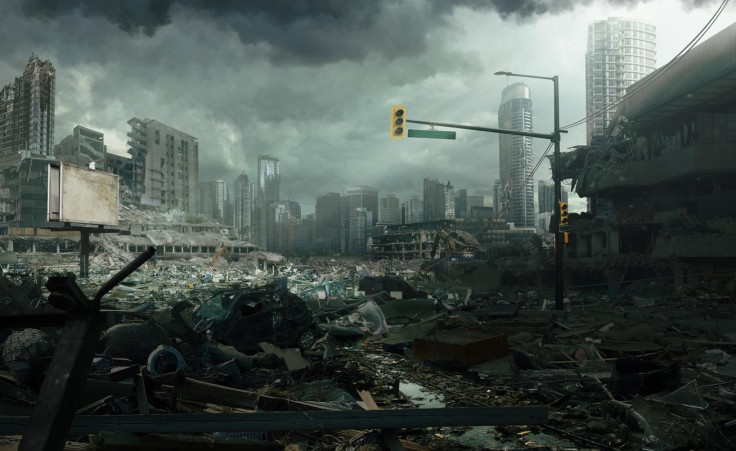
Human civilisation could face a catastrophic collapse within decades if current patterns of population growth and natural resource consumption continue. That's according to a mathematical study that placed the chances of avoiding such an outcome at less than 10 per cent in its most optimistic scenario.
Published in 'Scientific Reports' in 2020, the research examined the relationship between human population growth, technological development and deforestation. The researchers warned that continuing to consume resources at current rates could push humanity towards an irreversible collapse.
The study states: 'In conclusion our model shows that a catastrophic collapse in human population, due to resource consumption, is the most likely scenario of the dynamical evolution based on current parameters.'
The researchers added: 'We conclude from a statistical point of view that the probability that our civilisation survives itself is less than 10% in the most optimistic scenario.'
The study is a mathematical projection rather than a definitive prediction that humanity will disappear. Its conclusions depend on assumptions about population growth, resource consumption and deforestation remaining broadly unchanged.
Deforestation Could Trigger a 'No-Return Point'
Forests are central to the researchers' warning. They estimated that Earth had around 60 million square kilometres of forest before human civilisation became dominant, compared with fewer than 40 million square kilometres today.
The researchers stressed that humanity would not simply continue unaffected until the final forest disappeared.
'Clearly it is unrealistic to imagine that the human society would start to be affected by the deforestation only when the last tree would be cut down,' they wrote.
Instead, environmental degradation would begin affecting societies much earlier. The study states: 'The progressive degradation of the environment due to deforestation would heavily affect human society and consequently the human collapse would start much earlier.'
The model identifies a potential 'no-return point', after which the human population could become unable to sustain itself.
The researchers explained: 'We call this point in time the 'no-return point' because if the deforestation rate is not changed before this time the human population will not be able to sustain itself and a disastrous collapse or even extinction will occur.'
Their projections showed population growth followed by a potentially rapid decline, with the most severe scenario ending in extinction. The calculations suggested that, under the model's assumptions, humanity could have only a few decades before reaching such a point.
Will our modern civilization collapse? | Eric Cline @digkabri pic.twitter.com/HxgUJRbZvF
— Big Think (@bigthink) May 29, 2026
Wider Research Highlights Forest Loss Risks
The warning echoes broader scientific concerns about deforestation and the loss of natural ecosystems. Forests help regulate water cycles, store carbon, protect soils and support biodiversity and food systems, making their destruction a threat extending beyond the loss of trees themselves.
Research into past civilisations has also highlighted how environmental pressures can contribute to societal decline. Studies of the Maya civilisation, for example, have linked prolonged drought and environmental degradation to the challenges faced by Maya societies.
However, they did not claim that civilisation's collapse is inevitable. Their model demonstrates what could happen if current trends continue.
'Calculations show that, maintaining the actual rate of population growth and resource consumption, in particular forest consumption, we have a few decades left before an irreversible collapse of our civilisation.'
The message is therefore less a countdown to extinction than a warning about the consequences of inaction. Protecting forests, reducing resource consumption and changing unsustainable patterns of development could alter the trajectory.
© Copyright IBTimes 2026. All rights reserved.