

The Growing Mystery of 3I/ATLAS: Why Scientists Are Rethinking This Interstellar Body
Is 3I/ATLAS a comet or alien craft? New clues to a mysterious interstellar visitor
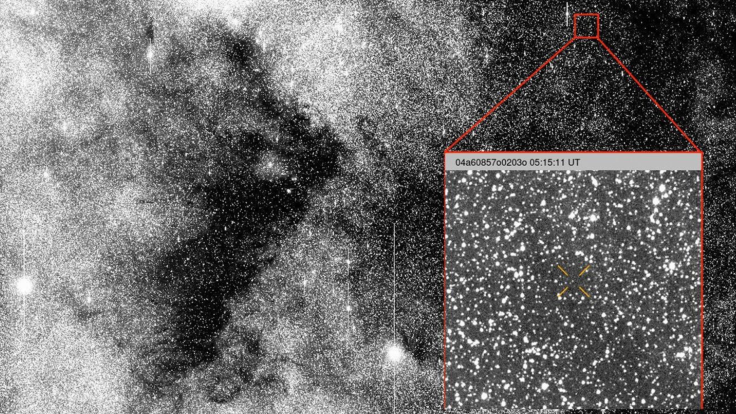
The vast, silent stretches of interstellar space have just coughed up another mystery, and it is one that has left the global scientific community checking their calculations twice. When NASA released the latest imagery of the interstellar visitor known as 3I/ATLAS, many expected a routine look at a distant lump of ice and rock. Instead, what they found has sparked a frantic debate about what exactly is cruising through our solar system.
The Asteroid Terrestrial-impact Last Alert System in Chile first saw the object on July 1, 2025. It was quickly identified as an intruder from outside of our gravitational reach. At first, the data didn't seem very interesting — just another dark object moving through the stars.
But researchers from the All Day Astronomy project have done a more in-depth study and found something much more disturbing. The picture shows a very 'ordered structure' inside the object that is pointing toward the sun. We can't explain how comets are made or how they act as they tumble through space with this level of geometric accuracy.
Specifically, new high-resolution frames captured in late 2025 show ruler-straight, sideways jet-like lines extending roughly one million kilometres on either side of the body, forming a bizarre 'X' shape that defies the expected physics of solar radiation pressure.

The Bizarre Symmetry of the 3I/ATLAS Interstellar Visitor
This discovery has effectively thrown the astronomical rulebook out of the window. Typically, a comet is a chaotic 'dirty snowball' of ice, gas and dust. Yet, 3I/ATLAS is displaying features that are not typical for such interstellar bodies. While it was initially written off as a standard, albeit dim, visitor from beyond our gravitational reach, the 'ordered' nature of its orientation suggests something far more complex.
Astronomers have been able to guess that the nucleus of the object is between 320 meters and 5.6 kilometers wide using data from the Hubble Space Telescope. This makes it much bigger than other interstellar visitors. The discovery is a historic event because 3I/ATLAS is only the third interstellar object that humans have ever found.
It follows in the footsteps of the famous cigar-shaped asteroid 'Oumuamua, which made headlines in 2017, and the more traditional-looking comet 2I/Borisov, which was found in 2019. 3I/ATLAS, on the other hand, seems to be bridging the gap between a natural event and something much more controversial.
Notably, 3I/ATLAS is the fastest of the three, screaming through our system at a staggering 137,000 miles per hour (221,000 kilometres per hour), a velocity that peaked at 153,000 mph during its perihelion on Oct. 29, 2025.

Is 3I/ATLAS a Natural Phenomenon or Something More?
By following the British standards of journalism, we must look at the data with both curiosity and caution. The orientation of the object's internal structure toward the sun is the 'smoking gun' for many theorists. If this were a simple rock, such alignment would be statistically improbable.
Recent spectroscopic analysis has further muddied the waters, revealing a chemical composition unusually rich in carbon dioxide and a nickel-to-cyanide ratio that is orders of magnitude larger than any comet ever recorded. This has led to a split in the scientific community: is this a new class of natural interstellar comet, or are we looking at something manufactured?
While the majority of mainstream researchers are still leaning toward the theory that 3I/ATLAS is a unique type of interstellar comet, not everyone is convinced by the 'natural' explanation. Enter Avi Loeb, the renowned Harvard astrophysicist who has never been one to shy away from controversial hypotheses.
Loeb points out that the object's trajectory was strangely 'fine-tuned', bringing it within tens of millions of kilometres of Mars, Venus and Jupiter — a series of flybys he calculates as having a likelihood of less than 0.005%. Loeb, who famously suggested that 'Oumuamua might have been a piece of advanced technology, is considering an alternative theory for this latest visitor.
He refuses to rule out an artificial origin, suggesting that 3I/ATLAS could potentially be a large 'alien spacecraft'. His reasoning is grounded in the object's anomalous characteristics — specifically the ordered structure and its movement patterns — which he argues are incredibly difficult to explain through natural, unguided processes.
For the British public, the implications are as fascinating as they are daunting. According to reports from the All Day Astronomy project, the ordered nature of the object's structure is the primary source of shock among experts. Whether it is a shard of a long-dead planet or a craft sent from a distant civilisation, 3I/ATLAS is forcing us to rethink our place in the cosmos.
On Dec. 19, 2025, the object came closest to Earth, passing at a safe distance of 170 million miles. As the object moves on, everyone is trying to get more information before it disappears into the dark again. The 'mysterious' tag is still firmly attached to 3I/ATLAS, a visitor that reminds us of how little we really know about the area between stars.
© Copyright IBTimes 2026. All rights reserved.